Sunday column
The Evolution of Sushi: A Surprising Historical Journey
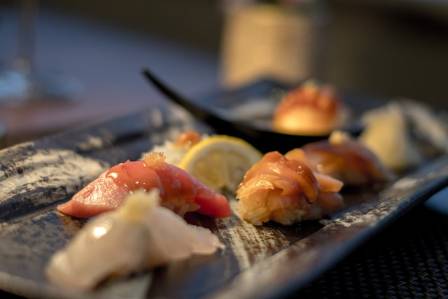
The global phenomenon of sushi—the combination of vinegared rice and fresh seafood—has a history that contradicts many modern assumptions. While today it is often viewed as a high-end Japanese delicacy, its roots trace back to ancient China, where it functioned as a preservation method rather than a fresh meal. Throughout the centuries, sushi has undergone radical transformations, evolving from a pungent, fermented street food into the diverse culinary art form enjoyed across the world today.
Tristan Mercer
Desk editor
Editor’s note
The full column continues in quiet type below.
Section
Sunday Broadsheet
The global phenomenon of sushi—the combination of vinegared rice and fresh seafood—has a history that contradicts many modern assumptions. While today it is often viewed as a high-end Japanese delicacy, its roots trace back to ancient China, where it functioned as a preservation method rather than a fresh meal. Throughout the centuries, sushi has undergone radical transformations, evolving from a pungent, fermented street food into the diverse culinary art form enjoyed across the world today.
The Ancient Roots of Fermentation
Contrary to its modern image, the earliest form of sushi was not raw; it was fermented and notably sour. This primitive version, known as funazushi, can still be found near Lake Biwa in Japan. It involves aging fish in rice for a year or more, resulting in a flavor profile comparable to strong blue cheese. Historically, this process was a practical necessity. As cooked rice ferments, it produces lactic acid, which, when combined with salt, pickles and preserves the fish. This allowed seafood to remain safe for consumption for months or even years before the advent of refrigeration.
While this technique was practiced across East Asia for centuries, the transition toward modern sushi began in the bustling city of Edo—now known as Tokyo. As the urban population grew, so did the demand for quicker dining options. The long fermentation periods were gradually shortened, and cooks began adding vinegar and sugar directly to the rice to mimic the traditional tangy flavor without the wait.
The Rise of Nigiri and the "Fast Food" Revolution
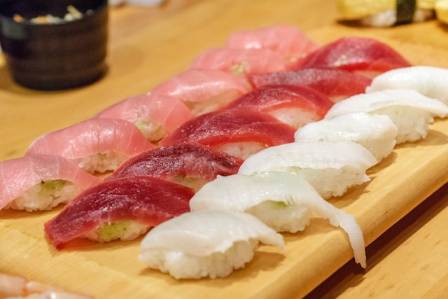
The definitive shift toward the sushi we recognize today occurred in the early 19th century. A peddler named Hanaya Yohei is often credited with revolutionizing the craft in 1810. Operating a stall in a high-traffic area of Edo, Yohei sought to speed up service for his customers. He began using fresh fish caught directly from Tokyo Bay, pairing it with rice seasoned with vinegar and salt that required only minutes to prepare.
This "fast food" innovation, known as Edomae or nigiri sushi, quickly became the urban standard. However, it took decades for this style to spread; as late as the 1940s, many in rural Japan were still unfamiliar with the raw fish preparation. The post-war economic boom and advancements in rice production—specifically the development of moist, chewy medium-grain rice in the 1960s—eventually solidified nigiri as a national staple.
From Nori Wraps to American Acceptance
The iconic seaweed wrapper, or nori, has its own distinct lineage. Rolled sushi, or norimaki, likely emerged around 1716, utilizing advanced papermaking techniques to create thin, edible sheets of seaweed. While Japan refined these methods, similar traditions of wrapping rice in seaweed existed in Korea, highlighting a shared regional history of using marine resources for portable meals.
Sushi’s journey to the West was a slow process that gained momentum several decades after World War II. In the late 1960s, critics in New York began noting a growing local enthusiasm for raw fish. By 1970, the opening of sushi bars near Hollywood studios attracted celebrities, turning the cuisine into a trendy luxury. The 1977 U.S. "Dietary Goals," which encouraged increased fish consumption for heart health and omega-3 benefits, provided the final push needed for sushi to move from elite coastal enclaves into mainstream American culture, eventually appearing in supermarkets and sports stadiums.
The Future of Sustainable Sushi
The history of sushi is defined by adaptation, and its future may be shaped by environmental necessity. Some historians and ecologists suggest that as traditional species like bluefin tuna face sustainability challenges, the industry may shift toward more abundant alternatives. For instance, Asian carp—an invasive species in North American waterways—has been proposed as a clean, sustainable, and flavorful option for modern sushi chefs.
Just as the practitioners of ancient fermented sushi could never have predicted the "raw revolution," the next stage of sushi's evolution will likely be driven by new culinary technologies and a commitment to ocean health. Sushi continues to be a living cuisine, constantly reinventing itself to suit the tastes and values of each new generation.
More from the edition
Column · en
Wooden Alarm Clocks That Enhance Your Home Decor
Anjankstore is a home-products brand focused on creative, practical, and attractive items that can add both convenience and personality to your living environment. One of its notable products is the Wooden Digital Alarm Clock, which combines useful everyday functions with a natural decorative style.
Column · en
Gooderham Tower, Canada’s Most Iconic Flatiron
Often called Toronto’s Flatiron Building, the Gooderham Building stands as one of the city’s most cherished landmarks. Located at the junction of Wellington Street and Front Street, it displays remarkable architectural design while also reflecting the legacy of a leading Toronto family that played a major role in the region’s industrial development.
Column · en
Rock Climbing Mastery: Essential Techniques for Better Performance
Improving your climbing technique requires more than just strength - it's about movement efficiency, body positioning, and mental focus. These practical tips will help climbers of all levels refine their skills and tackle more challenging routes with confidence.
Column · en
The 7 Most Shocking Truths About Seagulls You Never Knew
Despite the name "seagull," many have abandoned coastal living for urban landscapes and landfill sites. These areas provide an endless, easy-access buffet. While their natural diet includes mollusks, small fish, and insects, they are ultimate opportunists—readily consuming other birds' chicks and eggs, roadside carrion, or your discarded fries. Their primary culinary rule? Minimum effort, maximum reward.
Column · en
The Most Breathtaking Coastal Scenery in the World: Must-Visit Ocean Destinations
The ocean holds an irresistible allure for humans. We willingly invest time and money just to witness its vast, mesmerizing beauty. While we may never fully understand what draws us to the sea, one thing is certain—there are countless breathtaking ocean views around the world waiting to be discovered. If you're looking for some of the most spectacular coastal landscapes, we’ve handpicked several stunning locations, each offering a unique and unforgettable experience.
Column · en
How to Drink Matcha the Traditional Way and Beyond
Matcha, the bright green powdered tea deeply connected to Japanese tea culture, has become popular worldwide for both its flavor and health benefits. More than just a beverage, matcha represents a long-standing tradition that combines mindfulness, preparation, and taste.