Sunday column
What's that Weed? Dollarweed!
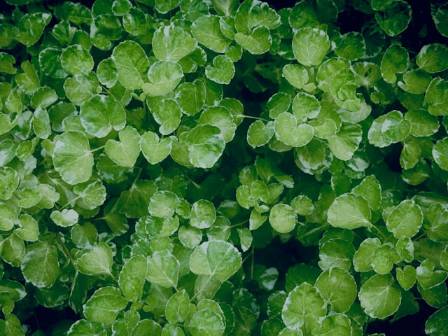
Dollarweed, often called pennywort, is a warm-season perennial broadleaf weed that commonly appears in lawns and turf areas. It belongs to the parsley family and includes several related species, such as marsh pennywort, coastal plain pennywort, many-flowered pennywort, and whorled pennywort.
Vivian Carter
Desk editor
Editor’s note
The full column continues in quiet type below.
Section
Sunday Broadsheet
Dollarweed, often called pennywort, is a warm-season perennial broadleaf weed that commonly appears in lawns and turf areas. It belongs to the parsley family and includes several related species, such as marsh pennywort, coastal plain pennywort, many-flowered pennywort, and whorled pennywort.
This weed spreads through multiple methods, including rhizomes, seeds, and underground tuber-like structures. Rhizomes are horizontal underground stems that continue growing and produce new shoots and roots along their length, making dollarweed highly effective at spreading once established.
Where Dollarweed Grows
Dollarweed can invade many types of turfgrass found throughout North America, especially in warmer southern regions. It prefers hot, humid environments and is particularly common in areas of the southern United States.
In places such as southern Florida, dollarweed can quickly dominate St. Augustine grass lawns. It usually becomes a problem in thin or weakened turf where growing conditions favor weed development.
Common areas where dollarweed appears include poorly maintained residential lawns, golf course fairways and rough areas, athletic fields, recreational spaces, and industrial landscapes.
This weed often develops in locations with excessive moisture, including overwatered lawns, damp soil, and areas with poor drainage.
The size of dollarweed leaves can change depending on mowing practices. Frequent mowing may keep leaves as small as about 1 cm wide, while plants left unmowed can develop leaves measuring 6 to 10 cm across. This difference is often noticeable in golf course turf management.

How to Identify Dollarweed
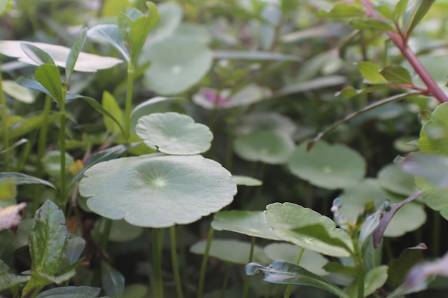
Dollarweed grows close to the ground and is easy to recognize by its bright green, shiny, round leaves with wavy or scalloped edges. The leaf shape resembles a small lily pad, and some leaves can become as large as a silver dollar, which explains the plant’s common name.
The leaf stalk, known as the petiole, is long and narrow and connects directly to the center of the leaf. This creates a distinctive umbrella-like appearance.
During summer, dollarweed produces clusters of small white flowers. These blooms grow at the end of tall stalks and may appear as elongated spikes or rounded umbrella-shaped groups called umbels.
The fruit is green, round, and slightly flattened in appearance.
Dollarweed can sometimes be mistaken for dichondra. The easiest way to tell them apart is by looking at the leaf stalk. Dollarweed has a petiole attached in the middle of the leaf, while dichondra has a petiole connected to the edge of its kidney-shaped leaves.
Growing Season
Dollarweed usually begins appearing in early summer and can survive for up to two years. Its ability to spread through underground rhizomes allows it to persist and return year after year if conditions remain favorable.
How to Manage Dollarweed
Because dollarweed spreads through rhizomes, eliminating it completely can be challenging once it becomes established. The most effective approach combines proper lawn care practices with targeted control methods.
The first step is reducing unnecessary irrigation. Dollarweed thrives in wet conditions, while most healthy turfgrass can tolerate less water than this moisture-loving weed requires.
Maintaining a thick, vigorous lawn with strong roots is another important prevention method. Proper fertilization, regular maintenance, and good turf health can reduce open spaces where dollarweed can spread.
Correct mowing practices are also essential. Always maintain the recommended mowing height for your specific grass type and avoid cutting the lawn too short, as scalping weakens turf and creates opportunities for weeds to invade.
Proper aeration and thatch control can also improve soil conditions and help prevent dollarweed from establishing in lawns.
Chemical Control for Severe Infestations
For heavy dollarweed problems, a post-emergent herbicide containing the active ingredient Penoxsulam can provide effective control. This herbicide targets dollarweed along with several other broadleaf weeds.
The best time to apply post-emergent treatments is during spring. Avoid using herbicides during extreme summer heat because high temperatures can increase stress on the turfgrass.
After applying the herbicide, avoid mowing or removing the dollarweed immediately. Allow the plant foliage to absorb the treatment so the herbicide can move through the shoots and reach the root system.
Since dollarweed is a persistent weed that can remain difficult to control throughout the growing season, repeat applications may be needed in both spring and fall. Always follow product label instructions carefully when applying treatments.
Before using any herbicide, identify your turfgrass species first. Some active ingredients may damage certain types of lawn grass. Carefully review the product label to confirm that the treatment is suitable for your specific turf variety, or consult a local lawn care professional for guidance on grass identification and weed control.
More from the edition
Column · en
7 Exciting Finds When Collecting Rocks on Ocean Beaches
Walking along an ocean beach can be a peaceful and exciting experience for rockhounding enthusiasts. With the gentle sound of waves in the background, every step along the shore could reveal a hidden treasure. Whether you're looking for stones that have been naturally polished by the ocean or fossils that have survived for centuries, beaches offer a variety of collectible items. Below are seven of the most common treasures you can find while rockhounding on the beach.
Column · en
The Best Selling Vehicles Dominating British Roads Right Now
Fully electric vehicles secured an unprecedented thirty percent of the automotive market in the United Kingdom during the month of June, representing the highest performance observed throughout the current year. This surge helped propel overall vehicle registrations upward by eleven point four percent to hit a grand total of 213,166 units, according to recent data published by the Society of Motor Manufacturers and Traders. This exceptional performance marked the strongest showing for the month of June since the year 2019, with the expansion driven entirely by low-emission options as automakers continue to roll out more electric and hybrid models while fresh automotive brands enter the British marketplace. Consumer appetite for electric mobility was further accelerated by climbing fuel prices connected to ongoing geopolitical tensions in the Middle East.
Column · en
The 10 Most Famous Pieces of Street Art in the World
Street art emerged in 1960s Philadelphia, USA, fueled by the creative drive of pioneering artists like Cornbread and Cool Earl. Long dismissed as a lesser art form, this genre encompasses everything from wall tags and public transit murals to building-scale pieces. Though often unauthorized and transient—easy to paint over or remove—street art has nonetheless captured the imagination of countless creators and admirers. At its core, it seeks to make art accessible and visible to the masses, serving as a vehicle for profound messages that spark reflection. Today, some street artworks command million-dollar price tags and stand as celebrated masterpieces. Artsper highlights 10 of the most iconic street art pieces across the globe.
Column · en
Gooderham Tower, Canada’s Most Iconic Flatiron
Often called Toronto’s Flatiron Building, the Gooderham Building stands as one of the city’s most cherished landmarks. Located at the junction of Wellington Street and Front Street, it displays remarkable architectural design while also reflecting the legacy of a leading Toronto family that played a major role in the region’s industrial development.
Column · en
Basil benefits: Nourishing cancer warriors
Basil is a fragrant herb widely used in Iranian, Italian, Greek, Chinese, and Indian cooking. While it is well known for enhancing the flavor of many dishes, basil also has a variety of potential health benefits beyond the kitchen. During cancer treatment, many patients look for supportive approaches that may help improve their quality of life alongside medical care. Including basil as part of a balanced diet may provide valuable nutrients and beneficial plant compounds. Let’s explore how this herb may support cancer patients and overall wellness.
Column · en
Definitive Guide to Decorating Tables with Fresh Flowers
Matching flower varieties and colors to the table’s overall theme helps elevate the mood and visual harmony.