Sunday column
The canyon between us
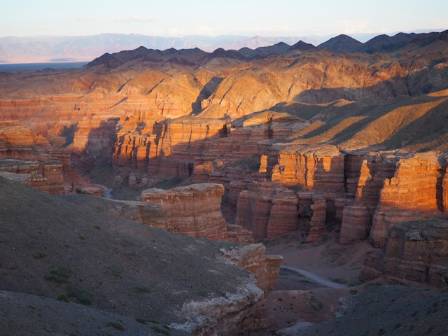
We left the day after Christmas in his truck, the man I loved beside me, traveling west from Colorado toward Utah. We followed the highway to Gateway and then turned onto the road leading to Paradox.
Viola Hartley
Desk editor
Editor’s note
The full column continues in quiet type below.
Section
Sunday Broadsheet
We left the day after Christmas in his truck, the man I loved beside me, traveling west from Colorado toward Utah. We followed the highway to Gateway and then turned onto the road leading to Paradox.
The route carried us through empty canyons where it seemed as though no one else had risen for the day. Every so often, we passed a ranch, quiet and motionless, as though it too were asleep beneath some strange winter spell. The days were crisp and brilliantly clear, with a hard, intense blue stretching across the sky. Along the streams, the willows surprised me with their color. Their bare, twisting branches looked almost flushed, as though the cold itself had stained them red.
We lived on Fig Newtons, talked about the state of the world, and sang with the music playing from the CD player. Every so often, I asked him to stop so I could take a photograph or make a quick sketch. “Photo opportunity!” I would announce, lifting my sketchbook as though it were an official signal.
He found my habit both amusing and intriguing. I would crouch down with the sketchbook balanced on my knee, eagerly drawing a handful of pencil strokes before adding quick touches of color. Once, while I was sketching, he climbed into the back of the truck and took out an orange. Without saying much, he peeled it slowly and shared it with me, giving me one glowing slice after another while I continued to draw.
The Rhythm of a Pilgrimage
A pilgrimage follows a different sense of time. Hours seem to stretch outward, so that a couple of hours can feel like an entire day, while a day or two can seem to contain a whole week. “The kind of journey we’re taking,” I told him, “has a geological name: an entrenched meander.” I had borrowed the phrase from geology, where it refers to a river winding deeply through a canyon. He enjoyed language as much as I did, and I was hoping the expression would make him laugh. It did.
Late in the afternoon, we finally crossed over the shoulder of the La Sal Mountains. The sun had already moved far ahead of us toward the western horizon. Its light spilled across the land like a vast flood, while long blue shadows stretched quickly away. Everything in that blazing landscape seemed outlined in gold, touched with an almost sacred brilliance.
At that moment, I was happier than I knew how to be.
Arriving in Bluff
I believed he was happy too. I still believe it.
By the time we reached Bluff, darkness had settled over the land. We ate rather unimpressive food at the only café that was still open and joked about how nearly everyone inside appeared to have come from somewhere else.
As he studied the map, he asked, “Where should we go next?”
“The Valley of the Gods,” I answered. “And the Goosenecks of the San Juan.”
I offered those destinations to him as though I were presenting gifts. I wanted to be beside him when he experienced them for the first time. I wanted to point toward the landscape and say, “Look at that,” then watch his expression as the view revealed itself to him.
If you have ever visited the Valley of the Gods, you know something of what we encountered: an enormous expanse of desert filled with buttes, mesas, spires, and shapes that seem almost like temples. The earth is so intensely red that it appears to color the undersides of clouds drifting across the sky. Wherever you look, the land seems to rise, twist, tilt, and collapse into itself. Beneath your feet it is intensely physical and solid, yet far away it becomes almost transparent, dissolving into layers of blue and violet like something from a dream.
The Valley of the Gods
The place is magnificent and immense, yet it has absolutely no need for human beings.
The God who seems to inhabit such a landscape is the God of deserts, the God who spoke to Moses and told him to remove his shoes because the ground beneath him was holy.
At the Goosenecks of the San Juan, that sense of sacredness becomes even more overwhelming. There, the landscape appears to have been gathered into enormous hands and compressed into deep, astonishing folds. Six miles of river wind through what amounts to only one mile of land, creating a canyon so improbable that you can stand nearby without realizing it exists until the moment it suddenly appears.
We walked toward the overlook, and the quiet seemed to become even more profound whenever our own small movements interrupted it.
The Silence of Goosenecks
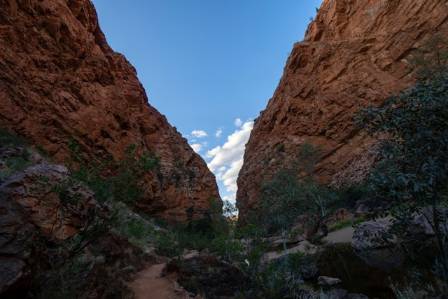
You have to experience the Goosenecks to understand its severity. There is almost nothing there to comfort or distract you. The surrounding cliffs are edged with gray-green shale, while red soil breaks apart beneath your feet. A few hardy plants, dull green and covered with prickles, survive among rocks marked by patches of red and orange lichen.
There is little to look at except the abrupt precipice dropping toward the river far below. The water twists through the canyon in an unfamiliar green ribbon, cold and bordered with ice.
Nothing seems destined to move there except clouds crossing the sky and ravens circling high above. There is no promise of noise, either. Perhaps there will be wind. Perhaps the river. Perhaps the distant call of a raven, the rumble of thunder, or the sudden beating of dark wings.
It is beautiful.
It is also frightening.
When We Saw the Landscape Differently
I turned toward the man I loved, expecting to see the same wonder that I felt shining in his face.
Instead, he looked almost like someone standing at a dull party, wondering why everyone else found it interesting. He glanced around briefly and then walked toward an old, battered interpretive sign, as though the words on it might explain why this place mattered so much to me.
I wished I had prepared him for it. Perhaps I should have warned him about how stark and desolate the landscape would be. Perhaps I should have explained that simply standing in a desert and truly seeing it can be difficult.
We remained on the canyon rim without speaking. Above us, the ravens continued their silent flight.
The Argument in the Truck
Later, as we drove, we had a short and friendly disagreement about an aerial tour he had taken several years earlier.
“You can see much more from an airplane,” he said.
I tried to explain why I disagreed. When you camp among strange, enormous canyons, airplanes can seem almost offensive. Their passage through the sky appears to disturb something delicate, breaking the fragile quiet above the land.
More importantly, I told him, when you simply fly across a landscape like this, you never truly cross its surface. You cannot touch the earth, smell it, listen to it, or feel the warmth of the sun against your skin. From above, you can convince yourself that you understand the place. You might even begin to believe that the earth belongs to you.
Standing on the ground destroys that illusion.
The earth does not make itself easy for us. When you stand directly upon the hard foundation of beauty, you begin to understand just how difficult and uncompromising that beauty can be.
But I could not find the right words to make him understand.
Instead, he laughed, called me a radical, and kissed me.
I decided that kiss was enough.
When Love Comes Apart
Our love ended not long afterward, through a separation that was sudden, strange, and impossible to undo.
Many years have passed, but I still feel sorrow whenever I remember it. Yet my thoughts eventually return to the Goosenecks of the San Juan. I remember standing there without speaking, surrounded by that immense silence, and I remember the wings of the ravens moving above us like guardians.
I still do not understand why love sometimes falls apart. But human relationships seem to me to be as rugged as any landscape: winding, improbable, complicated, and almost impossible to explain. On a map, or viewed from an airplane, those six miles of river folded into one mile of rock do not appear to be such a great distance.
On the ground, the canyon tells another story.
Its two sides rise far apart, carved by the same river. They may appear close from a distance, but they remain separated by deep, steep walls and can never meet again.
Learning to Love the Canyons from Afar
When an injury brought my days of backpacking to an end, I had to discover different ways of loving the canyons.
My heart remains crowded with places I may never walk through again. Sometimes I paint the things I can only experience from a distance. I remember the feel of dust, the warmth held inside stone, and the fragrance of barberry in bloom.
Through a difficult kind of grace, that beauty continues to nourish me. It fills the spaces within my solitude and gives its shape a sense of intimacy, surrounding it with something like wings.
What the River Leaves Behind
I can still hear the silence of the Goosenecks, but I also remember the calm contained within that silence.
It is an ancient and sacred landscape. It has never needed me, and it will not miss me when I am gone. Long after the man I loved and I have disappeared, the rocks and ravens will remain.
The river will continue carving its way deeper into the stone. Clouds will gather their shadows across the land, and then move on.
And the Goosenecks will still be there.
More from the edition
Column · en
Are Smoothies Good for You? A Nutritionist’s Comprehensive Guide
Smoothies have become a staple in modern diets, celebrated for their convenience, versatility, and ability to pack fruits, vegetables, and nutrients into a single, easy-to-consume drink. Whether enjoyed as a quick breakfast on a busy morning, a post-workout recovery snack, or a way to sneak extra veggies into a child’s diet, smoothies offer undeniable appeal. But beneath their vibrant colors and refreshing taste lies a question that divides health enthusiasts: are smoothies truly good for you, or are their high sugar content and blended format undermining their nutritional value? To answer this, we’ll dive into the science, benefits, potential pitfalls, and expert tips to help you make informed choices about incorporating smoothies into your lifestyle.
Column · en
The Giant Panda: A Black-and-White Icon of Conservation
The giant panda (Ailuropoda melanoleuca) is one of the world’s most recognizable and beloved mammals, a member of the bear family distinguished by its striking black-and-white fur and gentle demeanor. Native exclusively to China’s mountainous regions, these iconic creatures have long captured global attention—not just for their adorable appearance, but also for their remarkable conservation journey, which has seen them rebound from the brink of extinction to a status of “Vulnerable” on the IUCN Red List. Beyond their cultural significance as China’s national treasure, giant pandas play a vital role in their forest ecosystems, serving as an umbrella species whose protection benefits countless other plants and animals sharing their habitat. From their specialized diet to their solitary lifestyle, every aspect of the giant panda reflects a unique adaptation to the challenging mountain environment they call home.
Column · en
5 Proven Advantages of Bodybuilding: Beyond Physical Fitness
Bodybuilding is more than just a sport aimed at shaping and enhancing your body. While it undoubtedly helps you achieve a fit and proportionally sculpted physique, its benefits extend to mental health and overall well-being. If you're intrigued by the advantages of bodybuilding, whether it's about comprehensive workout routines, dietary plans, and more, the seasoned trainers at our Silicon Oasis gym can offer valuable insights.
Column · en
The Top 8 Beaches in the World — Tripadvisor’s 2025 Picks
With winter fading, many travelers are already mapping out their spring and summer escapes. If you’re daydreaming about sandy shores, Tripadvisor’s 2025 Travelers’ Choice Best of the Best Beaches list offers plenty of inspiration. The rankings are based on the volume and quality of global reviews collected between October 2023 and September 2023, showcasing some of the most breathtaking coastal destinations across the globe.
Column · en
Seafood Recipes for an Elegant Dinner
Seafood has long been connected with elegant dining, and it’s not difficult to understand why. Its delicate flavor, rich texture, and versatility make it an excellent choice for refined meals. Whether you are planning a festive celebration or simply treating yourself to something special, seafood dishes can instantly make dinner feel more sophisticated.
Column · en
World’s Most Iconic Lighthouses: Beacons of History and Beauty
Lighthouses have long held a special place in the hearts of travelers, with their rich histories and stunning locations captivating imaginations across the globe. For centuries, these towering coastal sentinels have guided ships safely to shore, standing as enduring symbols of hope, resilience, and human ingenuity. From rugged shorelines battered by waves to serene islands tucked away in distant seas, each lighthouse tells a unique story of maritime heritage, while offering breathtaking views that make the journey to visit them well worth the effort. Here, we explore ten of the world’s most famous lighthouses, each with its own distinct charm and significance.