Sunday column
China’s 10 Best-preserved Ancient City Walls
China is a country filled with history, mystery, and inspiration. As one of the world’s oldest civilizations, it has preserved countless traces of its thousands of years of cultural development. Among these surviving treasures are numerous ancient city walls.
Lydia Fairchild
Desk editor
Editor’s note
The full column continues in quiet type below.
Section
Sunday Broadsheet
China is a country filled with history, mystery, and inspiration. As one of the world’s oldest civilizations, it has preserved countless traces of its thousands of years of cultural development. Among these surviving treasures are numerous ancient city walls.
Cities represent important stages in the development of human civilization, while their defensive walls often serve as distinctive symbols of the places they protected. China has a particularly long tradition of constructing fortified walls, and ancient Chinese builders developed remarkably sophisticated techniques for creating durable defensive structures.
Although the Great Wall is undoubtedly the most celebrated example of Chinese fortification, many other historic city walls have also survived in impressive condition. These ten ancient walls are among the best-preserved examples and offer valuable insight into the continuity of Chinese history and civilization.
1. Xi’an Ancient City Wall
Ticket price: RMB 54
Best time to visit: 8:00 a.m. to 10:30 a.m. and 5:00 p.m. to 7:30 p.m. in summer; 4:30 p.m. to 6:00 p.m. in autumn and winter. The wall may also open at night during special celebrations, including the Lantern Festival and Mid-Autumn Festival.
Top things to do: Rent a bicycle at the South Gate for an additional fee and ride around the entire city wall.
Recommended tour: 3-day Xi’an Highlight Tour
The ancient city wall of Xi’an in Shaanxi Province traces its origins to the Tang and Yuan dynasties. It was substantially expanded between 1370 and 1378, during the reign of the Hongwu Emperor of the Ming Dynasty. The wall follows a rectangular layout, measuring approximately 12 to 14 meters across at the top and 15 to 18 meters at its base. Its total perimeter is around 13.7 kilometers.
A moat surrounds the fortification, measuring roughly 20 meters in width and 10 meters in depth. Constructed primarily from sturdy blue bricks, the wall was designed for both strength and defense. Originally, there were four principal gates positioned to the east, west, north, and south. Today, the number of gates has increased to 18, accompanied by imposing gate platforms, watchtowers, and defensive structures serving different purposes.
Xi’an Ancient City Wall is widely regarded as the only completely preserved ancient city wall of its kind in China.
2. Nanjing Ancient City Wall
Ticket price: RMB 10–50
Best time to visit: 8:00 a.m. to 10:30 a.m. and 5:00 p.m. to 6:30 p.m. in summer; 3:30 p.m. to 5:30 p.m. in winter.
Top things to do: Visit the Liberation Gate, which provides broad views over Nanjing and sections of the historic wall.
Recommended tour: 11-day Discovery of China Ancient Capitals
The ancient city wall of Nanjing in Jiangsu Province was begun in 1366 under the Yuan Dynasty and completed in 1386 during the Ming Dynasty. The inner city wall originally extended for approximately 33 kilometers, while about 21 kilometers remain today.
The surviving sections generally stand between 14 and 18 meters high, with the upper portion measuring approximately 8 to 12 meters wide. Nanjing’s historic fortifications once contained 13 gates, of which four have survived.
Where the wall meets waterways, specialized structures such as water gates, sluices, and culverts were incorporated into the defensive system. The wall originally featured 13,616 crenellations, although some portions have suffered damage over time. Nanjing City Wall is recognized as the largest city wall in the world.
3. Pingyao Ancient City Wall
Ticket price: Free
Best time to visit: 8:00 a.m. to 9:30 a.m. and 4:30 p.m. to 6:30 p.m. in summer; 3:30 p.m. to 5:00 p.m. in winter. Nighttime access is also available.
Top things to do: Watch the sunset from Yunlu Temple, where the curved sections of the ancient wall can be viewed from above.
Recommended tour: 2-day Pingyao Highlight Tour
Located in Pingyao County in central Shanxi Province, the Pingyao Ancient City Wall was constructed in 1370 during the Ming Dynasty under the Hongwu Emperor. The fortification stretches for approximately 6 kilometers and rises between 8 and 10 meters. Its base is about 8 to 12 meters wide, while the top measures roughly 3 to 6 meters.
The main body of the wall was built using compacted earth, while white-gray masonry was used to reinforce the exterior surface. Six fortified gates are positioned around the city, each equipped with a drawbridge. Outside the gates are enclosed defensive areas known as wengcheng, which were designed to strengthen the city’s protection.
A total of 72 watchtowers were constructed along the wall. With six fortified gate areas arranged around the city, the overall shape resembles a turtle, which is why Pingyao has traditionally been associated with the nickname “Turtle City.”
The wall is particularly admired for its straightforward and functional construction. Several important sections have since been restored, including Kuixing Tower and portions along the northern, eastern, and southern sides of the city.
4. Jingzhou Ancient City Wall
Ticket price: RMB 40
Best time to visit: Spring, from March to May, and autumn, from September to November.
Top things to do: Try traditional-style weapon activities at the concealed archery range near the East Gate.
The ancient city wall of Jingzhou in Hubei Province is traditionally linked to the Three Kingdoms period, when Guan Yu, the famous general of Shu, was stationed in Jingzhou. The original defensive earthwork was later transformed into a brick fortification during the Southern Song Dynasty.
The wall underwent another major reconstruction in 1646, during the third year of the Shunzhi Emperor’s reign in the Qing Dynasty, and much of the structure has remained to the present day. Its overall layout is irregular and roughly elliptical.
The wall stands approximately 8.83 meters high and measures about 10 meters wide at the bottom. Its total circumference is around 11.3 kilometers, with a diameter of approximately 3.75 kilometers from east to west and 1.2 kilometers from north to south. The enclosed area covers about 4.6 square kilometers.
Jingzhou’s moat formed another important component of the city’s defenses. It extends for approximately 10.5 kilometers, reaches around 30 meters in width, and is about 4 meters deep, creating a substantial first line of protection around the historic city.
5. Xiangyang Ancient City Wall
Ticket price: Free
Best time to visit: 7:00 a.m. to 10:00 a.m. and 5:00 p.m. to 6:30 p.m. in spring and autumn; 6:00 p.m. to 7:30 p.m. in summer.
Top things to do: Climb the tower at the South Gate and visit the Zhaoming Tower.
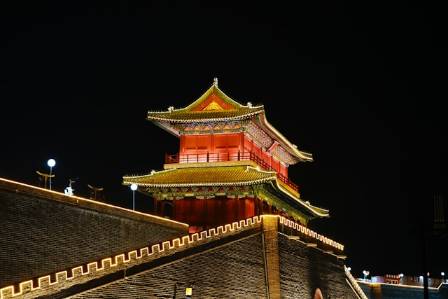
The ancient city wall of Xiangyang in Hubei Province was constructed during the early years of the Hongwu reign in the Ming Dynasty. Six gates were built into the fortification, with each gate connected to a wengcheng and supported by additional defensive installations.
The wall extends for approximately 7.6 kilometers, with an average height of around 8 meters and a width of about 10 meters. Its core was created through successive layers of rammed earth and was reinforced on the outside with large black bricks.
Xiangyang benefited from its natural geography as well. The Han River lies to the north of the city and served as a natural defensive barrier. Moats were constructed along the eastern, southern, and western sides, measuring between 130 and 250 meters across and approximately 2 to 3 meters deep. Their considerable width makes them resemble large lakes rather than conventional moats.
6. Beijing Ancient City Wall
Several surviving sections of Beijing’s historic city walls can still be visited today as part of a Beijing tour.
The wall near the Southeast Turret contains one of the longest and most complete surviving portions of Beijing’s Inner City Wall. It extends from the eastern side of Chongwen Gate toward the eastern side of Bianmen in Chongwen District and includes the Southeast Turret, an important defensive structure.
The remaining wall near the southwestern corner can be found close to the West Bianmen Bridge along the Second Ring Road in Xicheng District. This section represents the ruins of an old city wall that was among the earliest wall remains in Beijing to receive municipal key cultural heritage protection. An arrow tower known as the “Eight Stares” is located inside the area.
The Deshengmen Arrow Tower stands north of Deshengmen Bridge near Beijing’s North Second Ring Road in Xicheng District and represents another surviving element of the city’s former defensive system.
Zhengyang Gate’s watchtower and arrow tower, commonly associated with Qianmen, form the most complete surviving gate complex of old Beijing. The historic structure stands south of Tiananmen Square and remains one of the city’s best-known remnants of its former fortifications.
Recommended tour: 14-day China History Tour on Bullet Train
7. Kaifeng Ancient City Wall
Ticket price: RMB 40
Best time to visit: Spring, from March to May, and autumn, from September to October.
Top things to do: Visit after dark to see historical scenes presented through laser projections.
Kaifeng Ancient City Wall is considered one of the better-preserved city walls in China and is the largest surviving city wall in Henan Province. The structure visible today dates primarily from the Qing Dynasty.
The wall extends for approximately 14 kilometers and stands about 11.3 meters high. It measures around 6.66 meters across at the base and more than 5 meters along the top. Both its inner and outer surfaces are faced with large black bricks, while battlements and defensive positions line the exterior.
The history of Kaifeng’s fortifications reaches much further back. The earliest city in the area is believed to have been established during the Warring States Period. At that time, Daliang, the former name of Kaifeng, reportedly had 12 gates. The eastern gate was known as Ymen and stood near the area of the Iron Pagoda, while the western gate was called Gaomen and was located in what is now western Chenzhuang.
Before the Ming Dynasty, most of the city’s defensive walls were made from earth, apart from the imperial city. Brick was generally reserved for important structures such as gates and towers.
A moat approximately 16.66 meters wide and 3.33 meters deep surrounds the city wall. Drawbridges once connected the city gates across the water. Five principal gates remain associated with the wall, each accompanied by a defensive tower.
8. Dali Ancient City Wall
Ticket price: Free
Best time to visit: 8:00 a.m. to 10:00 a.m. and 6:30 p.m. to 7:30 p.m. in spring and summer; 6:00 p.m. to 7:00 p.m. in autumn and winter.
Top things to do: Explore the morning market near the South Gate for local snacks while enjoying views of the old wall.
Recommended tour: 3-day Dali Tour to Shaxi Ancient Town
Dali in Yunnan, historically known as Yeyu or Purple City, has roots reaching back to the Tang Dynasty. During that period, Geluo Fengzhu, king of the Nanzhao Kingdom, established Dali as the kingdom’s new capital. The former capital was located near the Three Pagodas.
The present-day ancient city was first constructed in 1382, during the 15th year of the Hongwu Emperor’s reign in the Ming Dynasty. The original wall measured approximately 6 kilometers in length and was built as a major defensive enclosure around the city.
Four main gates were positioned on the eastern, western, northern, and southern sides. Each gate had its own tower, known respectively as Tonghai, Cangshan, Chengen, and Anyuan.
Only sections of the northern and southern walls have survived. The South Gate was reconstructed in 1982, and the inscription reading “Dali” above the entrance was written by the renowned Chinese poet Guo Moruo.
9. Fenghuang Ancient City Wall
Ticket price: Included with the admission fee for Fenghuang Ancient City.
Best time to visit: 7:00 a.m. to 9:00 a.m., 5:00 p.m. to 7:00 p.m., and after 7:00 p.m.
Top things to do: Walk along the ancient wall to appreciate Ming and Qing architectural traditions while looking over the Tuojiang River and its riverside stilt houses.
Recommended tour: 6-day Zhangjiajie Tour to Fenghuang Ancient Town
The ancient city wall of Fenghuang in Hunan Province was constructed in 1704, during the 43rd year of Emperor Kangxi’s reign in the Qing Dynasty. The surviving North Gate section has undergone restoration over the years.
The remaining fortification links the North Gate Tower with the East Gate Tower and runs alongside the clear waters of the Tuojiang River. Within the historic town, stone-paved streets, traditional wooden houses raised above the river, and historic buildings such as Chaoyang Palace, the Temple of the King of Heaven, Dacheng Hall, and the Longevity Palace help preserve the atmosphere and appearance of the ancient settlement.
Together, these architectural features provide a glimpse into what Fenghuang looked like during its historic period and demonstrate how the city’s defensive structures were integrated with everyday life.
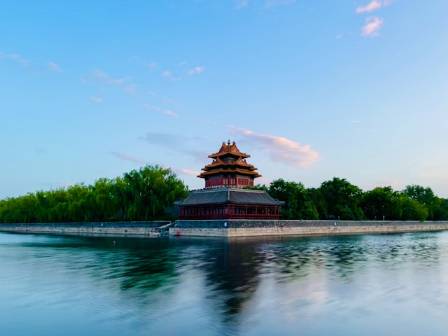
10. The Forbidden City Wall
For more than five centuries, the Forbidden City served as the heart of imperial authority in China. With its enormous collection of palaces and halls, it remains one of the most significant surviving witnesses to Chinese civilization during the Ming and Qing dynasties.
The Imperial Palace is the largest and most complete surviving ancient architectural complex in China. It extends approximately 750 meters from east to west and 960 meters from north to south, covering around 720,000 square meters and making it the largest palace complex of its type in the world.
The Forbidden City was protected by two major defensive barriers. A moat approximately 52 meters wide and 6 meters deep surrounds the palace complex, while an imposing wall rises nearly 10 meters above the ground. The wall measures approximately 8.62 meters across at its base and has a total circumference of about 3 kilometers.
Four principal gates provide access through the wall. Wumen Gate stands to the south, Shenwu Gate to the north, Donghua Gate to the east, and Xihua Gate to the west. Four corner towers reinforce the walls, while their distinctive roofs are decorated with a total of 72 roof ridges.
Together, the walls, moat, gates, towers, and palace buildings form an extraordinary example of traditional Chinese urban planning, architecture, and defensive design.
More from the edition
Column · en
Top Ten Beach Towns for a Cottage by the Sea
If you dream of owning or staying in a cozy cottage by the ocean, these charming coastal towns are worth discovering. Away from the busiest tourist destinations, they offer peaceful beaches, beautiful landscapes, rich history, and relaxing seaside lifestyles. From quiet islands to historic waterfront communities, each destination provides its own unique coastal charm.
Column · en
Donald Trump become 47th president
Former President Donald Trump has triumphed over Vice President Kamala Harris in a stunning victory, securing a second term in the White House after an extraordinary election season marked by unprecedented challenges, including two assassination attempts. Harris, who entered the race just over 100 days before the election, was ultimately defeated by Trump.
Column · en
Eight Classic Sunglasses Styles for Timeless Elegance
The world of sunglasses is awash with fleeting trends, but certain styles effortlessly transcend seasons, years, and even decades. These timeless sunglasses styles are universally flattering and serve as enduring fashion statements.
Column · en
The largest known terrestrial gastropod is the giant African land snail.
A snail is a type of shelled gastropod mollusk. The term is most commonly used to describe land-dwelling snails, especially terrestrial gastropods that breathe through lungs.
Column · en
Black Swan: The World’s Only Completely Black Swan
The Black Swan (Cygnus atratus) is the only swan species in the world with an almost entirely black-colored body.
Column · en
Spring Kite Creative Painting For Children
No child should miss the chance to fly a kite on a grassy field. Sharing a kite-flying experience with parents can become a treasured memory in a child’s early years.