Sunday column
The World's Most Dramatic Sea Cliffs
Towering sea cliffs offer some of the world's most spectacular viewpoints, combining dramatic scenery with the thrilling sensation of standing at the edge of the earth.
Caelis Rowan
Desk editor
Editor’s note
The full column continues in quiet type below.
Section
Sunday Broadsheet
Towering sea cliffs offer some of the world's most spectacular viewpoints, combining dramatic scenery with the thrilling sensation of standing at the edge of the earth.
From Ireland's famous Cliffs of Moher to New Zealand's towering Mitre Peak, these remarkable coastal formations seem to belong in a postcard. With immense stretches of ocean unfolding around them, they offer unforgettable encounters with some of nature's most impressive landscapes.
Cliffs of Moher • County Clare, Ireland
A haven for more than 20 bird species
Stretching for 14 kilometers along Ireland's Atlantic shoreline, the Cliffs of Moher are one of the country's most impressive natural landmarks. At their tallest point, the cliffs rise 702 feet above the Atlantic Ocean. On clear days, visitors can enjoy spectacular views extending toward the Aran Islands, the mountains of Connemara, and the Loop Head lighthouse.
Between April and July, the grassy cliff ledges become nesting grounds for Atlantic puffins, razorbills, and kittiwakes. Careful observers may also notice guillemots gathered around the sea stacks. In the waters below, shark fins and groups of bottlenose dolphins can sometimes be seen moving through the coastal waters of the Wild Atlantic Way.
White Cliffs of Dover • Dover, England
A brilliant white coastal wonder
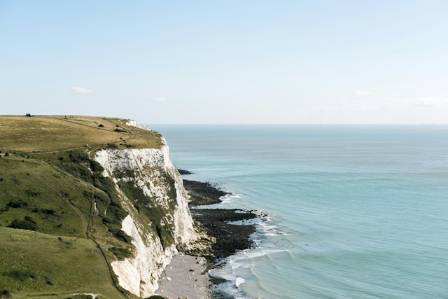
Created nearly half a millennium ago through ice-age flooding, the White Cliffs of Dover are instantly recognizable because of their distinctive pale appearance. Under favorable weather conditions, they can reportedly be seen from the French coastline across the English Channel.
The cliffs are made largely from microscopic remains of calcium-rich algae that accumulated across the seabed during the Cretaceous Period. Alongside their striking natural appearance, they conceal a fascinating history, including wartime tunnels hidden within the cliffs. The surrounding landscape also supports uncommon plants, including the early spider orchid.
Sea Cliffs of Étretat • Étretat, France
Capture the dramatic natural arches
Located along the Normandy coast, the white cliffs and natural stone arches of Étretat create spectacular views across the Atlantic. The area's strong coastal winds also provide opportunities for visitors interested in activities such as air gliding and water sports.
The unusual formations once inspired the famous artist Claude Monet, who repeatedly painted the arches under different lighting conditions to portray their changing appearance. Étretat also has its share of mysterious local stories. One legend tells of the “Chambre des Demoiselles,” a small cave within the cliffs where three sisters were supposedly imprisoned by a local lord and eventually died after running out of food and water.
Paracas Sea Cliffs • Paracas, Peru
Where arid landscapes meet the ocean
Within Paracas National Park, visitors can discover dramatic coastal cliffs that are well worth exploring on foot. The surrounding cliffs attract large numbers of birds, while the nearby beaches are home to abundant sea lions, making the region particularly appealing to wildlife enthusiasts.
The area's remarkable biodiversity is supported by the nutrient-rich Humboldt Current, which turns this otherwise arid coastline into what is often called the “Galapagos of Peru.” As you travel along the red-sand beaches, the loud calls of sea lions may echo from the shore. Nearby, the famous Candelabra geoglyph is carved into a hillside. Standing approximately 600 feet tall, the enormous design has endured the region's powerful coastal winds for more than 2,000 years.
Cliffs of Los Gigantes • Tenerife, Spain
Known as the “Cliffs of the Giants”
Formed by an ancient volcanic landscape, the Cliffs of Los Gigantes rise dramatically above the surrounding beaches and create impressive views from both land and sea. Known locally as Acantilados de los Gigantes, or “Cliffs of the Giants,” these enormous rock walls descend almost 600 meters toward the Atlantic Ocean.
The cliffs provide a natural barrier that helps create sheltered waters where pilot whales and bottlenose dolphins are frequently found. Visitors exploring the coastline by kayak often have opportunities to observe these remarkable marine animals alongside the towering rock walls.
Slieve League Cliffs • County Donegal, Ireland
Once an important Christian pilgrimage destination
Although the Cliffs of Moher receive more visitors, Donegal's Slieve League Cliffs are significantly taller, reaching approximately 1,972 feet. That makes them nearly three times the height of the Cliffs of Moher. Those who hike toward the cliffs can also encounter the remains of an early Christian monastery along the route.
Following the narrow trail known as “One Man's Pass,” hikers are surrounded by immense quartzite cliffs dropping dramatically into the deep blue Atlantic. Changing weather and light frequently cover the peaks in soft golden mist, creating an especially atmospheric setting for photographers hoping to capture the character of the Irish coast.
Hornelen • Fjordane County, Norway
Northern Europe's tallest sea cliffs
Anyone uncomfortable with heights may want to think twice before looking over Hornelen's dramatic edge. The mountain rises more than 2,800 feet above sea level, creating an extraordinary vertical landscape. A boat trip provides another way to experience the cliffs while appreciating their immense scale from the water below.
Although reaching the summit requires a demanding hike, the effort provides hikers with expansive views over deep blue fjords and rugged islands scattered throughout the Norwegian Sea. Hornelen is recognized as Europe's highest sea cliff, and local folklore adds another fascinating element to the landscape. According to legend, witches once gathered on the mountain, giving its sharp and rugged ridges an added sense of mystery.
Preikestolen • Rogaland County, Norway
Also called Pulpit Rock
Reaching the summit of Preikestolen involves a more strenuous hike than some of the other cliffs on this list. However, the dramatic scenery from this unfenced natural landmark makes the physical effort especially rewarding.
The enormous plateau provides a spectacular viewpoint that can make visitors feel as though they have reached the edge of the world. Rising nearly 2,000 feet above the Lysefjord, the famous rock formation overlooks brilliant turquoise water far below. The combination of height, open space, and untouched surroundings creates an unforgettable sense of natural achievement.
Vestmannabjørgini • Vestmanna, Faroe Islands
Boat excursions and remarkable birdlife
The towering cliffs of Vestmannabjørgini are home to some of the Faroe Islands' more elusive bird species. Taking a boat through this dramatic coastal landscape is one of the memorable experiences of visiting the islands. As boats pass through narrow passages and dark man-made caves, the enormous 600-meter-high rock walls rise vertically into the surrounding mist.
The cliffs function like natural skyscrapers for seabirds, with countless birds gathering along the rocky ledges overlooking the islands. Visitors may spot puffins nesting inside grassy burrows or guillemots perched along the jagged cliff faces. Boat trips also reveal ancient sea stacks and natural arches that cannot be reached by road or on foot, offering perspectives unavailable from land.
Mitre Peak • New Zealand
The world's highest sea cliff
Rising vertically to approximately 5,560 feet, Mitre Peak is regarded as one of the world's highest sea cliffs. It is also an extremely challenging mountain to climb, but those who reach its upper elevations are rewarded with extraordinary views that can become a once-in-a-lifetime experience. Rather than being a single isolated summit, the landmark consists of five closely positioned peaks that combine to create one dramatic silhouette.
The mountain received its name because its shape resembles the headwear traditionally associated with a Christian bishop. Over thousands of years, enormous glaciers carved the landscape, leaving behind the steep, dark rock faces that now descend directly toward the deep waters of Milford Sound. Today, Mitre Peak remains one of the most photographed natural landmarks in the Southern Hemisphere, embodying the wild and largely untouched character of New Zealand's South Island.
More from the edition
Column · en
Amazing Girl Drawing Ideas That You Can Easy Handle
Whether you’re just starting out with sketching for fun or an aspiring artist seeking fresh inspiration, this guide offers a variety of drawing ideas for girls — ranging from simple, cute concepts to more detailed anime-style illustrations.
Column · en
Classic Cheesecake
This is a timeless cheesecake—silky, indulgent, and decadently sweet. We’re big fans of a thin layer of sour cream on top; it adds the perfect tangy contrast to the richness of the cake.
Column · en
Black Swan: The World’s Only Completely Black Swan
The Black Swan (Cygnus atratus) is the only swan species in the world with an almost entirely black-colored body.
Column · en
6 Powerful Health Benefits of Happiness
Feeling cheerful does far more than brighten your mood—it can genuinely transform your health. Research from psychology and medical fields shows that positive emotions influence the body in measurable ways. Here are six proven benefits that explain why choosing joy is one of the best things you can do for your wellbeing.
Column · en
Authentic Thai Mango Sticky Rice
Thai mango sticky rice is a globally adored dessert that combines the tropical sweetness of ripe mangoes with the rich, comforting texture of coconut-infused glutinous rice. Known in Thailand as kao niew mamuang, this dish relies on a delicate balance of sweet and salty flavors. While the classic version is brilliant white, modern variations often feature vibrant, naturally dyed rice.
Column · en
5 Fun Facts About Clownfish
Clownfish are famous for their vibrant colors and lively personalities, making them one of the most beloved aquarium fish around the world. Here are five fascinating facts about these colorful marine residents.