Sunday column
Hidden Histories of Famous Animated Figures
Most of us hold fond memories of the cartoons that defined our youth. Whether it was the frantic energy of Donald Duck or the mystery-solving adventures of Scooby-Doo, animation has spent nearly a century evoking deep emotional responses in audiences.
Christopher Miller
Desk editor
Editor’s note
The full column continues in quiet type below.
Section
Sunday Broadsheet
Most of us hold fond memories of the cartoons that defined our youth. Whether it was the frantic energy of Donald Duck or the mystery-solving adventures of Scooby-Doo, animation has spent nearly a century evoking deep emotional responses in audiences. These characters often feel like lifelong companions, yet even the most iconic figures possess backstories and secrets that remain unknown to many fans. From the technical hurdles of animating realistic fur to the surprising linguistic roots of certain sidekicks, the world of animation is full of fascinating trivia.
The Wartime Hiatus and Return of Mickey Mouse
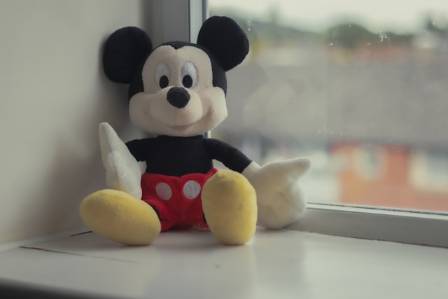
Mickey Mouse stands as perhaps the most universally recognized figure in animation history. Debuting in the 1928 classic Steamboat Willie, he quickly became a global sensation. However, his broadcasting history in the United Kingdom took a dramatic turn during World War II. In 1939, the BBC suspended all television transmissions, fearing that the signals could inadvertently guide enemy aircraft toward London. The final program aired before the blackout was Mickey’s Gala Premier, a 1933 short film. Remarkably, when the BBC finally resumed television service in 1946, seven years later, they chose to begin exactly where they had left off by broadcasting that same Mickey Mouse short first.
The Biological Mosaic of the Beast
Character designers often look to the natural world for inspiration, but few designs are as complex as the titular creature from Disney’s Beauty and the Beast. To create a figure that felt both wild and emotionally resonant, animator Glen Keane visited a taxidermy shop. The resulting character is a hybrid of six different animals. The Beast features the heavy brow of a gorilla, the head and facial hair of a buffalo, the tusks of a wild boar, and the mane of a lion. His physical power is rounded out by the torso of a bear and the agile legs and tail of a wolf.
Overcoming the Fur Challenge in Monsters Inc.
The rapid evolution of digital animation is best illustrated by the technical demands of Pixar’s 2001 hit, Monsters Inc. The character Sulley presented a massive hurdle: he was covered in more than 2.3 million individual hairs. Animating this much fur realistically was nearly impossible with existing technology, as it could take a team of animators up to 12 hours to process a single frame of film. To solve this, Pixar’s engineering team had to develop a proprietary software tool named "Fizt," specifically designed to handle the complex physics of fur and fabric movement.
The Unintended Impact of Pokémon
While animation is generally associated with harmless entertainment, one particular episode of the Japanese series Pokémon had an unprecedented real-world effect. In 1997, the show's 38th episode featured a scene where the character Pikachu used a thunderbolt attack, resulting in intense, rapidly flickering red and blue lights. Shortly after it aired, approximately 700 children across Japan were hospitalized. Medical experts determined that the high-frequency visual effects had triggered photosensitive epileptic seizures in a large number of viewers, leading to a permanent change in how strobing effects are used in animation.
Decoding the Language of Minions
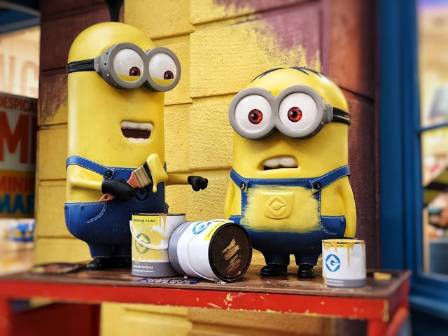
The small, yellow henchmen from the Despicable Me franchise have become global icons, partly due to their eccentric way of speaking. While their dialogue may sound like nonsense, "Minionese" is actually a carefully constructed polyglot language. It draws from a variety of global tongues, including Spanish, English, Italian, Japanese, and French. When a Minion says "para tu," they are using the Spanish phrase for "for you," and "gelato" is simply the Italian word for ice cream. This blend of recognizable roots helps make their gibberish feel surprisingly familiar to international audiences.

More from the edition
Column · en
What is the Empire State Building?
The Empire State Building is one of the most famous attractions in New York City. Standing 102 stories tall, it held the title of the world’s tallest skyscraper for over four decades. Located at the intersection of Fifth Avenue and West 34th Street in Manhattan, the building was originally designed as an office tower. However, its iconic design and incredible city views have made it a major destination for millions of visitors every year.
Column · en
5 Things to Know About Sun Conures
Sun conures possess the capacity for speech, though they typically don't match the talking proficiency of some other parrot species. These birds generally acquire only a small vocabulary, and many individuals never develop the ability to imitate human words at all.
Column · en
The Giant Panda: A Black-and-White Icon of Conservation
The giant panda (Ailuropoda melanoleuca) is one of the world’s most recognizable and beloved mammals, a member of the bear family distinguished by its striking black-and-white fur and gentle demeanor. Native exclusively to China’s mountainous regions, these iconic creatures have long captured global attention—not just for their adorable appearance, but also for their remarkable conservation journey, which has seen them rebound from the brink of extinction to a status of “Vulnerable” on the IUCN Red List. Beyond their cultural significance as China’s national treasure, giant pandas play a vital role in their forest ecosystems, serving as an umbrella species whose protection benefits countless other plants and animals sharing their habitat. From their specialized diet to their solitary lifestyle, every aspect of the giant panda reflects a unique adaptation to the challenging mountain environment they call home.
Column · en
Fascinating Biological Traits and Behaviors of Woodpeckers
Woodpeckers possess a remarkable set of sensory adaptations and physical characteristics that allow them to thrive in forested environments. While many birds rely primarily on sight, woodpeckers may locate concealed prey through a combination of auditory cues and an advanced sense of smell. By striking a tree trunk, they can listen for hollow echoes that reveal the tunnels of wood-boring insects—a technique similar to thumping a melon to check for ripeness. Additionally, the audible sounds made by grubs as they feed on wood can be detected by these birds. Unlike many avian species, woodpeckers also have a keen olfactory sense, allowing them to smell the formic acid excreted by termites, bark beetles, and ants, which often carries a scent reminiscent of tart candy.
Column · en
The King of the Jungle: Unveiling the Behaviors, Ecology, and Conservation of Lions
With its thunderous roar that echoes across savannas and its majestic mane framing a face of raw power, the lion (Panthera leo) has captivated human imagination for millennia, earning the title "king of the jungle" – a moniker that endures despite its primary habitat being grasslands rather than dense forests. More than just a symbol of strength and nobility, the lion is a complex, social apex predator whose behavior, diet, and social structure are finely tuned to its role as a keystone species in African and Asian ecosystems. As human activities increasingly encroach on wild habitats, understanding the lion’s natural biology and the challenges it faces has never been more critical. From the coordinated hunts of lionesses to the tender care of cubs and the threats of habitat loss and poaching, the lion’s story is one of resilience, cooperation, and urgency – a tale that highlights both the wonders of the natural world and the responsibility we bear to protect it.
Column · en
What Are Nebulae And How Are They Formed?
Nebulae are enormous collections of gas and dust drifting through space. The singular form is "nebula," while the plural is "nebulae." These magnificent structures rank among the most beautiful sights in the universe. Over time, astronomers have given many nebulae names inspired by familiar objects and creatures, including birds, insects, sea animals, mammals, and even supernatural figures.