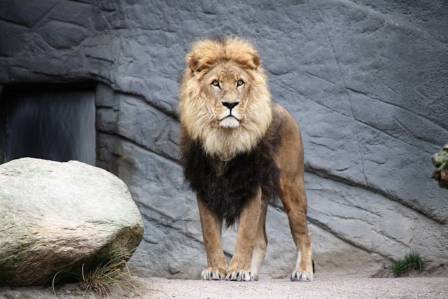
Introduction: The "King of the Jungle" – Beyond the Icon
With its thunderous roar that echoes across savannas and its majestic mane framing a face of raw power, the lion (Panthera leo) has captivated human imagination for millennia, earning the title "king of the jungle" – a moniker that endures despite its primary habitat being grasslands rather than dense forests. More than just a symbol of strength and nobility, the lion is a complex, social apex predator whose behavior, diet, and social structure are finely tuned to its role as a keystone species in African and Asian ecosystems. As human activities increasingly encroach on wild habitats, understanding the lion’s natural biology and the challenges it faces has never been more critical. From the coordinated hunts of lionesses to the tender care of cubs and the threats of habitat loss and poaching, the lion’s story is one of resilience, cooperation, and urgency – a tale that highlights both the wonders of the natural world and the responsibility we bear to protect it.
Social Structure: The Cohesive Dynamics of Lion Prides
Unlike most big cats, which are solitary hunters, lions are highly social animals that live in structured groups called prides, typically consisting of 10 to 15 individuals, though some prides can grow to 30 members in areas with abundant prey. The core of any pride is its female members – lionesses that are usually related, forming a matriarchal network of mothers, daughters, sisters, and grandmothers who remain together for life. This familial bond is the foundation of the pride’s success: lionesses collaborate in hunting, share parenting duties, and defend their territory as a unified force. Male lions, by contrast, are transient members; a pride typically hosts one or two adult males (often brothers) who gain control through fierce battles with resident males and retain dominance for two to four years before being ousted by younger, stronger competitors. The males’ primary role is to protect the pride from intruders, particularly other males seeking to take over and kill existing cubs to sire their own offspring. This social structure offers numerous advantages: group hunting increases the chances of capturing large prey, shared parenting boosts cub survival rates, and collective defense deters predators and competitors, ensuring the pride’s long-term viability.
Vocal Communication: The Power and Purpose of the Lion’s Roar
Lions are among the most vocal big cats, using a diverse range of sounds to communicate with one another – from soft purrs and chuffs to menacing growls and snarls. None, however, is as iconic or powerful as the male lion’s roar, which can be heard up to 8 kilometers (5 miles) away on a clear night. This impressive vocalization is made possible by a specialized larynx and hyoid apparatus that allow lions to produce deep, resonant sounds with minimal effort. A typical roar sequence begins with one or two low, rumbling moans, building to several loud, prolonged roars that fade into grunting huffs. The roar serves multiple critical functions: it declares territorial ownership, warning other prides and nomadic males to stay away; it reunites scattered pride members after a hunt or separation; and it signals mating readiness to potential partners. Female lions also roar, though their calls are higher-pitched and less resonant than males, often used to coordinate hunts or call cubs back to safety. Beyond roars, lions use softer sounds to express affection – such as chuffing (a short, breathy sound) between mothers and cubs – or aggression, with growls and snarls warning off rivals or asserting dominance during feeding.
Dietary Habits: Apex Predators and Opportunistic Scavengers
As obligate carnivores, lions rely entirely on meat for survival, with their diet consisting primarily of large to medium-sized ungulates – hoofed mammals such as zebras, wildebeests, buffalo, giraffes, and various antelope species (including impalas and gazelles) that weigh between 45 and 453 kilograms (100 to 1,000 pounds). These prey species are abundant in the savannas and grasslands where lions thrive, and their size provides enough meat to sustain the entire pride. Lionesses are the primary hunters, using their speed (up to 80 kilometers per hour in short bursts), agility, and camouflage to stalk prey before launching a coordinated ambush. Unlike solitary hunters, lionesses work together to surround and tire their target, minimizing the risk of injury and maximizing the chance of success. While hunting is their primary means of securing food, lions are also skilled scavengers, often stealing kills from other predators like leopards, cheetahs, and hyenas – a behavior that can account for up to 50% of their diet in some areas. This opportunism is a key survival strategy: when prey is scarce, lions will also hunt smaller animals such as hares, birds, reptiles, and rodents, and they have even been known to feed on carrion during droughts or harsh winters. Despite their status as apex predators, lions face competition for food – large hyena clans, in particular, can overpower a small group of lions and steal their kill, leading to violent confrontations between the two species.
Reproduction and Cub Rearing: Ensuring the Pride’s Future
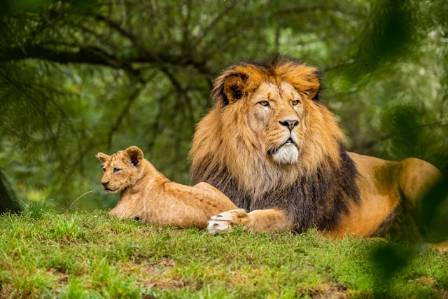
Lions are polygamous, with both males and females mating with multiple partners, though females are restricted to the resident males of their pride. Unlike many seasonal breeders, lions can reproduce year-round, with females entering estrus (heat) every 2 to 3 weeks if they do not conceive, and their fertile window lasting just 3 to 4 days per cycle. During this brief period, a lioness may mate every 20 to 30 minutes, with up to 50 copulations in a single day – a frequent, intense process that stimulates ovulation and ensures paternity for the resident male by preventing other males from mating with her. After a gestation period of approximately 108 days (3.5 months), the lioness gives birth to a litter of 2 to 4 cubs, though litters of up to 6 have been recorded. Cubs are born blind, helpless, and covered in faint spots (which fade as they mature), weighing just 1 to 2 kilograms (2 to 4 pounds). To protect them from predators and male lions (who may kill cubs not their own), the mother keeps her cubs hidden in a den for the first 6 to 8 weeks of life, visiting only to nurse them. After this period, the cubs are introduced to the pride, where they are cared for collectively – all lionesses in the pride will nurse and protect the cubs, regardless of whether they are their own. Cubs begin eating meat at around 3 months old, though they continue nursing until 6 to 8 months, and they start accompanying the pride on hunts to learn skills at around 1 year old. Unfortunately, cub survival rates are low in the wild – only about 20 to 30% of cubs live to adulthood, falling victim to predation, starvation, disease, or infanticide by invading males.
Habitat Diversity: From African Savannas to Indian Forests
The majority of wild lions are found in Sub-Saharan Africa, where they inhabit a range of habitats including savannas, grasslands, open woodlands, and semi-arid regions. These environments are ideal for lions: they offer abundant prey, open spaces for hunting, and sufficient cover for stalking. Lions are highly adaptable, and while they prefer areas with access to water, they can survive in dry regions by obtaining moisture from their prey. In recent decades, however, African lion habitats have become increasingly fragmented due to human activity, with populations now concentrated in protected areas such as national parks and game reserves. A small, distinct population of lions – the Asiatic lion (Panthera leo persica) – survives in the Gir Forest National Park and Wildlife Sanctuary in the Indian state of Gujarat. Unlike their African counterparts, Asiatic lions have smaller manes (in males) and live in smaller prides, often consisting of just 2 to 3 females and one male. Their habitat is a mix of dry deciduous forests, scrublands, and grasslands, and conservation efforts over the past century have helped this once-critically endangered population recover from fewer than 50 individuals in the early 1900s to over 600 today. Despite this success, Asiatic lions remain vulnerable due to their limited range and the threat of human-wildlife conflict.
Conservation Status: Threats Facing Wild Lion Populations
The African lion is classified as Endangered on the IUCN Red List of Threatened Species, with its population declining by an estimated 43% over the past 21 years. Today, fewer than 25,000 wild African lions remain, down from over 100,000 in the early 20th century. The primary threats to lion survival are habitat loss, human-wildlife conflict, poaching, and the illegal wildlife trade. As human populations grow, forests and grasslands are cleared for agriculture, livestock grazing, and urbanization, shrinking the lion’s natural range and reducing access to prey. This encroachment leads to increased conflict: lions often attack livestock when wild prey is scarce, prompting farmers to retaliate by poisoning or shooting lions. Poaching is another major threat, driven by demand for lion bones, skin, teeth, and claws – which are used in traditional medicine, as trophies, or for decorative purposes. Trophy hunting, while legal in some African countries, also contributes to population decline by targeting large, healthy males – the very individuals needed to protect prides and sire cubs. Climate change exacerbates these threats, with droughts becoming more frequent and intense, reducing prey populations and forcing lions to travel farther in search of food and water, increasing their exposure to humans and conflict.
Human-Wildlife Conflict: A Growing Challenge for Lions
Human-wildlife conflict is one of the most pressing issues facing lion conservation today, as the expansion of human settlements and agriculture into lion habitats creates unavoidable competition for space and resources. For rural communities living near lion ranges, the loss of livestock to lion attacks is not just an economic hardship but a threat to their livelihoods – livestock often represents a family’s primary source of income and food. In response, many farmers resort to lethal measures, such as setting poison baits or using spears and guns to kill lions, leading to the deaths of hundreds of lions each year. This conflict is cyclical: as lions lose habitat and prey, they are forced to hunt livestock, which triggers retaliation, further reducing lion populations and disrupting ecosystems. Addressing this issue requires collaborative solutions that balance the needs of humans and lions, such as implementing livestock protection measures (e.g., predator-proof enclosures), providing compensation for livestock losses, and involving local communities in conservation efforts. When communities benefit from lion conservation – through ecotourism revenue or training programs – they are more likely to support measures that protect lions rather than view them as a threat.
Illegal Wildlife Trade: A Silent Crisis for Lion Survival
The illegal wildlife trade poses a silent but devastating threat to lion populations, driven by global demand for lion parts. In parts of Asia, lion bones are used as a substitute for tiger bones in traditional medicine, despite no scientific evidence of their medicinal value. Lion skins, teeth, and claws are also sought after as trophies or decorative items, while live cubs are sometimes captured and sold as exotic pets – a practice that is not only cruel but also unsustainable, as captive-bred lions often cannot be released into the wild and may suffer from poor health and behavioral issues. The illegal trade in lion parts is facilitated by weak law enforcement, corruption, and a lack of public awareness, making it difficult to combat. To address this crisis, conservation organizations are working with governments to strengthen anti-poaching laws, increase surveillance of wildlife trafficking routes, and raise awareness about the impact of the illegal trade on lion populations. Additionally, efforts to reduce demand for lion parts – through education campaigns in consumer countries – are crucial to curbing this destructive practice.
Rescued Lions Find Hope: The Role of Accredited Sanctuaries
For lions that have been injured, abused, or abandoned – whether by poachers, circuses, private breeders, or the illegal pet trade – accredited wildlife sanctuaries provide a lifeline. Unlike zoos, which often prioritize public display, accredited sanctuaries focus on rescuing, rehabilitating, and providing lifelong care for animals that cannot be returned to the wild. These sanctuaries adhere to strict standards of animal welfare, ensuring that rescued lions have access to spacious, naturalistic enclosures, proper medical care, and a diet that mimics their natural feeding habits. Beyond providing a safe haven, sanctuaries also play a critical role in conservation education, teaching the public about the threats facing wild lions and the importance of protecting their habitats. By allowing visitors to observe lions in a natural setting (without exploiting them for entertainment), sanctuaries foster empathy and inspire action, encouraging people to support conservation efforts and advocate for stronger protections for wild lions.
How Lions Tigers & Bears Sanctuary Supports Rescued Lions
Lions Tigers & Bears (LTB), an accredited wildlife sanctuary located in Alpine, California, is a leading example of how sanctuaries can make a difference in the lives of rescued lions. Founded by Bobbi Brink, LTB is dedicated to rescuing exotic animals – including lions, tigers, bears, and other big cats – from abusive or neglectful situations, such as roadside zoos, circuses, and private homes. For rescued lions, LTB provides comprehensive medical care to address injuries, malnutrition, and trauma: veterinary teams work to heal physical wounds, treat illnesses, and support the mental well-being of animals that have often suffered years of abuse. The sanctuary’s enclosures are designed to resemble the lions’ natural habitats, with oak trees, meadows, and hills that allow the lions to roam freely, climb, and engage in natural behaviors like exploring and sunbathing. Diet is carefully tailored to each lion’s needs, with a focus on replicating their wild diet – for example, white lion Louie enjoys racks of ribs, while Jillian and Suri prefer beef – ensuring that the lions receive the nutrition they need to thrive. LTB also prioritizes public education, offering guided tours, school field trips, and educational programs that teach visitors about lion biology, conservation, and the cruelty of the exotic pet trade. By combining rescue, rehabilitation, and education, LTB empowers people to become advocates for lions and other exotic animals, driving positive change for wildlife.
Conclusion: Joining the Fight to Protect Lions
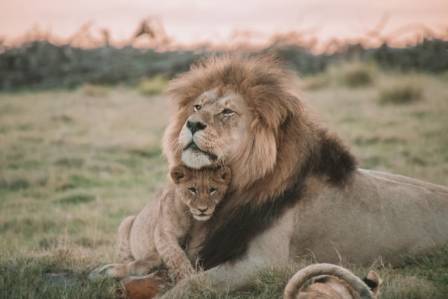
The lion’s reign as the "king of the jungle" is not guaranteed – its survival depends on our ability to address the threats of habitat loss, human-wildlife conflict, and the illegal wildlife trade. From the grasslands of Africa to the forests of India, lions play a vital role in maintaining healthy ecosystems, and their decline would have far-reaching consequences for biodiversity. Fortunately, there are many ways to help: supporting accredited sanctuaries like Lions Tigers & Bears through donations or volunteer work, advocating for stronger wildlife protection laws, reducing demand for lion parts, and supporting community-based conservation programs that benefit both humans and lions. By learning about the lion’s complex biology and the challenges it faces, we can move beyond the myth of the "king of the jungle" and recognize the lion as a vulnerable, vital species that deserves our protection. The roar of the lion is a sound that has echoed through the ages – with our help, it will continue to resonate for generations to come.