Sunday column
A brief history of microchips
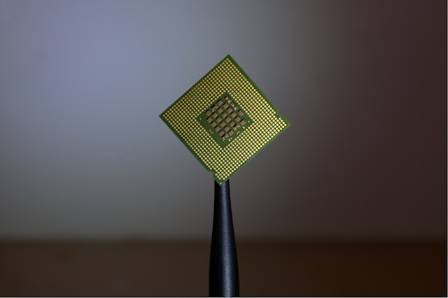
Microchips, also known as integrated circuits, are the core building blocks of today’s electronic devices. They make possible the operation of countless technologies, including computers, smartphones, and advanced digital systems. Looking back at the development of microchips reveals how these miniature components have grown from simple inventions into powerful tools that have reshaped society.
Sophia Brown
Desk editor
Editor’s note
The full column continues in quiet type below.
Section
Sunday Broadsheet
Microchips, also known as integrated circuits, are the core building blocks of today’s electronic devices. They make possible the operation of countless technologies, including computers, smartphones, and advanced digital systems. Looking back at the development of microchips reveals how these miniature components have grown from simple inventions into powerful tools that have reshaped society.
This article explores the major turning points in microchip history, from the creation of the first integrated circuits to the innovations that continue to push semiconductor technology forward.
The Birth of the Integrated Circuit – Who Created the First Microchip?
The development of the microchip began in the late 1950s when two engineers, Jack Kilby and Robert Noyce, independently created early versions of integrated circuits.
In 1958, Jack Kilby achieved a major breakthrough by combining multiple electronic components into a single piece of semiconductor material. This invention became the foundation of the modern microchip.
Shortly afterward, Robert Noyce created a similar design using silicon, a material that offered better performance and greater potential for large-scale manufacturing. His approach became the basis for the production methods used in today’s semiconductor industry.
Kilby and Noyce are widely recognized as the inventors of the microchip. Kilby later received the Nobel Prize in Physics in 2000 for his contribution, while Noyce, who passed away in 1990, was honored for his role in advancing semiconductor technology. Their breakthroughs opened the door to rapid progress in electronics and transformed industries around the world.
Early Uses of Integrated Circuits – From Space Missions to Consumer Electronics
The first applications of integrated circuits were mainly found in military and aerospace projects. Their compact size, dependable performance, and efficient operation made them especially valuable for demanding missions.
One of the most famous early uses was in the Apollo Guidance Computer, which helped guide NASA’s Apollo spacecraft during the historic moon missions in 1969.
After proving their value in aerospace, microchips gradually entered commercial markets. Advances in manufacturing allowed companies to produce chips at lower costs, making them practical for everyday products.
By the late 1960s and early 1970s, integrated circuits began appearing in devices such as calculators, hearing aids, and early personal computers. Their introduction into consumer electronics marked the beginning of the digital era, allowing products to become smaller, faster, and more affordable.
Miniaturization Through Lithography – The Key to Advanced Chip Production
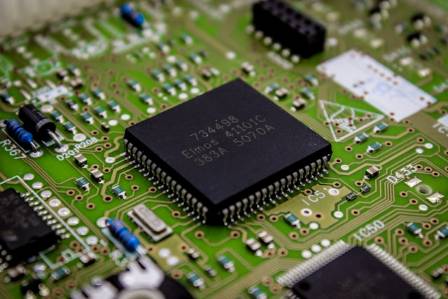
Inside every integrated circuit are tiny components called transistors, which control and amplify electrical signals. During the 1950s, transistors were large and manually assembled, often using materials like germanium. Early production methods relied on basic techniques such as chemical etching and physical masking.
A major improvement came when Jay Lathrop developed photolithography, a technique that used light to create extremely precise patterns on semiconductor surfaces. By adapting microscope technology to reduce pattern sizes, this method allowed engineers to shrink transistors and create increasingly compact chips.
Modern lithography systems have advanced to nanometer-level precision, making it possible to manufacture chips containing billions of transistors. Among all semiconductor manufacturing technologies, lithography remains one of the most important and technically demanding processes.
Moore’s Law and the Rapid Growth of Chip Performance
The incredible progress of microchip technology has been strongly influenced by Moore’s Law, a prediction made by Gordon Moore, co-founder of Intel.
Moore observed that the number of transistors placed on a microchip roughly doubled every two years. This trend resulted in continuous improvements in computing power while reducing the cost of electronic devices.
As semiconductor technology followed this pattern, transistor sizes continued to decrease, allowing chips to become more powerful, efficient, and compact.
During the 1970s, new types of logic chips, including microprocessors and microcontrollers, were introduced. These chips became the “brains” of electronic systems by performing calculations, processing information, and executing commands.
Intel’s 4004 processor, released in 1971, was one of the earliest commercially available microprocessors and represented a major step toward widespread electronic computing.
At the same time, memory chips were developed to store information. RAM and ROM chips became essential parts of electronic devices, providing the storage needed for software, instructions, and system operations. Over time, memory technology continued improving with greater capacity and faster performance.
Personal Computers and Smartphones – Microchips in Everyday Life
The story of microchips is closely connected with the development of modern computing. Without these tiny electronic components, personal computers and mobile devices would not exist in their current forms.
The release of the IBM PC in 1981 marked one of the first major examples of a mass-market computer powered by microchip technology. It helped bring computing capabilities into homes and businesses worldwide.
As microprocessors continued to advance throughout the 1980s and 1990s, they created the foundation for smartphones. These compact devices combine powerful computing, communication, and portable technology in a single product.
More recently, the demand for advanced computing has accelerated the use of Graphics Processing Units (GPUs), especially in artificial intelligence applications. Unlike traditional CPUs, which handle instructions sequentially, GPUs are designed for large-scale parallel processing, making them highly effective for machine learning, deep learning, and complex AI workloads.
Today, microchips are essential components in almost every modern electronic system, including household appliances, medical devices, vehicles, and industrial equipment. Their development has fundamentally changed how people live, work, and interact with technology.
More from the edition
Column · en
Embark on a Journey of Discovery Through World-Famous Paintings with Hidden Meanings
Art is not merely a creative endeavor; it is a profound medium for the expression of human emotions and sentiments. The term "painting" carries different connotations for different individuals. To some, it represents a vibrant adventure, while for others, it serves as a therapeutic means of alleviating stress and anxiety. The undeniable creative power of art and painting is a force that transcends boundaries. Artists around the globe utilize painting as a channel to convey their innermost thoughts and feelings in a visually captivating and aesthetically pleasing manner. In this article, we delve into renowned paintings that conceal hidden meanings.
Column · en
Is It Okay to Wear Brown in the Winter?
Brown is an especially fitting color for the winter season. Its rich, natural character works beautifully with the darker shades typically associated with cold weather, while also bringing to mind warm and comfortable winter settings. It also pairs naturally with many of the fabrics and accessories commonly worn during this time of year. In this guide, we’ll look at why brown is such a strong winter choice, which colors work well with it, and how to build brown outfits for a variety of occasions.
Column · en
Iconic Fried Delicacies from Every Corner of the Globe
Whether you are craving something sugary or a savory treat, fried snacks are a universal favorite. The appealing contrast between a crunchy, golden exterior and a tender, warm interior creates a sensory experience that many find irresistible. While the world offers an endless variety of fried foods, certain classics have achieved legendary status across international borders.
Column · en
Are Flavored Sparkling Waters Bad for You? The Science Behind Bubbly Drinks
Sparkling water has become a ubiquitous beverage in recent years, capturing the attention of health-conscious consumers and casual drinkers alike. By 2020, the global sparkling water market had surged to a staggering $29 billion, a testament to its popularity as a seemingly guilt-free alternative to sugary sodas and sweetened beverages.1 With zero calories, no added sugars, and a refreshing fizz, it’s easy to see why many people view sparkling water as a healthy choice. However, when flavors like lemon, grapefruit, or berry are added, the narrative becomes more complex. To unpack whether flavored sparkling waters are truly good for you, we turn to expert insights from Sean Hashmi, MD, a physician and regional director of weight management and clinical nutrition for Kaiser Permanente Southern California, who breaks down the key considerations—from carbonation’s effects to the hidden risks of artificial sweeteners and the truth behind “natural flavors.”
Column · en
Voyaging through the Spectrum: Decoding Ocean Colors and Marvels
The vast expanses of the world's oceans aren't just boundless bodies of water; they are captivating palettes of color. Have you ever pondered over the reasons behind the deep blues, greens, browns, and even reds that adorn the seas? This article seeks to demystify the wonders of ocean colors, providing an accessible understanding for all. We'll unravel the secrets behind these breathtaking color phenomena, explore their ever-changing nature, and delve into their significance. Join us as we dive into a vibrant journey through the kaleidoscopic wonders of our oceans!
Column · en
Why Picking Up Seashells From the Shoreline Is a Surprisingly Destructive Habit According to Scientists
Gathering discarded exoskeletons and marine snails along the shoreline represents a classic warm-weather tradition. Much like biting into a chilled piece of fruit on a hot evening or observing a late-night meteor shower, picking up seaside keepsakes feels like an innocent element of a coastal getaway. However, this seemingly harmless activity generates an extensive environmental toll that has persisted for decades.