Sunday column
The Art of Flower Arranging: Techniques for Stunning Floral Designs
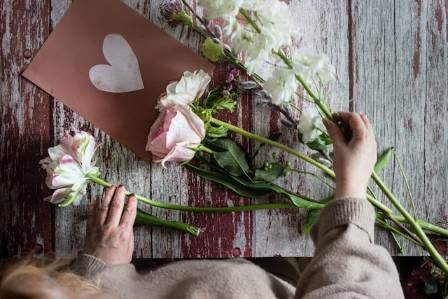
There is often much more intention behind a beautiful flower arrangement than meets the eye. The art of arranging flowers is not simply about placing random stems into a vase. It involves understanding how form, color, proportion, and empty space interact so that the flowers create a visual message rather than merely filling a container.
Lyra Morgan
Desk editor
Editor’s note
The full column continues in quiet type below.
Section
Sunday Broadsheet
There is often much more intention behind a beautiful flower arrangement than meets the eye. The art of arranging flowers is not simply about placing random stems into a vase. It involves understanding how form, color, proportion, and empty space interact so that the flowers create a visual message rather than merely filling a container.
You do not have to be a professional florist to benefit from learning a few basic flower arranging techniques. Once you understand the fundamentals, you will begin to notice how even small changes in placement can completely transform a bouquet.
Here are some straightforward approaches for creating bouquet arrangements that feel balanced, attractive, and thoughtfully designed without making the process complicated.
Start With a Plan, Not a Guess
It is tempting to pick up a handful of flowers and begin putting them wherever they seem to fit. Sometimes that works, but having a basic idea beforehand usually produces a better result. First decide what overall appearance you want. Consider whether the arrangement should be tall, rounded, broad, or compact enough for a tabletop. Once you establish the desired shape, choosing and positioning the flowers becomes much easier. This is also an approach professional Kirkwood florists use.
There is no need to make the planning process complicated. A simple concept helps you recognize which flowers belong in the arrangement and which ones may not work. The same principle applies when professionals develop floral design ideas for special occasions. Before arranging anything, they consider where the finished display will be placed, whether it is a desk, dining table, entryway, or another part of the room.
Choose a Focal Point
A successful floral design usually has one area that immediately attracts attention. This is known as the focal point, or the main visual feature of the arrangement. It might be a particularly large flower, a group of blooms, or a striking difference in color. It does not have to be elaborate; simply select one element that stands out slightly from everything around it.
Without a clear focal point, every flower may compete equally for attention. The result can look acceptable but lack a sense of purpose. Placing one prominent bloom among smaller supporting flowers gives the arrangement a natural sense of direction and makes the overall design feel more composed.
Balance the Colors
Color plays an important role in the appearance of any bouquet. Using too much of a single shade can make an arrangement appear dull, while combining too many intense colors may make it seem chaotic. A better approach is to combine several softer shades with one or two colors that provide a little contrast. This adds dimension while keeping the arrangement visually comfortable.
One useful guideline is to work with odd numbers. Groups of three or five colors often feel more harmonious than combinations divided evenly into pairs or groups of four. You should also consider the brightness of each shade. Combining lighter and deeper colors can provide additional contrast and improve the overall balance. These simple floral design tips can make even an uncomplicated collection of flowers appear carefully planned.
Use Height and Depth
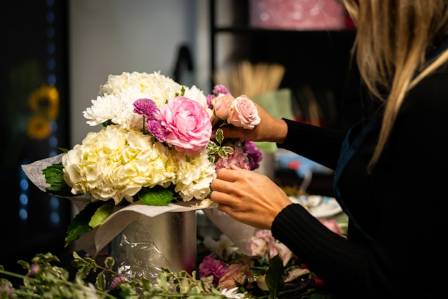
An arrangement in which every flower sits at exactly the same level can appear somewhat flat. Adding differences in height and depth gives the bouquet greater movement and dimension. Place taller stems toward the back or around the center, while allowing a few stems to angle slightly toward the front. Everything does not need to be perfectly symmetrical.
Varying stem lengths can also make an arrangement appear fuller without requiring additional flowers. Sometimes changing the direction of just one stem is enough to alter the entire composition. As you practice, you will begin to recognize that the open spaces between flowers are also part of the design rather than areas that must always be filled.
Don’t Forget Texture
Texture can make an arrangement more interesting even when the color palette is relatively simple. Combine flowers with smooth petals and varieties with more rugged surfaces, or pair broad leaves with narrow foliage. These differences create visual contrast and give the bouquet a more dynamic appearance. Even a few unopened buds positioned beside fully developed flowers can add another layer of interest.
Natural materials such as branches, herbs, and distinctive foliage can also be incorporated into an arrangement. A successful design does not have to consist entirely of conventional flowers. Variety is what matters most. Different textures help the bouquet appear layered and dimensional even when only a small number of stems are used. If you need additional guidance, a skilled Middletown florist can help turn your ideas into a polished and expressive arrangement.
Keep It Loose
An arrangement does not always need to look perfectly controlled. While an extremely precise design may initially appear attractive, a little looseness can make flowers feel more natural and inviting. Avoid packing the stems too closely together and allow some room between the blooms. These small gaps give the arrangement a relaxed and organic character.
Many effective flower arranging techniques ultimately involve recognizing when enough is enough. Once you think the bouquet is finished, step back and evaluate it from a distance. If one side looks too heavy, try removing or repositioning a stem instead of automatically adding another flower. Sometimes reducing the amount of material produces a much stronger result.
You do not need complicated rules or costly equipment to create an attractive floral arrangement. The most important skill is learning to identify what looks unbalanced and making small adjustments until everything works together. A little practice can make the process feel natural and enjoyable, allowing you to create bouquets that look both effortless and intentional.
More from the edition
Column · en
The Genesis and Technical Evolution of Chibi-Robo
A Chibi-Robo is a specialized miniature automaton created by Citrusoft Robotics with the fundamental goal of spreading happiness. Conceived by lead designer George Ebisu, these units stand just 10 centimeters tall and are constructed primarily from aluminum. They operate on electrical power measured in Watts, drawing energy from standard wall outlets via a signature built-in plug. To facilitate consistent performance, most units are paired with a Chibi-House for recharging. Each robot is also accompanied by a dedicated manager or robotic assistant to oversee their daily operations and provide guidance.
Column · en
Best 6 Best Luxury Silk Scarves to Buy
A number of prestigious fashion houses are known for creating exceptionally beautiful and high-quality silk scarves. Among the most notable names are the following.
Column · en
6 of the World’s Most Impressive Piers
Across coastlines worldwide, piers stand as a bridge between land and sea. Some are beloved for their seaside entertainment, others are marvels of history, while a few are celebrated simply for their sheer size. Built from timber, concrete, or steel, these structures have become icons of both engineering and culture. Here are six of the most extraordinary piers on the planet.
Column · en
Fun Facts About Penguins
Penguins are among the most delightful and captivating creatures on the planet, boasting incredible adaptations for life in the ocean and social behaviors that feel surprisingly familiar.
Column · en
Understanding the Fundamentals of Caloric Equilibrium
The concept of caloric balance centers around the comparison of calorie intake with calorie expenditure. It plays a pivotal role in your overall health and physical fitness, as it dictates whether you maintain, gain, or lose weight over time. Remarkably, caloric balance isn't concerned with the origin of calories, whether they stem from proteins, carbohydrates, or fats; it's solely about the grand total of calories ingested versus calories expended.
Column · en
Discovering the Blue Morpho Butterfly: A Marvel of Nature
The Blue Morpho butterfly, scientifically identified as Morpho menelaus, is among the most spectacular and easily recognizable butterflies on Earth. Its brilliant, shimmering blue wings create an unforgettable appearance and have fascinated people for generations. Visitors can also observe these remarkable butterflies at The Butterfly House at Navy Pier in Chicago.