Sunday column
Bluestone Bridge
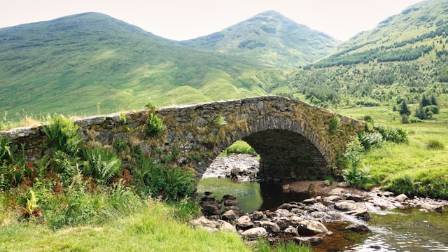
As you cross the present-day Blue Stone Bridge and listen to the peaceful flow of Wissahickon Creek beneath you, it is difficult to imagine how lively and heavily traveled this same spot once was.
Rowan Ellery
Desk editor
Editor’s note
The full column continues in quiet type below.
Section
Sunday Broadsheet
As you cross the present-day Blue Stone Bridge and listen to the peaceful flow of Wissahickon Creek beneath you, it is difficult to imagine how lively and heavily traveled this same spot once was.
The Old Red Covered Bridge and a Busy Crossroads
Before the current Blue Stone Bridge stood here, the Old Red Covered Bridge was one of five covered bridges built in the Wissahickon during the 19th century. It carried a considerable amount of traffic through the area. The site was also home to one of Henry Rittenhouse's mills and its associated dam, while a hillside roadhouse known as The Lotus Inn overlooked the area.
Today, the location has no remaining buildings, but it was once among the busiest junctions along the Wissahickon. Shur's Lane, which approached from the Schuylkill River, intersected with Rittenhouse Lane, which traveled from Germantown along the lower Monoshone Creek. A red covered bridge allowed travelers to cross the creek along an important stagecoach route.
The Crawford Stage Coach line traveled along this rough, deeply rutted road, making the journey anything but comfortable. Passengers endured dusty and jarring rides, while the steep incline on Shur's Lane placed considerable strain on both the horses and the carriage brakes. In 1896, the covered bridge was replaced by the Blue Stone Bridge. Once the Walnut Lane Bridge was completed in 1908, however, this route was no longer used as a major transportation corridor.
The Old Fairmount Guard Station
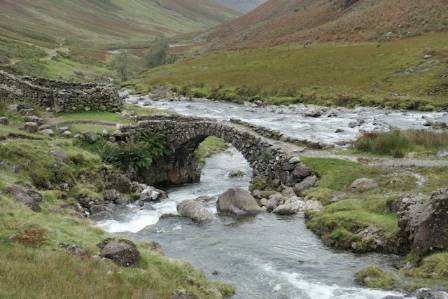
A small stone building can still be found on the western side of the Blue Stone Bridge. The structure was part of the Fairmount Guard station network, of which Ten Box was another example. Early photographs of the Blue Stone Bridge show the building, suggesting that it may have been constructed around the same period as the bridge itself.
Remains of the Rittenhouse Mill
Those who make their way down to the creek can still find traces of the area's industrial past. Among the surviving features are the remains of a wall and portions of a dam that once belonged to Henry Rittenhouse's mill.
Henry Rittenhouse's grist mill and cottage stood beside the eastern bank of the creek. The mill was constructed in 1751 and remained within the Rittenhouse family for more than a century. In 1873, the Fairmount Park Commission purchased the mill and 26 acres of surrounding property for $46,000.
The Rittenhouse mill was not the only mill operating nearby. Approximately 750 feet upstream from the Blue Stone Bridge stood Mathew Holgate's fulling mill, where oil and grease were removed from raw wool. Holgate also operated a ford across the stream, providing another route for traffic traveling between Ridge Avenue and Germantown Avenue.
The Lotus Inn
The Lotus Inn was located close to the Blue Stone Bridge and was among the final seven roadhouses that continued operating during the 19th and early 20th centuries. By the beginning of the 20th century, the inn stood at the bottom of Shur's Lane near Forbidden Drive.
The establishment became a popular stopping place for horsemen, who could pause for refreshments on its balcony covered with honeysuckle and overlooking the stream. During winter, party sleighs drawn by high-stepping horses would make their way to the inn to enjoy its well-known catfish and waffles.
A few traces of one of the inn's outbuildings can still be found along the footpath that follows the remains of Shur's Lane westward from Forbidden Drive, near the western end of the Blue Stone Bridge. The structure was built just beyond the park boundary in the late 19th century, after the Fairmount Park Commission prohibited alcohol within the park. When the park boundaries were later expanded, the building was eventually torn down in 1916.
More from the edition
Column · en
Types of Crab Featured
The article highlights seven crab types prized for their flavor, texture, and culinary appeal.
Column · en
Colourful Macaroons
Enter the playful universe of bright, delicate macarons—sometimes also referred to as macaroons—where every light, airy bite delivers a harmony of taste and a splash of vivid color. These famous French pastries have become a worldwide favorite among dessert lovers, admired for their crisp outer shells and smooth, flavorful fillings.
Column · en
11 Fascinating Facts About Chickens—and Why They Deserve Better Lives
Chickens are the most numerous land-dwelling animals on Earth, yet their intelligence and emotional depth are often overlooked. In many industrial farming systems, they endure harsh and unnatural conditions. The following facts shed light on the remarkable traits of chickens and offer a compelling reason to rethink how we treat them.
Column · en
The Most Impressive Race Cars In The Industry
The world of motorsport is filled with high-octane excitement, from Formula 1 circuits to the unpredictable challenges of rally racing. Across the globe, manufacturers compete in multiple championships each season, constantly pushing engineering limits to build faster, sharper, and more capable machines. A few cars, however, rise above the rest and earn legendary status.
Column · en
Is Coffee Beneficial or Harmful to Your Health?
Coffee contains numerous biologically active compounds that can significantly impact long-term health.
Column · en
World’s most beautiful winter scenes
When winter arrives, some places transform into breathtaking scenes covered in snow, ice, and frost. Frozen lakes, snow-covered villages, icy mountains, and landscapes wrapped in a quiet winter atmosphere reveal a different kind of beauty. These destinations show how cold temperatures can turn ordinary scenery into unforgettable natural masterpieces.