Quiet Type Edition
NTnotedthesundy.com
← Back to desk4 min column
Woodpeckers: The Vital Core of the Woodland

Sunday column

Woodpeckers: The Vital Core of the Woodland

Discover one of the most fascinating avian families in existence as we explore the intricate lives of North American woodpeckers.

H

Henry

Desk editor

Editor’s note

The full column continues in quiet type below.

Section

Sunday Broadsheet

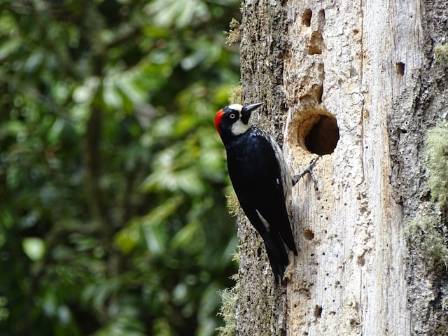
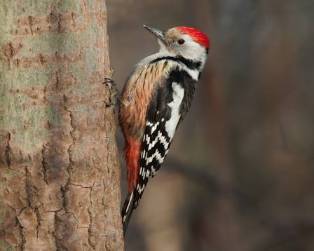
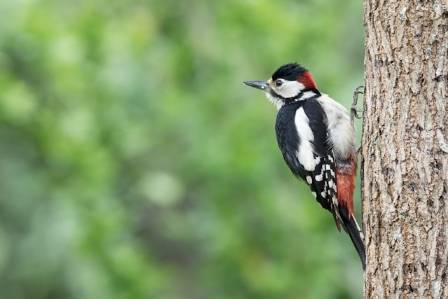
Discover one of the most fascinating avian families in existence as we explore the intricate lives of North American woodpeckers. These birds have developed unique adaptations that make them indispensable to the well-being of the forest, acting as keystone species across a multitude of wooded ecosystems. Their daily routines provide a foundation for countless other organisms, serving as a primary driver of biodiversity in their territories. Drawing from deep field experience and scholarly investigation, this study examines the cultural and natural legacy of these birds, spanning from the northern boreal reaches of Canada to the temperate oak and evergreen forests of the United States, and further into the humid tropical jungles of Mexico and the Caribbean islands. With a focus on 41 distinct species, this exploration details their survival challenges and conservation status, offering a comprehensive look at these legendary birds through detailed observations and ecological guides.

Woodpeckers: The Soul of the Forest

My introduction to the world of woodpeckers occurred in a quite ordinary setting. As a young child, I stood by my kitchen window, watching the rain with boredom and longing for a chance to leave my quiet neighborhood for a place where I could find something more exotic than a common robin.
Suddenly, a bird I initially mistook for a robin caught my eye. As it drew nearer, I noticed a spotted chest, an oversized beak, a striking red facial mark, and vibrant orange hues beneath its wings and tail. It was a male Northern Flicker! With a sudden burst of crimson, the bird vanished. That single encounter sparked a lifelong obsession; I began devouring every book available on flickers and their relatives, discovering how quiet observation and a sense of wonder could turn an ordinary afternoon into something extraordinary.
Ever since that moment, the distinctive call of the woodpecker has guided my travels from local yards to far-off lands. It has motivated me to wake before dawn, following the rhythmic sounds of their drumming to uncover the secrets of their hidden lives before they retreat into the dense canopy. My admiration has deepened as I realized that wherever large trees or cacti exist within a natural setting—be it the snowy forests of Alaska or the lush islands of the Tropics—there is always a woodpecker species present to remind me of the complexity of the environment and the bird's essential role in maintaining it.
The sheer variety of woodpeckers is a source of constant amazement. It is rare to find another animal family where several different species can be observed interacting within a single short stroll. Seeing so many related birds—each with its own size, color pattern, crest, and vocalization—living together in what seems like one environment challenges our understanding of how habitats are defined.
By watching multiple species in the same area, I began to see how each bird targets specific prey, utilizes different tree types, and forages at varying altitudes. Their preferences for nesting times and locations are equally diverse. Each species' unique requirements helped me perceive a complex mosaic of environments where I once saw only a uniform forest, allowing me to better grasp the elements necessary for their continued existence.
Because these birds inhabit every forested region in North America, their personal histories are intertwined with the story of our natural wilderness. Every woodpecker reshapes its environment in ways that provide shelter for other wildlife, bolsters the health of the ecosystem, and ultimately serves human interests. To experience this, we simply need to listen for their sounds, watch for their colorful flight, and appreciate the vibrant life that flourishes because of them.
The study of these forty-one North American species covers their journey from the high Arctic to the Caribbean through the four major seasons of life. This includes the rituals of finding mates and excavating nesting cavities, the methods used to forage for and feed their brood, the transition of young birds as they leave the nest to find independence, and the strategies for surviving harsh winters. Throughout this journey, the specific habitat features required for each phase are highlighted.
In chronicling these avian lives, the narrative focuses on the most iconic behaviors while also examining unique outliers and ecological contrasts. Special attention is given to those species residing in the most vulnerable or delicate environments. By sharing these intimate glimpses into their private histories, the goal is to foster a greater public appreciation for their essential role in the world and to encourage the permanent safeguarding of both the birds and the wild places they call home.

More from the edition

Column · en

Pronghorn: Racers on the Great Plains

Badlands National Park provides a home for the pronghorn, which is sometimes called the pronghorn antelope. Despite its nickname, the pronghorn is not actually a true antelope. However, it shares several characteristics with genuine antelopes found in Africa and Asia. These similarities are the result of convergent evolution, in which unrelated animals independently develop comparable traits because they face similar environmental conditions. The pronghorn is the only surviving species in the family Antilocapridae, and its closest living relatives are actually giraffes.

Column · en

Sago Palm: The Ancient Plant That Isn’t Really a Palm

During a recent trip to the warm, sunny South, I had the opportunity to reacquaint myself with palm-like plants. Like many people from northern regions, my knowledge of palms is fairly limited. One plant, however, has always caught my attention: the Sago Palm. Although its appearance strongly suggests that it belongs to the palm family, it is actually much more closely related to pine trees.

Column · en

6 of the World’s Most Impressive Piers

Across coastlines worldwide, piers stand as a bridge between land and sea. Some are beloved for their seaside entertainment, others are marvels of history, while a few are celebrated simply for their sheer size. Built from timber, concrete, or steel, these structures have become icons of both engineering and culture. Here are six of the most extraordinary piers on the planet.

Column · en

The Ultimate Guide to Buying a Men’s Suit: Fit, Style, Fabric & Accessories

A well-fitted suit is more than just clothing—it’s a powerful tool for making a lasting impression, whether you’re interviewing for your dream job, attending a formal event, or building a professional wardrobe. For first-time buyers, however, navigating the world of suits can feel overwhelming: from understanding fit nuances to choosing the right fabric and accessories, there are countless details to consider. This guide breaks down the process into six essential steps, covering everything you need to know to buy a suit that fits perfectly, functions for your needs, and reflects your personal style. Whether you’re 18 or 80, this comprehensive resource will demystify suit shopping, ensuring you invest in a piece that serves you well for years to come.

Column · en

Ultimate Guide to the Stunning Sky High Adventures in Lujiazui Shanghai

Welcome to the dazzling core of the financial hub of Shanghai, where the spectacular cityscape serves as an incredible display of contemporary design and technological advancement. When you arrive in this energetic neighborhood, you will encounter a magnificent collection of soaring structures that define the city line while showcasing incredible engineering ambition. From the grand twisting mega towers to the distinctive spherical structures, this destination remains an essential stop for anyone wanting to see the absolute finest sights in the region.

Column · en

The Brilliant Beauty of the Black-Throated Sunbird

I have a completely untested theory that a surprisingly large number of bird photographers are people who secretly wish they could make beautiful art. The problem is that this artistic ambition is sometimes paired with very little actual artistic ability—and, fortunately, enough self-awareness to recognize the problem. Bird photography provides a wonderfully convenient alternative. Instead of creating beauty themselves, photographers simply borrow it from nature.