Quiet Type Edition
NTnotedthesundy.com
← Back to desk4 min column
The Black-capped Chickadee: A Tiny Bird With a Remarkable Predator Warning System

Sunday column

The Black-capped Chickadee: A Tiny Bird With a Remarkable Predator Warning System

Animal alarm calls are far more advanced than simple cries meaning “danger is nearby.”

L

lucy

Desk editor

Editor’s note

The full column continues in quiet type below.

Section

Sunday Broadsheet

Humans have a complicated relationship with listening to others. Although people are naturally curious and often interested in information that does not directly concern them, deliberately listening to private conversations is usually considered inappropriate. In nature, however, paying attention to the communications of others can mean the difference between survival and death.
Animals rarely communicate completely alone. Many species benefit from observing or listening to the signals of other animals, especially when those messages contain warnings about nearby predators.
For small animals, this type of information sharing can be particularly valuable. Many different species face the same threats from larger predators, so understanding another animal’s warning signals provides an important survival advantage. Even animals that are not closely related can sometimes recognize and respond to each other’s alarm calls. For example, vervet monkeys react to warning signals from superb starlings, while mongooses can interpret danger calls made by hornbills.

A Complex Language of Danger

Animal alarm calls are far more advanced than simple cries meaning “danger is nearby.” Many species have developed different signals to identify different types of predators or levels of threat.
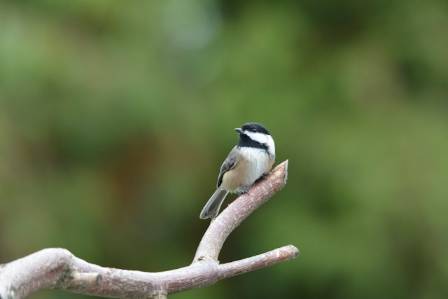
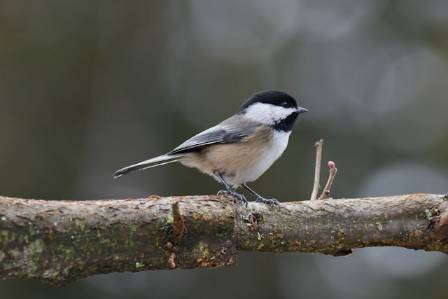
Among the most sophisticated alarm communication systems discovered so far belongs to a small North American songbird: the black-capped chickadee.
Although the chickadee is a tiny and seemingly ordinary bird, its warning calls serve as an important source of information for many other species living nearby.
The bird receives its common name from its distinctive “chick-a-dee-dee-dee” vocalization. It produces this call when it detects danger, such as a perched bird of prey or a predator moving on the ground.
Once this warning spreads through the forest, numerous other bird species may respond. Between 24 and 50 different species have been observed gathering around the predator, a behavior known as mobbing. By surrounding, chasing, and harassing the predator, the birds reduce its ability to attack successfully and force it away from the area.

More Than a Simple Warning Call

The chickadee’s alarm system is not just a general alert. The bird can adjust the structure of its call to communicate detailed information about the threat.
By changing the sound patterns within the call, black-capped chickadees can provide clues about:
the type of predator nearby;
the level of danger;
the size and hunting ability of the predator.
This distinction is especially important because smaller birds of prey can sometimes represent a greater danger than larger ones. Small raptors are often more agile and capable of maneuvering quickly through forests, making them highly effective hunters of small birds.
When a more dangerous predator is nearby, chickadees modify their calls by shortening the interval between the “chick” and “dee” sounds and adding more “dee” notes to the end of the warning.

Other Birds Understand Chickadee Messages


Researchers Christopher Templeton and Erick Greene from the University of Washington investigated whether other bird species could understand these subtle differences in chickadee alarm calls.
They studied the responses of red-breasted nuthatches, a common flock companion of black-capped chickadees.
During the experiment, researchers exposed chickadees to two different owl species under controlled conditions:
one larger owl species;
one smaller owl species that represented a greater threat to small birds.
The scientists recorded the different chickadee alarm calls produced during these encounters. They then played the recordings back to red-breasted nuthatches using hidden speakers placed inside trees.
The nuthatches responded to both types of calls by approaching and investigating the apparent danger.
However, their behavior changed significantly when they heard the warning associated with the smaller, more dangerous predator.
Compared with the response to the larger owl call, the nuthatches:
gathered around the sound source more frequently;
remained there for a longer period;
moved more than twice as close to the speaker;
displayed more wing-flicking behavior, a sign of alarm and excitement;
produced more warning calls themselves.
These reactions showed that the nuthatches were not simply responding to the presence of danger—they were interpreting the detailed information contained within the chickadee’s call.

Why Understanding Chickadee Calls Matters
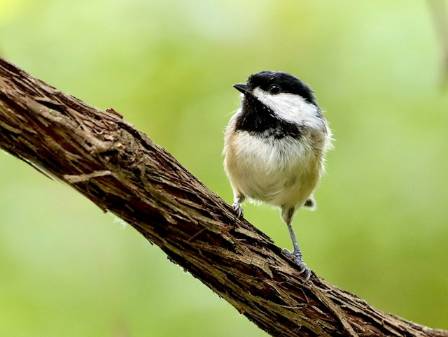
Learning to recognize different chickadee warnings provides important advantages for other birds, especially during winter.
Cold seasons create additional challenges for small birds. Food becomes harder to find, and maintaining body temperature requires large amounts of energy. Responding aggressively to every possible threat would waste valuable resources.
By understanding the differences between ordinary and serious predator warnings, birds such as red-breasted nuthatches can save energy and focus their defensive efforts only when a real danger is present.
The research by Templeton and Greene demonstrates that animals can gather surprisingly detailed information about their surroundings simply by paying attention to the conversations of other species.
The black-capped chickadee may be small, but its voice carries a powerful message—one that helps create a network of survival information throughout the forest.
 

More from the edition

Column · en

7 Reasons Why One Window Can Hold a Lifetime of Memories

Home means different things to different people, and within each home, there's often one cherished spot that carries more meaning than others. For me, that place isn’t in my own house—it’s at my mother’s home in Mumbai. No matter where I go, nothing compares to the comfort and connection I feel sitting by that window in her living room.

Column · en

Pronghorn: Racers on the Great Plains

Badlands National Park provides a home for the pronghorn, which is sometimes called the pronghorn antelope. Despite its nickname, the pronghorn is not actually a true antelope. However, it shares several characteristics with genuine antelopes found in Africa and Asia. These similarities are the result of convergent evolution, in which unrelated animals independently develop comparable traits because they face similar environmental conditions. The pronghorn is the only surviving species in the family Antilocapridae, and its closest living relatives are actually giraffes.

Column · en

Mastering Bike Transportation: A Guide for Every Enthusiast

As bike parks and forest trail centers open their doors, the question arises: How can you transport your bike safely and securely on or in your car? Let's delve into various options, examining the advantages and drawbacks of each. It's crucial to adhere to safety guidelines, including weight limits and proper installation, regardless of the method chosen.

Column · en

Chrysanthemum care tips

Chrysanthemum is among the most significant cut flowers in the global floral industry. It is highly appreciated for its long vase life, diverse flower shapes, and dependable quality throughout the entire supply chain. Since it is available in every season, Chrysanthemum has become an essential choice for flower growers, distributors, retailers, and florists due to its adaptability and consistent performance.

Column · en

Discovering the Blue Morpho Butterfly: A Marvel of Nature

The Blue Morpho butterfly, scientifically identified as Morpho menelaus, is among the most spectacular and easily recognizable butterflies on Earth. Its brilliant, shimmering blue wings create an unforgettable appearance and have fascinated people for generations. Visitors can also observe these remarkable butterflies at The Butterfly House at Navy Pier in Chicago.

Column · en

Bizarre Animal Renderings from a Sixteenth-Century Natural History Text

Between the years 1551 and 1558, Conrad Gessner, a Swiss physician and naturalist, released his monumental five-volume work, Historiae animalium. Spanning 4,500 pages, it became the most widely circulated natural history encyclopedia of its era. Gessner aimed to categorize every known creature by synthesizing the writings of ancient scholars like Aristotle and Pliny with contemporary reports from explorers. His volumes included both real animals and creatures now recognized as purely mythical. While Gessner often vouched for the credibility of his sources, he was occasionally skeptical; for instance, he famously questioned the anatomical logic of a multi-headed hydra.