Sunday column
Secrets of the Incredible Green Sea Turtle and the Urgent Fight to Save It
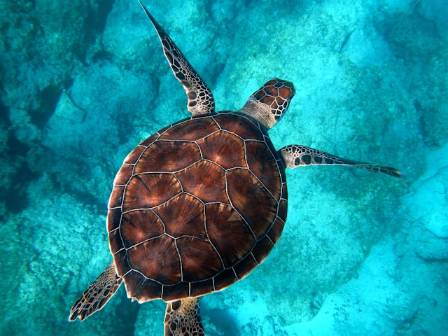
The green sea turtle stands out as the absolute largest species among all hard-shelled marine turtles. Unlike their omnivorous or carnivorous relatives, adult green sea turtles are highly unique because they live primarily as herbivores, consuming vast quantities of seagrasses and marine algae. On rare occasions, they might supplement this plant-based diet with sea sponges, various small invertebrates, or discarded fish scraps when they happen to encounter them. Interestingly, the common name of this creature does not stem from the coloration of its external shell, but rather from the distinctly green tint of its internal fat layer. Early observers believed this unusual internal coloration was entirely due to their specialized vegetarian diet, though modern researchers now know that other marine turtle species can also possess greenish subdermal fat.
Leo Whitaker
Desk editor
Editor’s note
The full column continues in quiet type below.
Section
Sunday Broadsheet
The green sea turtle stands out as the absolute largest species among all hard-shelled marine turtles. Unlike their omnivorous or carnivorous relatives, adult green sea turtles are highly unique because they live primarily as herbivores, consuming vast quantities of seagrasses and marine algae. On rare occasions, they might supplement this plant-based diet with sea sponges, various small invertebrates, or discarded fish scraps when they happen to encounter them. Interestingly, the common name of this creature does not stem from the coloration of its external shell, but rather from the distinctly green tint of its internal fat layer. Early observers believed this unusual internal coloration was entirely due to their specialized vegetarian diet, though modern researchers now know that other marine turtle species can also possess greenish subdermal fat.
These remarkable reptiles maintain a truly global footprint, choosing nesting locations across more than eighty sovereign nations and inhabiting the coastal waters of over one hundred and forty countries. Throughout human history, these creatures suffered massive population collapses worldwide due to intensive commercial exploitation for their meat, fat, and eggs. Today, numerous nations have enacted strict legal prohibitions against harvesting these marine reptiles or gathering their eggs. Despite these protective regulations, illegal hunting for meat and the black-market shell trade continues to persist in specific regions, while the poaching of eggs for human consumption remains a major obstacle to their comprehensive recovery. Modern survival is further compromised by accidental entanglement in commercial fishing equipment, the destruction of critical nesting beaches due to rapid coastal modernization, shifting global climate patterns like rising ocean levels and escalating temperatures, and fatal collisions with motorized watercraft.
Global conservation organizations and their international partners remain fully committed to shielding and restoring these fragile populations across the globe. Researchers deploy an array of cutting-edge methodologies to track, study, and protect these vulnerable marine animals. By collaborating closely with local communities and international stakeholders, conservationists formulate comprehensive recovery strategies designed to safeguard vital aquatic habitats while funding extensive monitoring initiatives to ensure long-term population stability.
Current Global Population Trends
These marine reptiles are distributed across the world in eleven distinct population groups that receive specialized legal protections under endangered species mandates. Among these isolated segments, three are officially classified as critically endangered while the remaining eight are recognized as threatened. The most significant nesting aggregations on Earth are concentrated in a few specific geographical hotspots. At Tortuguero along the Caribbean coastline of Costa Rica, an average of thirty thousand female turtles arrive to lay eggs each nesting season. Meanwhile, Colola Beach located in Michoacan Mexico welcomes approximately twenty-eight thousand nesting females annually. The largest gathering occurs at Raine Island on the Great Barrier Reef in Australia, where peak breeding years can see up to sixty thousand female turtles utilizing the island and its adjacent coral reefs.
Beyond these major nesting centers, these turtles lay eggs across more than eighty nations. Within American waters, nesting activity is concentrated throughout the southeastern states including Florida, Georgia, South Carolina, and North Carolina. Furthermore, active nesting occurs across American Caribbean territories such as Puerto Rico and the United States Virgin Islands, throughout the Hawaiian archipelago, and across various western Pacific territories including Guam, American Samoa, and the Commonwealth of the Northern Mariana Islands. Detailed status evaluations conducted over the past decade continue to provide deeper insights into the demographic health and distribution of these widely dispersed population segments.
Physical Characteristics and Appearance
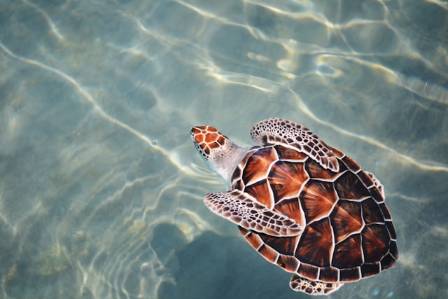
As the largest representatives of the hard-shelled marine turtle family, adult individuals possess exceptionally massive bodies contrasted by a disproportionately small head. A fully grown adult typically measures between three and four feet in total length and weighs anywhere from three hundred to three hundred and fifty pounds. Their upper shells exhibit shades of dark brown, gray, or olive green, which contrast sharply with their much lighter underside that ranges from pale yellow to pure white. Immature individuals display highly intricate, sunburst-like coloration patterns on their shells, which frequently leads observers to mistake them for hawksbill turtles. Their primary shell structure features five central scales running down the midpoint aligned with four lateral scales on each side of the shell. Other distinguishing physiological features include a uniquely serrated jawline and a pair of large scales positioned directly between their eyes. Newly emerged hatchlings feature a dark gray or pitch-black upper shell, a white lower belly, and distinct white borders highlighting the edges of their shell and swimming flippers.
Natural Behavior and Dietary Patterns
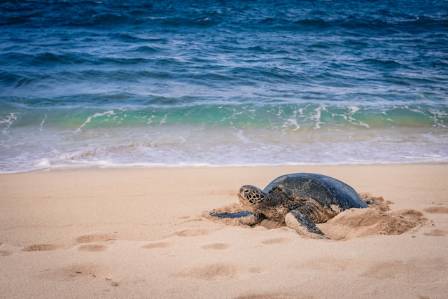
Like all marine turtles, these creatures are true reptiles and must periodically rise to the ocean surface to inhale atmospheric air. Mature females exhibit incredible navigational instincts, travelling immense distances across the open ocean to return to the exact coastal regions where they originally emerged as hatchlings decades prior. These animals migrate hundreds or even thousands of miles between their rich feeding grounds and their designated reproductive beaches. When the time comes to deposit eggs, they behave as solitary creatures that choose to crawl ashore exclusively under the cover of darkness.
The complex life cycle of these reptiles progresses through multiple distinct developmental phases from the moment they leave the egg until they reach full maturity. Upon emerging from their subterranean nests, tiny hatchlings immediately journey into deep offshore waters, spending several developmental years drifting within open ocean environments. Eventually, these older juveniles migrate away from pelagic habitats to settle in shallow coastal feeding zones, where they transition into adulthood and spend the majority of their remaining lives. Every two to five years, mature adults undertake arduous open-ocean journeys from these coastal feeding grounds back to the specific waters adjacent to their natal nesting beaches to reproduce.
These creatures hold the title of being the sole herbivorous marine turtle species in existence. Their daily sustenance revolves around marine algae and seagrass beds, though they will occasionally consume opportunistic animal matter such as discarded fishing bait or dead fish if the opportunity arises. Notably, the specific populations residing in the Eastern Pacific demonstrate a tendency to consume a higher proportion of animal prey compared to their global relatives. Before migrating to nearshore feeding environments, young open-ocean juveniles rely on the rich plant and animal biodiversity found within floating oceanic drift ecosystems, particularly massive floating mats of marine vegetation.
Geographic Distribution and Habitats
These marine reptiles maintain a vast global distribution that primarily spans the subtropical and temperate zones of the Atlantic, Pacific, and Indian Oceans, alongside the Mediterranean Sea. Within the American Atlantic and the neighboring Gulf of America, these animals are regularly observed in shallow inshore and coastal waters extending from the coastline of Texas all the way north to Maine, as well as throughout Puerto Rico and the United States Virgin Islands.
Across the eastern expanses of the Pacific Ocean, individuals have occasionally been documented as far north as the southern coast of Alaska, though their primary concentration remains clustered from southern California down to northwestern Mexico. In other parts of the American Pacific, these reptiles are commonly found throughout the Hawaiian islands, American Samoa, Guam, and the Commonwealth of the Northern Mariana Islands. Because these turtles routinely cross international boundaries during their extensive oceanic migrations, coordinated multinational cooperation remains absolutely vital for their overarching survival and ecological recovery.
Life Expectancy and Reproductive Cycles
These animals possess remarkable longevity and are capable of surviving for at least seventy years or even longer in the wild. Female individuals require a significant amount of time to reach reproductive maturity, typically taking between twenty-five and thirty-five years before laying their first clutch of eggs. Every few years, mature adults participate in long-distance reproductive migrations, with females navigating back to the precise nesting beaches where they were born decades in the past.
Within American regions, the breeding period commences during the late spring months. Male turtles mate with females within shared feeding grounds, along established migratory routes, and directly outside major nesting beaches. A single female deposits roughly one hundred and ten eggs within an individual nest, and she will repeat this nesting process every two weeks over the course of several months before finally departing the area to return to her distant feeding grounds. After spending approximately two months incubating beneath the warm beach sand, the eggs rupture and the tiny hatchlings emerge to make their dangerous trek to the sea. The newborns guide themselves toward the water by moving away from the dark silhouettes of landward dunes or coastal vegetation, crawling intentionally toward the brightest available horizon, which on undisturbed beaches corresponds to the open night sky reflecting over the ocean surface.
Major Modern Threats to Survival
Accidental capture in commercial and recreational fishing apparatus stands as one of the most immediate hazards facing these creatures globally. When turtles become inadvertently trapped in nets or hooked on lines, they can easily drown or suffer catastrophic injuries that lead to long-term debilitation or death, such as swallowing sharp metal hooks or experiencing severe flipper strangulation. This unintentional entanglement occurs worldwide, with trawls, gillnets, longlines, standard hook-and-line gear, and heavy commercial traps serving as the primary culprits behind these accidental captures.
Historically, these reptiles were slaughtered in massive quantities to supply global demands for their fat, meat, and eggs, a practice that directly triggered the catastrophic drop in their global numbers. Although this harvest is completely illegal within American borders, the hunting of these turtles and the systematic collection of their eggs remains legally permitted or unmonforced in several nations, severely undermining international conservation initiatives.
The rapid expansion of coastal infrastructure combined with rising ocean levels due to shifting environmental factors is causing a severe reduction in available nesting beach habitats. Human modifications to coastlines introduce destructive elements such as intense beachfront artificial lighting, shoreline reinforcement structures, and vehicular driving on fragile beaches. The installation of hard coastal barriers like seawalls can completely eliminate the dry sand zones required for successful egg incubation. Furthermore, bright artificial lights near nesting beaches deter mature females from crawling ashore and dangerously disorient newborn hatchlings as they attempt to locate the ocean after emerging from their nests.
Collisions with various motorized watercraft represent another severe hazard when these reptiles swim near the ocean surface. Boat strikes regularly inflict fatal wounds or severe trauma on large juveniles and mature adults, particularly near busy shipping lanes, ports, and highly developed coastlines. Geographies characterized by intense maritime traffic, such as crowded public marinas, boat ramps, and coastal inlets, pose an exceptionally high risk. Nesting females are uniquely vulnerable to these vessel strikes when they congregate near the shore during the active breeding season.
Escalating marine pollution and floating debris continuously degrade both nearshore and deep-ocean habitats. Major industrial disasters, such as the historic Deepwater Horizon oil spill, have left long-lasting negative impacts on nesting females, fragile eggs, developing hatchlings, and adult populations throughout the Gulf of America. The consumption of synthetic marine debris represents an equally deadly hazard, as these turtles frequently mistake human garbage for natural prey. They regularly ingest discarded fishing lines, balloons, plastic shopping bags, microplastic fragments, and floating tar balls, while also becoming fatally entangled in abandoned or ghost fishing gear drifting through the sea.
Changing global climatic parameters, particularly rising sand temperatures, can prove lethal to developing embryos or radically skew the sex ratios of newborn populations due to temperature-dependent sex determination mechanisms. Rising sea levels and severe storm cycles actively reshape beach topographies, leading to severe erosion that can easily flood or completely wash away hidden nests. Additionally, warming ocean temperatures are expected to alter the distribution and abundance of critical food resources, forcing unexpected shifts in the migratory routes, foraging boundaries, and nesting timelines of these reptiles, while also contributing to mass winter stranding events along the American eastern seaboard.
Finally, these marine reptiles are increasingly afflicted by a debilitating medical condition known as fibropapillomatosis, a disease that triggers the growth of large external and internal tumors. These massive growths severely impede a turtle's capacity to swim, seek out food, or escape predators, eventually resulting in systemic organ failure or death. This disease is disproportionately common among green sea turtles, and growing scientific evidence strongly correlates its elevated prevalence with heavily polluted or degraded coastal marine habitats.
Systematic Scientific Classification
From a biological standpoint, this animal belongs to the multicellular animal kingdom known as Animalia and is categorized under the phylum Chordata due to its internal skeletal structure. It is classified within the traditional reptilian class of Reptilia and falls under the specific shelled order designated as Testudines. Furthermore, it is a member of the hard-shelled marine turtle family recognized as Cheloniidae, placed within the genus Chelonia, and is defined specifically as the unique species known scientifically as Chelonia mydas.
More from the edition
Column · en
Best Electric Scooters for Speedy and Safe City Rides
Electric scooters have transformed from a trendy curiosity into a reliable way to zip through city streets. They’re portable, fun, and eco-friendly, but choosing the right one is key. Build quality, safety certifications, and ease of use all matter when deciding which scooter will carry you through daily commutes. Below are some standout models for 2025 that balance performance with practicality.
Column · en
5 Things to Know About Sun Conures
Sun conures possess the capacity for speech, though they typically don't match the talking proficiency of some other parrot species. These birds generally acquire only a small vocabulary, and many individuals never develop the ability to imitate human words at all.
Column · en
5 Spanish Castles You Can Stay In
Across Spain, the countryside is filled with ancient castles and palaces that have watched over towns and villages for hundreds of years. Although kings, queens, and nobles no longer inhabit these historic buildings, many of them have been carefully restored and transformed into unique hotels. Staying in one of Spain’s Paradores offers the rare chance to step directly into history and experience life in a medieval or Renaissance setting. Here are five remarkable castle hotels where guests can enjoy a truly royal stay.
Column · en
Why the CN Tower Stands Out in Toronto
Towering over Toronto’s skyline at 553.3 metres (1,815 ft), the CN Tower became the world’s tallest free-standing structure from its opening in June 1976 until it was overtaken in 2007. Initially conceived as a broadcast mast, its designers soon expanded the vision—adding elevators, observation decks, a rotating restaurant, shops, and daring experiences. Today it draws more than 1.5–2 million visitors each year to witness its blend of architecture, views, and excitement.
Column · en
Egypt Beyond the Pyramids: Temples & Wonders
When travelers begin planning a journey to Egypt, the first image that usually comes to mind is standing before the legendary Pyramids of Giza. And for good reason—the pyramids are one of the greatest wonders of the ancient world. However, Egypt has far more to offer beyond this iconic landmark, with countless temples, museums, and historical sites waiting to be explored.
Column · en
Fundamentals of Clay Modeling: A Beginner's Guide to Sculpting
Engaging with three-dimensional art provides a unique and rewarding creative challenge. Sculpting with clay is an excellent way to broaden your artistic horizons, though the medium can feel intimidating for those working from a home studio for the first time. By understanding the different materials available and mastering a few foundational techniques, you can successfully transition from two-dimensional sketches to physical forms.