Sunday column
Egypt Beyond the Pyramids: Temples & Wonders
When travelers begin planning a journey to Egypt, the first image that usually comes to mind is standing before the legendary Pyramids of Giza. And for good reason—the pyramids are one of the greatest wonders of the ancient world. However, Egypt has far more to offer beyond this iconic landmark, with countless temples, museums, and historical sites waiting to be explored.
Evelyn Monroe
Desk editor
Editor’s note
The full column continues in quiet type below.
Section
Sunday Broadsheet
When travelers begin planning a journey to Egypt, the first image that usually comes to mind is standing before the legendary Pyramids of Giza. And for good reason—the pyramids are one of the greatest wonders of the ancient world. However, Egypt has far more to offer beyond this iconic landmark, with countless temples, museums, and historical sites waiting to be explored.
Before visiting Egypt, I also knew very little about destinations outside the pyramids. I joined a group tour and relied on the organizers to handle the planning, so I did not spend much time researching beforehand. Once I started discovering the incredible places throughout the country, I quickly became fascinated. Egypt’s thousands of years of history, remarkable architecture, and preserved ancient culture make it a destination that is almost impossible not to admire.
With its strong commitment to protecting its heritage, Egypt is filled with extraordinary archaeological sites, ancient temples, and museums. These places allow visitors to follow in the footsteps of pharaohs and experience the stories of one of the world’s oldest civilizations. Many of these attractions are also included in guided Egypt tours, making group travel a convenient option for those who prefer extra support while exploring.
Here are some of the most incredible Egyptian wonders to visit besides the famous pyramids.
Philae Temple
Located near Aswan, Philae Temple is one of Egypt’s most fascinating historical sites. Unlike many other temples, it sits on an island in the middle of the Nile River and can only be reached by boat.
The temple was not originally built on its current island location. During the 1960s, the construction of large dams along the Nile threatened many ancient monuments. Recognizing the importance of preserving these treasures, Egyptian authorities worked with archaeologists to relocate several sites, including Philae Temple.
The entire temple complex was carefully dismantled into approximately 75,000 individual pieces, moved to a safer location, and rebuilt exactly as it had been before. Seeing the detailed carvings up close reveals both the incredible craftsmanship of ancient builders and the remarkable achievement of modern preservation efforts.
Dedicated to the gods Osiris and Isis, Philae Temple contains detailed carvings throughout its walls, columns, ceilings, and chambers that tell stories from Egyptian mythology. Inside the temple is a sacred room containing an offering table that was once used only by the pharaoh. The king would visit during special ceremonies to make offerings to the gods before the chamber was closed until the next ritual.
Valley of the Kings
The Valley of the Kings is one of Egypt’s most famous archaeological locations. Located near Luxor, it served as the main burial ground for Egyptian pharaohs between approximately 1500 BC and 1200 BC.
More than 60 tombs have been discovered in this valley, many containing some of the finest examples of ancient Egyptian painted hieroglyphics. The walls and ceilings of the tombs are decorated with scenes showing the pharaoh’s journey into the afterlife, creating an unforgettable view of ancient beliefs and artistic skill.
The tombs were carved directly into the surrounding mountains, so visitors should prepare for strong sunlight and heat while exploring the area. Wearing a hat, carrying water, and applying sunscreen are highly recommended.
Only a limited number of tombs are open to visitors at any given time. Standard admission usually includes entry to three tombs, while additional tickets are required for special sites such as King Tutankhamun’s tomb. The detailed artwork inside remains remarkably vibrant despite being more than 3,000 years old.
Memphis and Saqqara Pyramid
For those interested in the origins of Egyptian pyramid construction, Saqqara is a must-visit destination. Located near Cairo, this site contains the Step Pyramid of Djoser, the first pyramid ever built in Egypt.
Visiting Saqqara provides a chance to see how pyramid design developed before the famous pyramids of Giza were created. The burial chambers contain impressive hieroglyphic carvings that remained protected beneath the sand for thousands of years. Some of these scenes are among the only surviving artworks showing ancient pyramid construction methods.
Nearby Memphis was once the capital of ancient Egypt. Although much of the city has disappeared, visitors can still see several remarkable statues. One is the enormous statue of Ramses II, one of Egypt’s most famous and longest-reigning pharaohs.
Another important monument at Memphis is the second-largest sphinx in Egypt, after the Great Sphinx of Giza. Unlike the famous Giza statue, the identity of the figure represented by this sphinx remains uncertain because no inscription reveals who created it or whom it was intended to honor.
Abu Simbel
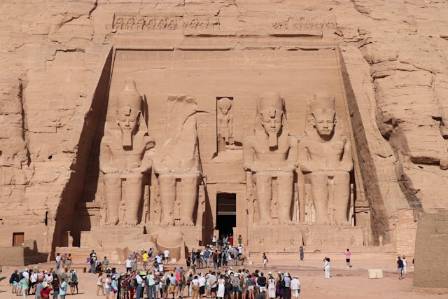
Abu Simbel was one of the most anticipated destinations for many travelers visiting Egypt. Located in a remote area near the Sudan border, this impressive temple complex sometimes worries visitors because of its distance from major cities. However, Egypt is generally considered a safe destination, especially when exploring with an experienced guide or organized group.
Like Philae Temple, Abu Simbel was affected by the Nile dam projects of the 1960s. However, moving Abu Simbel was a much more difficult challenge because the temples were carved directly into the mountain.
Instead of simply taking apart the structure, workers carefully cut each section from the original rock and reconstructed the entire complex at a higher location. The relocation project lasted seven years and became a remarkable example of international cooperation and human achievement.
The site includes two temples: one dedicated to Ramses II and another honoring Queen Nefertari. The enormous facade of Ramses II’s temple features four giant statues of the pharaoh, while the interior contains some of Egypt’s most detailed hieroglyphic artwork, including scenes with more than 100,000 characters.
Library of Alexandria
The modern Library of Alexandria, completed in 2002, was created as a tribute to the legendary ancient library that once stood in the city. Every part of the building contains symbolic connections to knowledge, history, and the ancient world.
The exterior design represents the rising sun emerging from the sea, inspired by ancient Egyptian ideas. The outer walls feature letters from many languages around the world, reflecting the old library’s reputation as a place that collected knowledge from different civilizations.
Inside, visitors can explore museums, digital research areas, children’s and youth libraries, exhibition spaces, and the main reading hall. The impressive open library area extends across nine levels and contains millions of books.
A guided tour is highly recommended for visitors who want to understand the stories and meanings behind the architecture.
Karnak Temple
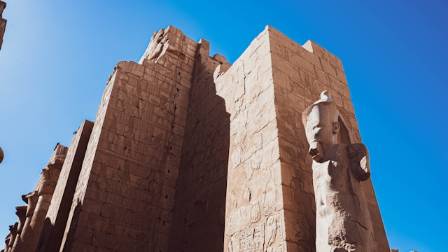
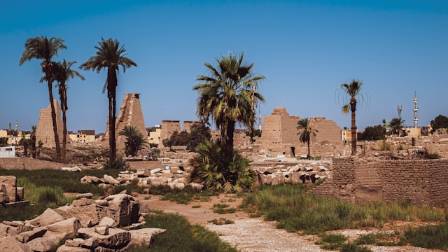
Karnak Temple is one of Egypt’s most impressive ancient sites and one of the largest religious complexes ever discovered. Construction continued for nearly 2,000 years, with different pharaohs adding their own structures, decorations, and architectural features.
As visitors walk through the enormous complex, they can see massive gateways, courtyards, obelisks, and rows of towering columns that reveal the power and ambition of ancient Egyptian rulers.
Unlike many other temples, Karnak remains in its original location beside the Nile River. Visitors should plan several hours to fully explore the site.
The Great Hypostyle Hall is one of the most famous areas, featuring 134 enormous stone columns covered with detailed hieroglyphics. These carvings tell stories about gods, religious ceremonies, and pharaohs, especially Ramses II, who played an important role in the construction of this section. Some restored columns still display the brilliant colors that decorated the temple thousands of years ago.
Egyptian Museum
For anyone fascinated by ancient Egypt, the Egyptian Museum in Cairo is an unforgettable experience. The museum houses around 120,000 ancient artifacts, including the famous treasures of King Tutankhamun.
Many visitors remember learning about Tutankhamun as children, and seeing his golden burial mask and royal treasures in person creates a truly impressive moment. The collection displays objects discovered inside his tomb, which are considered among the most valuable archaeological treasures ever found.
Photography restrictions apply in certain areas, especially the Tutankhamun exhibit, but visitors can take photos in many other parts of the museum.
Beyond King Tut’s collection, the museum also contains one of the world’s largest collections of royal mummies, making it an essential stop for history lovers.
Many famous artifacts have since been moved to the Grand Egyptian Museum near the Giza pyramids, so travelers should check the latest museum information when planning their visit.
Temple of Hatshepsut
The Temple of Hatshepsut near Luxor is one of Egypt’s most unique temples and a fascinating site for those interested in powerful female leaders.
Dedicated to Hatshepsut, the first woman to rule as pharaoh of Egypt, the temple reflects her ambition, intelligence, and political skill. She initially served as queen regent before taking full control of the kingdom and ruling as pharaoh.
Because Egyptian tradition connected pharaohs with male divine ancestry, Hatshepsut created a story presenting herself as the daughter of the sun god Amun-Ra.
Her temple features three impressive terraces built into the cliffs, creating a distinctive architectural design resembling a stepped pyramid. Large ramps connect each level, while the interior walls contain detailed paintings and inscriptions describing her reign and religious beliefs.
Colossi of Memnon
The Colossi of Memnon are two enormous stone statues representing Pharaoh Amenhotep III, the ruler who originally built the temple complex where they once stood.
Although much of the original temple has disappeared and the statues suffered damage over time, their massive size remains impressive. Archaeological discoveries continue around the site, and future excavation may reveal even more of its historical importance.
Luxor Temple
Luxor Temple is one of the few Egyptian temples that can be visited at night, creating a completely different atmosphere when the monuments are illuminated.
The combination of ancient stone structures and nighttime lighting makes the temple especially magical. Visitors can also experience the restored Avenue of the Sphinx, which connects Luxor Temple and Karnak Temple.
This historic pathway, also known as the Rams Road or the Road of the King’s Festivals, stretches about 2.7 kilometers. After decades of excavation, restoration, and preservation work, the route once again allows visitors to walk between two of Egypt’s greatest temples, just as people did thousands of years ago.
More from the edition
Column · en
Capturing Snowy Landscapes in Art
Snow-covered landscapes are among the most mesmerizing subjects in art, yet they are also some of the most technically demanding to depict. Capturing winter scenes convincingly requires careful handling of atmosphere, subtle color shifts, and complex lighting conditions, making them a true test of an artist’s skill.
Column · en
The Empire State Building and Its Historical Journey of Innovation and Fire Protection
Very few architectural masterpieces across the globe seize human curiosity as profoundly as the iconic skyscraper dominating midtown Manhattan. Soaring one thousand four hundred and fifty-four feet into the sky, this structure has remained a definitive monument of the ambition and fortitude of New York City ever since its grand opening in nineteen hundred and thirty-one. While its beautiful art-deco styling and legendary cultural status are celebrated on a global scale, the deep history of the tower is also intimately bound to critical breakthroughs in life safety and fire suppression elements which have successfully guaranteed that it remains both an incredible engineering triumph and a secure sanctuary for the countless millions of individuals who step through its doors over the generations.
Column · en
The World’s Most Remarkable Mountains to Climb
Mountain climbing represents one of the most challenging yet rewarding forms of adventure travel. Beyond the physical demands, each ascent offers cultural insight, natural beauty, and a deeper appreciation of Earth’s geography. The following twelve peaks, located across several continents, illustrate the variety and richness of the world’s climbing destinations.
Column · en
The Most Gorgeous Dreamcatchers We’ve Ever Seen
Spoke Woven dreamcatchers are nothing like the mass-produced, faux-hippie decorations you might find elsewhere. These are genuine works of handmade art: enormous, ethereal, striking creations filled with symbolism and character. They are the kind of statement pieces that can become the centerpiece of an entire room.
Column · en
A Design Enthusiast's Journey through Gothic Architecture
Gothic architecture, renowned for its iconic pointed arches and magnificent stained glass, stands as one of the most grandiose and enduring architectural styles in history. While its origins trace back to medieval times, many new structures boasting Gothic characteristics continue to grace our skylines each year. These structures, which include churches, government buildings, and educational campuses, incorporate Gothic elements to imbue them with a profound sense of history, permanence, and grandeur, all while captivating us with their breathtaking beauty.
Column · en
Rugby Unveiled: A Novice's Handbook
For those new to the world of rugby union, the intricacies of the game might initially perplex. Questions may arise about the frequent halts in play, the distinction between a 'ruck' and a 'maul,' and the essence of a scrum in rugby. Fear not! Our rugby guide for beginners ensures that you swiftly grasp the fundamentals, transforming you into an avid spectator in no time.