Sunday column
Rugby Unveiled: A Novice's Handbook
For those new to the world of rugby union, the intricacies of the game might initially perplex. Questions may arise about the frequent halts in play, the distinction between a 'ruck' and a 'maul,' and the essence of a scrum in rugby. Fear not! Our rugby guide for beginners ensures that you swiftly grasp the fundamentals, transforming you into an avid spectator in no time.
Alexander Daniel
Desk editor
Editor’s note
The full column continues in quiet type below.
Section
Sunday Broadsheet
For those new to the world of rugby union, the intricacies of the game might initially perplex. Questions may arise about the frequent halts in play, the distinction between a 'ruck' and a 'maul,' and the essence of a scrum in rugby. Fear not! Our rugby guide for beginners ensures that you swiftly grasp the fundamentals, transforming you into an avid spectator in no time.
Rugby Union stands as the backdrop for some of the globe's premier sporting events. The Guinness Six Nations, an annual clash between European nations, and the Rugby World Cup, held every four years, showcase the pinnacle of rugby competition. The Autumn Nations Series sees formidable countries engage in head-to-head battles globally. Besides these international tournaments, domestic leagues like Premiership Rugby and the Top 14 feature fierce contests, fostering local and distant rivalries.
As someone who, until recently, navigated the rugby landscape as a novice, I understand the initial bewilderment. While always enjoying the sport, delving deeper has transformed me into that slightly vexing individual who casually drops technical rugby terms into conversations.
Yet, once you unravel its complexities, rugby proves more straightforward than anticipated.
Decoding Rugby Union Rules for Beginners
The primary objective is to carry the ball over the opponent's goal line and ground it to score. Sounds simple, right? Not entirely. Progressing forward involves passing the ball backward. Kicking the ball forward is permitted, but your teammates must be behind the ball at the moment of the kick.
Scoring in Rugby Union
Points in rugby can be secured in four ways:
Try (5 points): Awarded when the ball is grounded over the opponent's goal line. A penalty try may be granted if a foul by the opposition prevents a potential score.
Conversion (2 points): After scoring a try, two additional points can be earned by kicking the ball over the crossbar from the spot aligned with the try.
Drop Goal (3 points): Scored by dropping the ball onto the ground and kicking it over the crossbar during open play.
Penalty (3 points): Awarded if a penalty is given after an infringement by the opposition, and the team may opt to kick at goal.
The Lineout in Rugby
When the ball goes out of bounds at the side, a lineout restarts play. Forwards assemble in two lines, one meter apart. The hooker throws the ball down the corridor between the lines, and the player catching it can either retain possession or pass it on. High throws are achieved by lifting the catcher, with the opposition prohibited from touching them while airborne, and any interference is penalized.
The Scrum
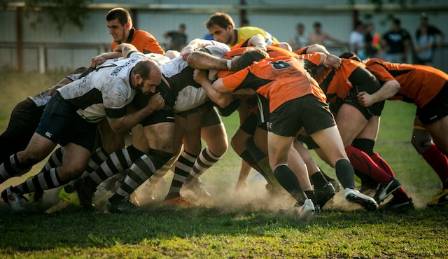
Another method of restarting play is the scrum, employed after minor infringements or when the ball becomes unplayable in a ruck or maul. Eight players from each team interlock arms, facing off by interlocking heads. The ball is thrown into the tunnel between the front rows, and the hookers compete to 'hook' it back. The winning team can either keep the ball grounded, attempting to advance, or pass it into the backline for open play.
Ruck vs. Maul
Contrary to playground chaos, mauls and rucks are distinct. In a maul, the ball is held off the ground, and players strive to remain on their feet. In a ruck, the ball is on the ground, and players use their feet to 'ruck' only the ball backward.
Rugby Union Positions
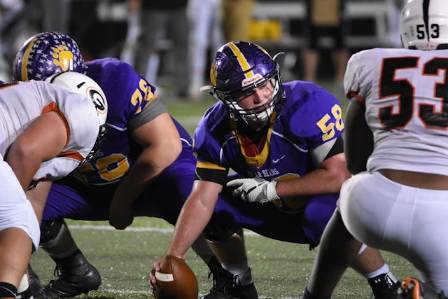
Props: Anchor the scrum, providing lifting strength in lineouts and essential support in rucks and mauls.
Hooker: Holds a pivotal role in scrums, winning possession, and throwing the ball in lineouts.
Number 8: Positioned at the back of the scrum, securing possession and carrying it into open play.
Scrum Half: Links forwards and backs at scrums and lineouts, deciding whether to distribute the ball quickly to the backs or keep it close to the forwards.
Wings: The accelerators of the team, injecting speed to outpace opponents and score tries, while maintaining defensive prowess.
Locks: Win the ball from lineouts and restarts, driving momentum in scrums, rucks, and mauls, providing a foundation for attacks.
Flankers: Tasked with winning possession through turnovers, involving tackling any opponent daring to run with the ball.
Centers: Key figures in both attack and defense, tackling opponents and utilizing speed and power to breach defenses.
Full Back: The last line of defense, requiring confidence under high balls, a powerful boot for clearing lines, and the ability to execute a try-saving tackle.
In summary, rugby unfolds as a captivating spectacle once its nuances are unraveled. Whether immersed in the exhilaration of live matches or captivated by the strategic intricacies, rugby offers a rich tapestry of athleticism and teamwork, ready for enthusiasts to explore.
More from the edition
Column · en
Understanding the Fundamentals of Caloric Equilibrium
The concept of caloric balance centers around the comparison of calorie intake with calorie expenditure. It plays a pivotal role in your overall health and physical fitness, as it dictates whether you maintain, gain, or lose weight over time. Remarkably, caloric balance isn't concerned with the origin of calories, whether they stem from proteins, carbohydrates, or fats; it's solely about the grand total of calories ingested versus calories expended.
Column · en
Elegant Outfit Ideas for Every Season and Occasion
Elegance is about more than just looking sophisticated, it’s about feeling confident in your own skin. When you slip into an elegant outfit, that sense of self-assurance often follows. What makes an outfit elegant can vary: it might be its simplicity, the quality of the fabric, or how perfectly it fits your body. Today, I’m excited to share a collection of elegant outfit ideas to inspire you to elevate your wardrobe. These looks prove that elegance doesn’t have to be complicated. It’s all about picking pieces that make you feel your best and there are ways to dress elegantly no matter the season or event. So, read on for some of my favorite elegant ensembles and essential pieces that belong in every elegant wardrobe.
Column · en
Adorable Robots You Can Actually Buy in 2026
Buying cute robots has never been easier. This guide showcases 14 charming robots you can purchase today, from robotic dogs to kids’ companions and small interactive bots that are currently in stock and worth exploring.
Column · en
Essential Techniques for Boneless Flower and Bird Painting
Boneless painting is a traditional Chinese art form that bypasses rigid outlines, relying instead on direct applications of ink and color to define shape and spirit. This method requires a sophisticated grasp of moisture control and brush pressure to capture the fleeting beauty of nature. From the delicate curve of a petal to the sturdy grip of a bird’s claw, every element is rendered through fluid washes and rhythmic strokes that emphasize vitality over literal representation.
Column · en
The Comprehensive Manual for Men's Tailoring
In an era defined by casual remote work and shifting dress codes, the necessity of a suit might seem debatable. Paradoxically, this makes it the perfect time to invest in one. With social calendars filling up and a growing weariness of loungewear, the suit is experiencing a cultural renaissance. Modern fashion has liberated tailoring from rigid rules; it is no longer about the standard navy set but about bold pinstripes, classic houndstooth, and personal expression. Whether paired with a traditional silk tie or a vintage graphic tee, every man needs at least one exceptional suit.
Column · en
Understanding Ice Hockey Strategy: Offensive and Defensive Tactics Unpacked
In the high-octane, lightning-fast world of ice hockey, raw athleticism and skill are essential—but they are meaningless without a cohesive, well-executed strategy. A team’s ability to outthink, outmaneuver, and outadapt its opponent on the ice often separates champions from also-rans. Ice hockey is a game of split-second decisions: a well-timed pass, a strategic shift in formation, or a last-ditch defensive play can turn the tide of a game in an instant. Unlike sports where individual brilliance can carry a team, hockey demands absolute synergy between players, with each member understanding their role within a larger tactical framework. Offensive tactics focus on creating and capitalizing on scoring opportunities, while defensive strategies aim to shut down opponents, protect the goal, and regain possession. Together, these two sides of the game form a delicate balance—too much focus on offense leaves a team vulnerable to counterattacks, while an overly defensive mindset stifles scoring potential. To truly grasp the beauty of ice hockey, one must dive into the intricacies of these tactics, exploring how teams blend creativity and discipline to dominate the ice. Whether you’re a player, coach, or passionate fan, understanding the strategic layers of the sport elevates your appreciation for every pass, shot, and save.