Sunday column
Essential Techniques for Boneless Flower and Bird Painting
Boneless painting is a traditional Chinese art form that bypasses rigid outlines, relying instead on direct applications of ink and color to define shape and spirit. This method requires a sophisticated grasp of moisture control and brush pressure to capture the fleeting beauty of nature. From the delicate curve of a petal to the sturdy grip of a bird’s claw, every element is rendered through fluid washes and rhythmic strokes that emphasize vitality over literal representation.
Dominic Sawyer Hayes
Desk editor
Editor’s note
The full column continues in quiet type below.
Section
Sunday Broadsheet
Boneless painting is a traditional Chinese art form that bypasses rigid outlines, relying instead on direct applications of ink and color to define shape and spirit. This method requires a sophisticated grasp of moisture control and brush pressure to capture the fleeting beauty of nature. From the delicate curve of a petal to the sturdy grip of a bird’s claw, every element is rendered through fluid washes and rhythmic strokes that emphasize vitality over literal representation.
Mastering Floral Subjects Without Outlines
When painting flowers in the boneless style, the approach varies significantly between single-petaled and multi-layered blossoms. For single-petaled flowers, such as hibiscus or plum blossoms, the focus is on the transition of color within a single stroke. By dipping the brush tip into white and touching the edge with crimson, an artist can create a natural gradient that defines the petal’s form. While the paint is still moist, a water-soaked brush can be used to diffuse the pigment, adding a soft, organic feel.
In contrast, multi-petaled flowers like peonies require a structural, layered strategy. The process begins at the heart of the bloom, working outward in stages to maintain a sense of unity. The goal is to avoid a fragmented appearance by focusing on the overall spherical volume. The final "awakening" of the flower occurs when the stamens are added; using contrasting colors like yellow-white on dark petals or deep crimson on pale ones adds the necessary spark of life.
Techniques for Foliage and Branch Work
Leaves in boneless painting are brought to life through two primary methods. The "vein-reserving" style is ideal for large foliage like lotus pads, where thin strips of white paper are left untouched to serve as veins. This requires careful wash placement to ensure the gaps follow the leaf's natural growth. For smaller leaves, the "vein-defining" method is used: the leaf is painted as a solid dot of color first, and the veins are later sketched over the top with ink to break the flatness and add texture.
The rendering of branches depends on the desired texture. Woody stems gain an aged, organic look through "water-color buildup," where watery ochre or green is added to wet ink sketches to create mottled patterns. For a more rugged, weathered appearance, the "outline-texture" approach uses a dry brush and swift strokes to achieve a "flying white" effect, mimicking the natural cracks in bark. Additionally, vines act as the connective tissue of a composition; their fluid, curving lines are planned early to ensure a dynamic sense of movement across the piece.
Rendering Avian Vitality and Softness
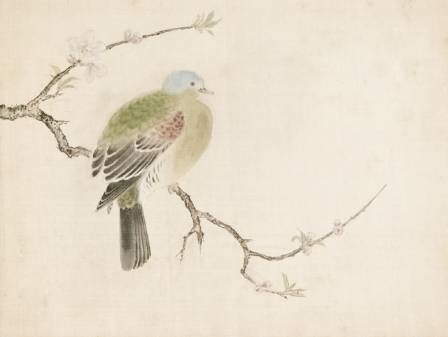
Extending the boneless technique to birds requires a masterful handling of translucent layers to suggest volume and feather texture. The process often begins with the eyes and beak to anchor the bird's presence. Using fresh, dark ink for the pupils is critical, as stale ink lacks the necessary luster. For birds like the kingfisher, indigo washes are layered on the head and wings, while a "split-brush" technique—where the bristles are separated—is used to thread fine lines that mimic delicate plumage.
Warmth and depth are achieved by applying diluted ochre to the breast and underbelly, creating a pleasing contrast with cooler wing tones. To imply the softness of a sparrow, artists often layer white silk-threading strokes over a pale yellow base, lifting some of the "hairs" to suggest fluffiness. This soft underbelly stands in stark contrast to the sturdy, dark-ink claws, which must appear to firmly grip their perch.
The Role of Secondary Elements and Composition
Secondary elements like stones and grasses are essential for creating a balanced, harmonious world. In boneless painting, rocks are not outlined but built through dry-brushing and layered washes to convey weight and geological logic. They serve as a visual anchor; where flowers are dense, the stones should be simple, providing a place for the viewer’s eye to rest.
Grasses and reeds are used to fill voids and guide the viewer's gaze through the composition. Even these "minor" details require botanical accuracy in their joints and growth angles. By alternating blade lengths and letting stems cross dynamically, the artist creates a rhythmic "dance" that feels inevitable rather than merely decorative. The success of the final piece lies in this restraint—knowing where the ink should pool and where the emptiness should speak, allowing the imagination to complete the scene.
More from the edition
Column · en
Hydrangea Growing Guide
Hydrangeas, commonly known as hortensias, are popular flowering shrubs admired for their abundant blooms and decorative foliage. With proper planting, pruning, and maintenance, these plants can provide impressive displays year after year.
Column · en
10 of the World's Most Dramatic Sea Cliffs
Vertical cliffs rising dramatically from the ocean offer some of the most unforgettable viewpoints on Earth, combining incredible scenery with that thrilling sensation of standing at the edge of the world.
Column · en
How to Grow and Care for an Orchid So It Blooms for Years
Orchids (family Orchidaceae) are elegant houseplants that can also serve as decorative elements when placed in attractive containers. Although they are often thought of as hard to maintain, orchids can actually thrive for as long as 15 years when their needs are properly met. With roughly 25,000 species available, one of the most beginner-friendly options is the moth orchid (Phalaenopsis). Regardless of the variety you choose, understanding a few essential care principles will help your orchid stay healthy and bloom beautifully indoors.
Column · en
Breathtaking Hot Air Balloon Adventures You Can’t Miss
Soaring high above the ground in a hot air balloon is a magical experience, offering stunning panoramic views and a sense of peaceful adventure. From floating over ancient landscapes to drifting above vibrant cities, these balloon rides provide unforgettable memories. Here are seven incredible hot air balloon journeys that belong on every traveler’s bucket list.
Column · en
Ramen Rules: Tim Anderson Deconstructs Japan's Famous Noodle Soup
A steaming bowl of ramen—with its springy noodles, aromatic broth, and carefully curated toppings—has become synonymous with Japanese cuisine worldwide. Yet this beloved dish is far from a singular creation: it’s a tapestry of regional traditions, cultural adaptation, and culinary innovation, rooted in Chinese origins but reimagined as a distinctly Japanese icon. To call ramen Japan’s national dish is both accurate and misleading—accurate because it permeates every corner of the country, from street stalls to Michelin-recommended restaurants, and misleading because it encompasses hundreds, if not thousands, of unique variations. Like “pasta” in Italy or “curry” in India, “ramen” is an umbrella term, uniting dishes that share core elements but diverge wildly in flavor, texture, and style. From the clear, citrus-kissed shio ramen of Tokyo to the rich, spicy tan tan men of Osaka, ramen is a celebration of diversity—one that tells the story of Japan’s history, geography, and creative spirit. In this deep dive, we explore the essence of ramen, its journey from Chinese import to Japanese staple, its regional identities, and the art of crafting the perfect bowl, culminating in a classic Tokyo shoyu ramen recipe that captures the dish’s timeless appeal.
Column · en
5 Enjoyable Cycling Tours for a Two-Wheel Vacation
Exploring a new destination on a bike lets you fully immerse yourself in the surroundings while getting your heart rate up. These five exciting cycling tours will have you gliding past stunning scenery, soaking up the sunshine, and breathing in fresh air as you discover new places.