Sunday column
Capturing Snowy Landscapes in Art
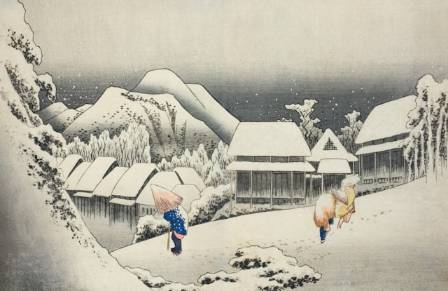
Snow-covered landscapes are among the most mesmerizing subjects in art, yet they are also some of the most technically demanding to depict. Capturing winter scenes convincingly requires careful handling of atmosphere, subtle color shifts, and complex lighting conditions, making them a true test of an artist’s skill.
Jack Smith
Desk editor
Editor’s note
The full column continues in quiet type below.
Section
Sunday Broadsheet
Snow-covered landscapes are among the most mesmerizing subjects in art, yet they are also some of the most technically demanding to depict. Capturing winter scenes convincingly requires careful handling of atmosphere, subtle color shifts, and complex lighting conditions, making them a true test of an artist’s skill.
Despite these challenges, snowy vistas have long fascinated painters. From historical masterpieces to modern interpretations, winter environments continue to inspire works that balance mood, atmosphere, and visual poetry. Exploring this genre reveals how artists across centuries have interpreted the quiet beauty of snow in dramatically different ways.
The development of winter landscape painting can be traced back to the Renaissance period, when landscape itself began emerging as an independent artistic subject. By the 16th century, Northern European painters were especially drawn to natural scenery, influenced by their surroundings of forests, mountains, and frozen terrain. As artistic interest grew, winter scenes became increasingly prominent, later evolving through Romanticism’s emotional intensity and Impressionism’s fascination with light and fleeting atmosphere.
Challenges in Depicting Winter Scenes
Painting snow is far from simple. Artists must navigate several visual difficulties in order to create believable winter compositions.
Color and Surface Complexity
Although snow appears white, using pure white paint alone often results in flat and lifeless imagery. Instead, painters must introduce subtle variations—cool blues, soft grays, and gentle warm tones—to suggest depth and realism. Texture also plays a crucial role: fresh snowfall appears soft and airy, while older snow may look compacted, icy, or uneven, requiring careful brushwork to distinguish between these surfaces.
Light and Atmospheric Effects
Light interaction with snow is another major challenge. Sunlight filtering through trees can cast delicate highlights, while shadows across snowy ground often contain unexpected blues, purples, or muted tones. Accurately capturing these variations requires close observation of time, weather, and environmental conditions, as winter light can shift the entire emotional tone of a scene.
Masterpieces of Winter Landscape Painting
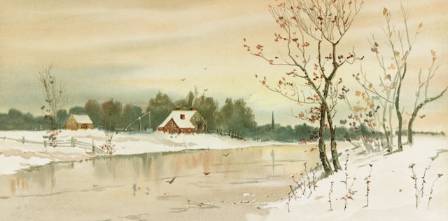
Despite these difficulties, many artists succeeded in producing unforgettable winter scenes that remain influential today.
Pieter Bruegel the Elder – Hunters in the Snow (1565)
This renowned painting depicts hunters returning through a vast snow-covered landscape. The figures appear small against the expansive terrain, emphasizing nature’s dominance. Below them, a lively village scene unfolds with skating figures and daily activity, contrasting human warmth with the cold environment. The composition balances hardship and comfort, while subtle symbolic elements, such as dark birds in the trees, add deeper meaning to the scene.
Caspar David Friedrich – Winter Landscape with Church (1811)
A leading figure of Romanticism, Friedrich used winter settings to evoke emotion and spirituality. In this work, snow-laden fir trees and rocky terrain lead the viewer’s eye toward distant Gothic architecture. The cool palette enhances a sense of solitude and reflection. Hidden within the composition are symbolic elements tied to faith and human struggle, reinforcing the painting’s emotional depth.
Frederic Edwin Church – Winter Scene in Hartford (1846)
As part of the American Hudson River School, Church portrayed winter landscapes with both grandeur and intimacy. This scene presents a partially frozen river near a small settlement, where a solitary figure stands in the foreground. The contrast between human presence and vast natural surroundings highlights the scale and beauty of the American wilderness.
Utagawa Hiroshige – Snowy Gorge at Fuji River (1842)
This Japanese woodblock print demonstrates how winter landscapes were interpreted in Eastern art. A narrow gorge framed by snow-covered mountains leads the viewer into a deep, structured composition. Small human figures traveling through boats emphasize nature’s dominance, reinforcing themes of humility and scale.
Claude Monet – Grainstacks: Snow Effect (1891)
Monet’s Impressionist approach transforms a simple rural scene into a study of light and atmosphere. Grain stacks stand quietly in a snowy field, rendered with soft, broken brushstrokes. Rather than focusing on detail, Monet captures shifting conditions and subtle tonal changes, including unexpected hints of color within the snow and sky.
Wassily Kandinsky – Winter Landscape (1909)
Kandinsky’s early work bridges Impressionism and emerging modern abstraction. In this winter scene, simplified forms and expressive color choices convey both structure and emotion. Snow-covered ground is suggested through layered tones, while contrasting warm and cool hues create a dynamic visual rhythm.
The Enduring Appeal of Winter Scenes
These works represent only a fraction of the vast tradition of winter landscape painting, yet they demonstrate the wide range of artistic interpretations—from realism and symbolism to abstraction and emotional expression.
Even today, contemporary artists continue to reinterpret snowy environments, drawing inspiration from these historical foundations. What remains constant is the timeless allure of winter landscapes: their quiet beauty, emotional depth, and ability to evoke a sense of stillness that feels both distant and familiar.
More from the edition
Column · en
Top 8 Stunning Cliff Diving Destinations Around the Globe
Cliff diving, often called tombstoning, is the ultimate blend of natural beauty and pure adrenaline. Leaping from dramatic cliffs into sparkling waters isn’t for the faint of heart, but for those who thrive on thrill and challenge, it’s an experience unlike any other. Around the world, there are only a handful of iconic spots where daredevils gather to take the plunge. Here are eight of the most breathtaking destinations every adventurous spirit should know.
Column · en
The World's 17 Most Lavish Ingredients
Indulge in a culinary journey through the world's most opulent and extravagant ingredients. These culinary gems are a testament to the heights of gastronomic luxury, far beyond your average grocery bill.
Column · en
Facts You Might Not Know About Gazelles
Gazelles are well-known members of the antelope family and are especially recognized for their impressive speed. They mainly inhabit dry, open environments such as grasslands and deserts. Many species live in migratory or nomadic groups, constantly moving through their surroundings while feeding on grasses and shrubs and remaining alert for predators.
Column · en
Mango Sago: Quick Creamy Hong Kong Dessert
Mango sago is a cherished dessert across Asia, featuring soft tapioca pearls immersed in a luscious mango and coconut milk mixture. Originating in Hong Kong and widely loved throughout Southeast Asia, this chilled treat combines the natural sweetness of ripe mangoes with the chewy texture of sago pearls, offering a refreshing and satisfying dessert.
Column · en
Mastering Sunset Art: A Comprehensive Alcohol Marker Tutorial
Creating a breathtaking sunset illustration may appear complex, but it is remarkably approachable when broken down into logical phases. This guide explores how to utilize alcohol markers and a touch of colored pencil to render a vibrant evening landscape. By layering specific hues of orange, pink, and violet, you can achieve a professional-grade transition from the glowing sun to the deepening sky.
Column · en
the Undulating Hills of Moravia
To undulate means “to move in a smooth, wave-like pattern.” The dictionary example—Her body undulated to the thumping rhythm of the music—certainly has a sensual flair. In this case, though, the subject isn’t moving. Yet when photographing the mesmerizing landscapes of Moravia, the hills’ curves and patterns create the illusion of movement, rhythm, and flow across the frame.