Sunday column
A Guide to Train Travel in the USA
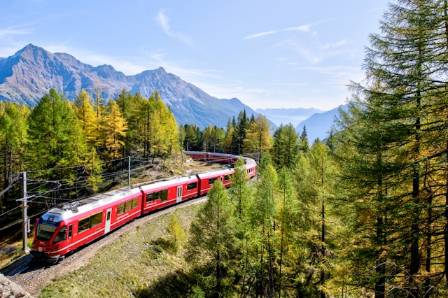
Think train travel belongs to another era in the USA? Not at all. While the country has the world's largest road network, it is also a surprisingly rewarding place to explore by rail. Instead of concentrating on the road ahead or waiting at an airport, you can spend hours looking through enormous windows as snowy peaks, open grasslands, vast deserts and bustling cities gradually pass by.
Leon Fairmont
Desk editor
Editor’s note
The full column continues in quiet type below.
Section
Sunday Broadsheet
Think train travel belongs to another era in the USA? Not at all. While the country has the world's largest road network, it is also a surprisingly rewarding place to explore by rail. Instead of concentrating on the road ahead or waiting at an airport, you can spend hours looking through enormous windows as snowy peaks, open grasslands, vast deserts and bustling cities gradually pass by.
That said, don't expect American trains to resemble Japan's famous bullet trains or Spain's extensive high-speed rail network. The United States has invested relatively little in passenger rail for decades. Amtrak, the country's national passenger rail operator, is known for slower journeys and frequent delays, which can sometimes stretch into several hours or, in extreme cases, even days. Some of its equipment also feels distinctly old-fashioned. Long-distance services that take multiple days to complete generally have no Wi-Fi, and many routes operate just once a day or only several times a week. Departure times can also be inconvenient depending on your boarding location.
Things are beginning to change, however. The 2021 Infrastructure Act represented the largest federal investment in rail transportation since the current national system was established in 1971. New services are planned to connect additional cities, while overnight long-distance trains are scheduled to receive their first major upgrades in four decades.
Although many of these improvements have yet to arrive, train travel is enjoying a level of popularity in the United States that has not been seen for generations. Amtrak carried nearly 33 million customer trips during 2024, its highest ridership ever and a 15% increase over the previous year.
Is taking the train the most efficient way to travel around the United States? Usually not. But the experience can provide much better memories and stories than spending your time inside an airport. Here is what you should know about Amtrak's network, purchasing tickets and what to expect once you're aboard.
The Train Network in the USA
Most large American cities operate their own local transportation networks, ranging from underground subway systems to surface light rail and buses. Traveling between cities or states is a different matter. Amtrak is the only passenger rail operator with a nationwide network. Although it is organized as a for-profit corporation, the federal government remains its controlling shareholder.
Amtrak services stretch across the United States from the Atlantic coast to the Pacific and from the Mexican border into several Canadian destinations. More than 30 routes operate across roughly 21,000 miles of railroad tracks. The network serves around 500 cities in 46 states, excluding Alaska, Hawaii, South Dakota and Wyoming, as well as several locations in Canada.
Even with such a large network, significant portions of the country have no Amtrak service. This is particularly noticeable across the western United States, where the lack of rail connections can make planning an entirely train-based journey difficult.
Book Amtrak Tickets as Early as Possible
Amtrak ticket prices can differ substantially depending on the distance, fare category, departure time, travel date and how early you make your reservation. Prices are generally higher around holidays and during the busiest travel periods, particularly summer and fall.
Reservations can be made as much as 11 months ahead. Unlike airline tickets, American train fares generally do not fluctuate downward after you have booked. Instead, prices tend to increase as the departure date approaches.
Amtrak offers several different fare types. Travelers looking for the absolute lowest price can choose the least flexible option, although this means changes and refunds may not be available if plans change. Paying a little more provides greater flexibility.
For long-distance journeys, booking a private sleeping accommodation well ahead of time can result in significant savings. If you happen to notice that the fare has dropped after purchasing your ticket, which is uncommon, you can contact Amtrak customer service and request a refund for the difference. For shorter journeys, reserving several months ahead can also help secure a reasonable fare.
Night Owl fares can be as low as $10 for certain departures between 7pm and 7am along the Northeast Corridor, including Washington, DC, Baltimore, Philadelphia and New York City. Weekend and holiday travel generally costs more, making advance booking especially useful for these periods.
Buy Tickets Online or Through the App
Getting an Amtrak ticket is relatively straightforward. You can visit the Amtrak website, enter your departure and arrival cities along with your travel dates, and complete the purchase online.
The Amtrak mobile app provides another convenient option. Once aboard, you can simply display the electronic ticket on your phone when the conductor comes through the train.
Tickets can also be purchased by telephone, through a travel agent or directly at a station. In some circumstances, buying a ticket after boarding may be possible, but this is not standard practice. Such tickets generally cost the most, and if the train has no available seats, you could potentially be required to leave at the next station.
Amtrak's USA Rail Pass May Save Money
Long-distance train journeys can become costly when purchased at the last minute. Depending on your itinerary, an USA Rail Pass may provide a better value.
The USA Rail Pass permits travelers to take 10 Amtrak segments within a 30-day period for $499. Keep in mind that a segment does not necessarily mean an entire one-way journey. A segment ends when you leave a train or transfer to another train.
After buying the pass, you have 120 days, or roughly four months, to activate it. Once you take your first segment, the 30-day period begins, during which you must complete the remaining nine segments.
There is one important limitation: the USA Rail Pass only covers coach travel. Business class and private sleeping accommodations are not included. You can purchase those upgrades separately, but you will have to pay their regular fares in addition to the pass.
Check for Discounts and Promotions
Amtrak offers several standard discounts. Seniors, veterans, military members and their families, and members of the Rail Passengers Association can receive 10% off, while students receive a 15% discount.
Children younger than 2 travel free, while passengers between the ages of 2 and 12 receive a 50% discount. Additional reduced fares are available for passengers with disabilities, groups and government employees.
Beyond the standard discounts, Amtrak also introduces temporary promotional offers throughout the year. Some promotions apply only to particular routes, while others are tied to specific seasons, travel periods or departure times.
Amtrak Routes Do Not Reach Every State
In many European countries, trains are so widespread that visitors may have little reason to rent a car. The situation is quite different in the United States. Whether train travel is practical depends heavily on your destination.
Traveling between cities by Amtrak is relatively easy throughout New England and the Mid-Atlantic. In other parts of the country, however, the enormous distances can make flying a more practical choice than relying entirely on trains.
Another complication is that many Amtrak stations are not located directly beside major airports. If your plan is to fly into one city and immediately transfer to a train, you may have to make additional transportation arrangements. In larger metropolitan areas, however, Amtrak stations often function as major transit centers, allowing passengers to connect with local buses, subways and light rail.
Many Amtrak routes have memorable names. The Coast Starlight links Seattle and Los Angeles and takes around 35 hours. The Sunset Limited connects Los Angeles with New Orleans in approximately 48 hours. The Silver Meteor and Palmetto services connect New York City with Miami in more than 28 hours.
One of the most famous scenic journeys is the California Zephyr, which runs between Emeryville and Chicago. At 52 hours from end to end when operating on schedule, it is Amtrak's longest daily route, although delays can make the trip considerably longer.
If Amtrak does not serve your final destination, you may be able to use a connecting Thruway bus. These buses are designed specifically for train passengers and are coordinated with train arrivals, including delayed services.
Amtrak Trains Can Get Very Crowded
East Coast services are commonly busy throughout the year. More scenic routes become especially crowded during weekends, holidays and the summer season.
Traveling during winter or in the middle of the week is generally quieter. Amtrak continues operating during major holidays such as Thanksgiving and Christmas. Although additional cars may be added to some services, trains can still become heavily booked during these periods.
Reserve a Sleeper for Maximum Comfort
Long-distance Amtrak services offer four main types of sleeping accommodation. These rooms can be expensive, but the price also includes several additional benefits, such as private accommodation, meals, access to lounges at major stations and assistance from a first-class attendant.
Roomettes accommodate one or two adults. Each private room contains two seats that are converted into a bed at night, while an upper bunk can be lowered to create another sleeping space. Bathrooms and showers are available elsewhere in the sleeping car rather than inside the room.
Bedrooms and accessible bedrooms provide roughly twice the space of a roomette. A sofa-style seat occupies one side of the room, while private bedrooms include a sink, toilet and shower. Accessible bedrooms are situated on the lower level and provide sufficient room for wheelchair users.
Bedroom suites are created by combining two bedrooms, allowing groups of up to four adults to travel together in a larger private space.
Family rooms are designed for two adults and two children. They extend across the width of the train car and provide seating for four people during the day. At night, the space converts into two lower berths and two upper berths. Bathrooms and showers are located elsewhere in the same car.
On certain shorter regional services, passengers can pay extra for business class. Benefits can include advance seat selection, additional legroom, a larger seat and a complimentary nonalcoholic beverage.
The high-speed Acela service operating along the Northeast Corridor also offers first class. First-class passengers receive lounge access at major stations as well as complimentary food and drinks on board. However, the additional cost of business and first class can be substantial compared with the relatively modest improvements they provide.
But the Coach Seats Are Quite Comfortable
Coach seating on long-distance Amtrak trains is considerably roomier than a typical airline seat. At approximately 23 inches wide, these seats feel more like comfortable living-room armchairs than cramped airplane seating, where many economy seats measure around 17 inches.
Seats on shorter regional Amtrak services are more comparable to the type of seating commonly found on European trains.
Trains Have Dining Options, but You Can Bring Your Own Food
Passengers staying in sleeper accommodations on long-distance services receive three meals per day in the dining car, or can request complimentary room service.
The menu generally consists of familiar American-style dishes, including flat iron steak, roasted chicken, salmon with rice and vegan pasta served with red sauce.
Passengers traveling in coach can purchase food from the cafe car. The selection typically includes sandwiches, burgers, snacks, soft drinks, beer and wine. The prices tend to be high and the quality is not particularly impressive, which is hardly surprising when passengers have limited alternatives during the journey.
You are allowed to bring your own food and beverages onto the train, although some restrictions apply. There is no facility for passengers to heat their own meals. Staff cannot handle personal food or permit travelers to use the train's ovens or microwaves, and there are no passenger refrigerators available.
Alcohol can be brought aboard by passengers staying in private rooms, but it cannot be consumed in public areas. In those spaces, alcoholic beverages must be purchased from the cafe.
The Best Amtrak Routes and Travel Tips
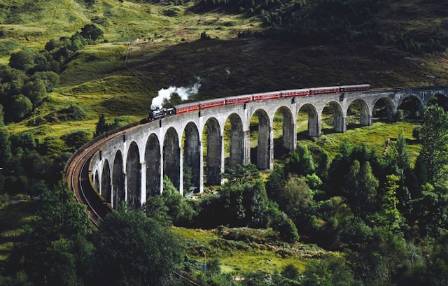
For travelers who enjoy the idea of slow travel, Amtrak offers an excellent way to see the United States. Many routes provide spectacular scenery that would be difficult to appreciate from an airplane, and some services even deliver passengers directly to the vicinity of national parks.
Coast Starlight
The Coast Starlight runs between Seattle and Los Angeles and offers constantly changing scenery throughout its approximately 35-hour journey. The route moves from the snow-covered peaks of the Cascade Mountains to the blue waters of the Pacific Coast, with expansive landscapes visible through the train windows.
If completing the entire journey is too much of a commitment, you can book only part of the route, such as the section between Los Angeles and Sacramento. Travelers heading north should choose a seat on the left side of the train for the best coastal views.
Adirondack
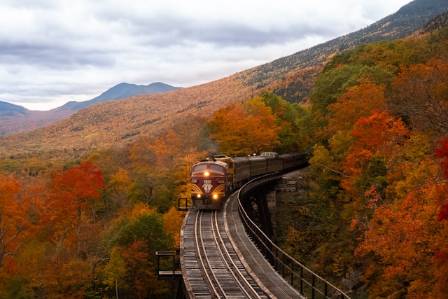
The Adirondack is particularly spectacular during autumn, when the forests along the route turn brilliant shades of orange, gold and deep burgundy. The scenery remains attractive during the rest of the year as well.
The journey begins amid the busy streets of New York City before moving into the quieter Hudson Valley. From there, the train follows the New York border with Vermont and travels beside the western shoreline of Lake Champlain before eventually reaching Montréal.
The complete trip takes approximately 10 hours. Since the route crosses from the United States into Canada, passengers should remember to bring their passports.
Winter Park Express
When winter arrives in Colorado, travelers heading toward the ski slopes can leave the car behind and take the scenic Winter Park Express instead.
This seasonal Amtrak service carries skiers and snowboarders from Denver through the rugged, evergreen-covered Rocky Mountains to Winter Park Resort. The journey takes a little more than two hours and generally operates between December and March.
If your schedule permits, consider staying for one or two nights at the Crawford hotel, which is located inside Denver's Union Station.
Empire Builder
The Empire Builder travels from Chicago toward either Seattle or Portland, Oregon, following portions of the route associated with the expedition of Meriwether Lewis and William Clark.
Passengers departing Chicago travel through Wisconsin and Minnesota before crossing the Great Plains of North Dakota and Montana. The train eventually climbs into the Rocky Mountains and passes near Glacier National Park.
At Spokane, Washington, travelers can continue toward either Seattle or Portland. The full journey takes approximately 46 hours, but the spectacular wilderness outside the windows provides plenty to occupy your attention throughout the trip.
Sunset Limited
The Sunset Limited, the southernmost Amtrak route, provides an impressive introduction to the geography and history of the American South and Southwest.
On a westbound journey, the train leaves New Orleans before entering the mysterious bayous of Louisiana. It then crosses the immense landscape of Texas, follows the Mexican border for part of the journey, and continues through the high desert scenery of New Mexico and Arizona before reaching Los Angeles.
The entire journey requires approximately 48 hours, making it a substantial commitment. Nevertheless, the variety of landscapes and regions experienced along the way makes the lengthy ride worthwhile.
The Accessibility of Trains in the USA
Amtrak has been working to improve accessibility throughout its trains and stations. In 2024, the company invested $155 million in accessibility-related projects.
Despite these efforts, some disability advocacy organizations believe progress has not been sufficient. The National Disability Rights Network has described Amtrak's progress as inconsistent, with some areas showing little or no improvement.
Travelers with disabilities can still encounter numerous difficulties, including trains, stations, ticket counters and restrooms that are not fully accessible.
Amtrak provides a limited number of accessible seats and sleeping accommodations. Passengers who require accessible travel services need to make a reservation in advance.
This applies to wheelchair users and people traveling with other mobility equipment, passengers accompanied by service animals, travelers who are deaf or blind, and anyone who requires specialized equipment or assistance to board or leave the train.
More from the edition
Column · en
Creamy Low-Fat Caramel Pudding Recipe
This rich-tasting pudding manages to stay low in fat while providing a good dose of calcium.
Column · en
10 Captivating Ancient Reliefs and Stone Carvings: Windows to Civilizations Past
From the earliest days of human existence, when our ancestors etched primitive symbols into cave walls, the urge to create has been an intrinsic part of what it means to be human. As civilizations evolved, so too did artistic expression—from simple rock engravings to elaborate sculptures and reliefs that adorned temples, palaces, and sacred sites. Unlike paintings or textiles, which are often fragile and susceptible to decay, stone carvings and reliefs possess a remarkable durability. Carved into hard materials like sandstone, granite, and limestone, they have survived for thousands of years, offering us a direct window into the past.
Column · en
Seafood Recipes for an Elegant Dinner
Seafood has long been connected with elegant dining, and it’s not difficult to understand why. Its delicate flavor, rich texture, and versatility make it an excellent choice for refined meals. Whether you are planning a festive celebration or simply treating yourself to something special, seafood dishes can instantly make dinner feel more sophisticated.
Column · en
Qingdao Zhanqiao Pier, One Of The Most Famous Piers In China
As one of China's most celebrated piers, Zhanqiao Pier stands as both a historical monument and cultural symbol. Originally constructed during the German concession in 1891, this 440-meter-long pier has witnessed Qingdao's transformation from a colonial port to a modern metropolis.
Column · en
Pronghorn: Racers on the Great Plains
Badlands National Park provides a home for the pronghorn, which is sometimes called the pronghorn antelope. Despite its nickname, the pronghorn is not actually a true antelope. However, it shares several characteristics with genuine antelopes found in Africa and Asia. These similarities are the result of convergent evolution, in which unrelated animals independently develop comparable traits because they face similar environmental conditions. The pronghorn is the only surviving species in the family Antilocapridae, and its closest living relatives are actually giraffes.
Column · en
Mastering the Art of Selecting the Perfect Coffee Table
Finding the ideal coffee table is a task that goes far beyond simple aesthetics. As a central piece of furniture in the living room, it must balance size, silhouette, height, and material to complement your lifestyle. This guide provides professional insights into choosing a table that enhances both the utility and the visual appeal of your home.