Sunday column
Go with the Flow: Rivers and Streams
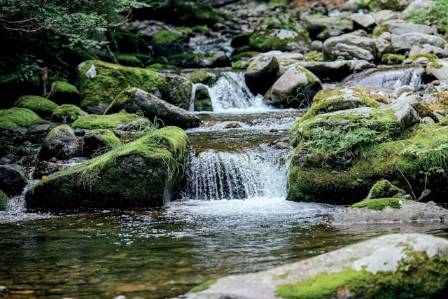
Naturally formed freshwater systems, including lakes, rivers, and streams, are interconnected through complex and constantly changing networks. Freshwater lakes are generally stationary water bodies enclosed by land, while rivers are flowing waterways that move through defined channels and eventually connect with larger aquatic systems. Streams also contain moving water and often combine with other streams to create larger waterways. A classification system is used to organize streams within watersheds based on their position and connections. For example, a stream located at the highest point of a watershed is considered a first-order stream, and when two first-order streams join, they create a second-order stream (Agriculture and Agri-Food Canada [AAFC], 2020).
Celeste Morgan
Desk editor
Editor’s note
The full column continues in quiet type below.
Section
Sunday Broadsheet
Naturally formed freshwater systems, including lakes, rivers, and streams, are interconnected through complex and constantly changing networks. Freshwater lakes are generally stationary water bodies enclosed by land, while rivers are flowing waterways that move through defined channels and eventually connect with larger aquatic systems. Streams also contain moving water and often combine with other streams to create larger waterways. A classification system is used to organize streams within watersheds based on their position and connections. For example, a stream located at the highest point of a watershed is considered a first-order stream, and when two first-order streams join, they create a second-order stream (Agriculture and Agri-Food Canada [AAFC], 2020).
Human modifications that reduce shoreline complexity, such as straightening waterways, shortening shorelines, and removing natural side channels, can negatively affect aquatic ecosystems. These changes simplify shoreline structures, reduce habitat variety, eliminate sheltered backwater environments, and decrease the interaction area between land and water (Strayer & Findlay, 2010). Research examining simplified shorelines and biodiversity has found major ecological impacts in large river systems and similar, though less severe, effects along lake edges (Strayer & Findlay, 2010).
Physical Characteristics Influence Aquatic Habitats
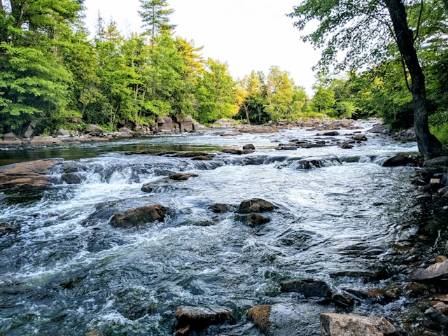
Rivers and streams experience changes in physical conditions such as width, depth, water speed, slope, sunlight availability, and bottom materials. These differences create unique local environments that influence available habitats and food resources, allowing many aquatic organisms to occupy different ecological roles (McCabe, 2011).
Because river conditions constantly change, populations of aquatic insects, fish, and algae also shift in response to flooding events, competition, and interactions among species (McCabe, 2011). Shorelines also serve as important pathways for wildlife movement and the transfer of organic materials, depending on factors such as their length, direction, vegetation cover, and water flow patterns (Strayer & Findlay, 2010). Large rivers often provide longer and more continuous movement corridors compared with smaller isolated lakes.
Rivers and streams are closely connected with their surrounding landscapes. As a result, water chemistry, aquatic communities, and sediment characteristics reflect both nearby environmental conditions and influences from areas upstream and downstream (McCabe, 2011).
Differences Between Small Streams and Large River Systems
River systems connected with lakes generally experience more stable flow conditions compared with smaller streams. Lakes help regulate water movement by providing consistent base flow and reducing the effects of sudden snowmelt or heavy rainfall events (Jones et al., 2014).
Smaller streams with unpredictable and challenging conditions tend to support smaller organisms that grow quickly, reproduce in large numbers, tolerate environmental changes, and are able to survive in unstable habitats (Jones et al., 2014). In contrast, larger rivers influenced by lake systems usually provide more predictable environments, allowing larger organisms with slower development, specialized behaviors, stronger competitive abilities, and fewer offspring per reproductive cycle to thrive (Jones et al., 2014).
The abundance and diversity of aquatic invertebrates are also affected by the size and texture of streambed materials. Different combinations of water depth, flow speed, and substrate conditions create different habitats that support different biological communities (McCabe, 2011). Therefore, the physical structure and flow characteristics of aquatic environments strongly influence species distribution and ecosystem composition (Jones et al., 2014).
Watersheds as Connected Natural Systems
A watershed is a geographic area where precipitation, including rainfall and snowmelt, collects and either enters underground water systems or flows through streams and rivers toward larger bodies of water such as lakes and oceans (AAFC, 2020).
All parts of a watershed are connected. Small streams combine to form tributaries, which eventually merge into larger rivers, creating a linked aquatic network (World Wildlife Fund Canada [WWF-Canada], 2020). Watersheds function as nested systems, meaning smaller watersheds exist within larger ones (AAFC, 2020).
The structure of a watershed is influenced by many natural features, including underlying rock formations, sediment types, fractures, and geological patterns that determine drainage routes (AAFC, 2020). Important watershed characteristics include land shape, slope, total size, elevation differences, drainage systems, land-use practices, geology, soil conditions, and vegetation coverage (AAFC, 2020).
Canada contains 25 major watersheds separated by natural land elevations and includes more than 100 smaller sub-watersheds (WWF-Canada, 2020).
Measuring the Health of Freshwater Ecosystems
WWF-Canada evaluates watershed conditions using four major indicators that represent important aspects of aquatic ecosystem health.
Hydrology examines natural water movement patterns, including changes in river flow and water volume over time. Shoreline areas with natural water-level changes often support high biodiversity and productivity because they provide diverse habitats for aquatic species (Strayer & Findlay, 2010).
Water quality focuses on chemical conditions within rivers, including levels of pollutants such as phosphorus, heavy metals, and chloride. These contaminants can affect aquatic organisms, recreational activities, and sources of drinking water.
Benthic invertebrates, including insects, snails, and leeches that live on river bottoms, are another important indicator. These organisms are highly sensitive to environmental changes and play essential roles in aquatic food webs.
The final indicator is the condition of native fish populations. Fish contribute significantly to aquatic food chains, ecosystem diversity, and human activities such as fishing and recreation.
Threats Facing Canada’s Freshwater Systems
According to WWF-Canada (2020), freshwater ecosystems in Canada face growing pressures from invasive species, pollution, habitat destruction, climate change, excessive water use, and changes in natural water movement caused by human structures such as dams and reservoirs.
Human development, especially urban expansion, can affect smaller streams and lower-order waterways, creating consequences throughout the larger watershed network. The condition of specific watersheds and the challenges they face can be explored through WWF-Canada’s Watershed Reports.
Rivers, Floodplains, and Climate Change Impacts
Rivers play a vital role in maintaining floodplains, which are low-elevation areas near rivers that naturally experience flooding. However, climate change, expanding urban areas, and inadequate flood management strategies are expected to increase both the frequency and severity of floods in the future (Mohanty & Simonovic, 2021).
Human activities such as agriculture, urban construction, pollution, and changes to river flow patterns have weakened the ability of aquatic ecosystems to recover from extreme flooding events. These disturbances may further worsen water quality problems within watersheds (Talbot et al., 2018).
Future flood patterns are expected to change significantly, with greater flood coverage predicted in many regions, especially northern and western Canada. Research suggests that flood-prone areas across Canada could expand by nearly 16%, with some regions experiencing more frequent flooding events (Mohanty & Simonovic, 2021).
Protecting ecosystems from flood impacts requires strategies that restore natural connections between rivers and floodplains, reconnect separated aquatic habitats, and rebuild healthy vegetation zones along riverbanks (Talbot et al., 2018). These approaches help maintain ecosystem services while improving the resilience of freshwater environments against future environmental changes.
More from the edition
Column · en
Beautiful and Deserted Roads in the US
Road trips can bring to mind everything from bumper-to-bumper traffic and roaring semitrucks to peaceful stretches of countryside. Yet the popularity of U.S. National Scenic Byways suggests that many travelers would rather spend their time enjoying beautiful landscapes without dealing with heavy traffic. In fact, some of the country's most impressive roads are also among its least crowded.
Column · en
Vintage Convertible Cars That Feel Timeless
There is something truly special about vintage convertible cars. They transform every journey into an experience rather than just transportation. With elegant silhouettes, open roofs, and classic appeal, these timeless vehicles never go out of fashion. Iconic models such as the Ford Mustang and Chevrolet Corvette still appear stylish and relevant even many decades after their debut.
Column · en
China’s 10 Best-preserved Ancient City Walls
China is a country filled with history, mystery, and inspiration. As one of the world’s oldest civilizations, it has preserved countless traces of its thousands of years of cultural development. Among these surviving treasures are numerous ancient city walls.
Column · en
Top Rowing Competitions Around the World
Rowing is a sport that blends strength, endurance, and teamwork, as athletes glide boats through water with precision oar strokes. Across the globe, major rowing competitions draw elite rowers and passionate fans alike. Here’s a look at some of the most prestigious rowing events worldwide.
Column · en
Top 7 Breathtaking Ocean Views Around the World
Few things stir the soul like standing before the endless horizon where sea, sky, and land collide. From dramatic cliffs and hidden bays to iconic coastlines, the planet offers countless vantage points where the ocean feels larger than life. Whether you’re chasing sunsets, photographing waves, or simply soaking in nature’s grandeur, these seven ocean panoramas are among the most unforgettable.
Column · en
5 Spanish Castles You Can Stay In
Across Spain, the countryside is filled with ancient castles and palaces that have watched over towns and villages for hundreds of years. Although kings, queens, and nobles no longer inhabit these historic buildings, many of them have been carefully restored and transformed into unique hotels. Staying in one of Spain’s Paradores offers the rare chance to step directly into history and experience life in a medieval or Renaissance setting. Here are five remarkable castle hotels where guests can enjoy a truly royal stay.