Sunday column
The Purple Swamphen
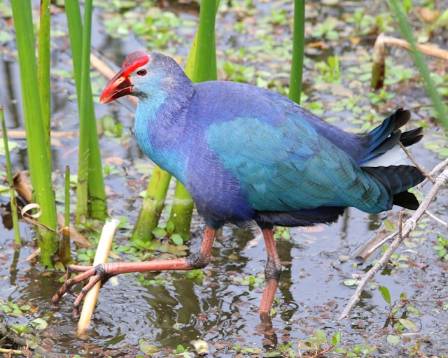
Last spring, during a three-month study abroad program in South Africa, I finally encountered one of my long-awaited lifer birds, the Purple Swamphen (Porphyrio porphyrio). I spotted it partially concealed among reeds in a large wetland within Wilderness National Park. After noticing me, the bird hurried across the water, attempting to disappear into the reeds on the opposite side of the shallow stream.
Elise Moon
Desk editor
Editor’s note
The full column continues in quiet type below.
Section
Sunday Broadsheet
Last spring, during a three-month study abroad program in South Africa, I finally encountered one of my long-awaited lifer birds, the Purple Swamphen (Porphyrio porphyrio). I spotted it partially concealed among reeds in a large wetland within Wilderness National Park. After noticing me, the bird hurried across the water, attempting to disappear into the reeds on the opposite side of the shallow stream.
I was amazed by its appearance. The bird was surprisingly large, roughly the size of a grouse, but with exceptionally long legs and toes. Its striking colors also reminded me of a Purple Gallinule. This impressive member of the rail family, closely related to coots, was accidentally introduced to southeastern Florida during the early 1990s. Birds that escaped from aviculture collections eventually established a substantial population in the swamps and wetlands surrounding Fort Lauderdale and Miami.
Finding Purple Swamphens in Florida
Earlier this month, I finally had the opportunity to explore the Miami-area wetlands where Purple Swamphens had been introduced. My friends and I visited Chapel Nature Trail in Broward County, Florida, hoping to locate the birds.
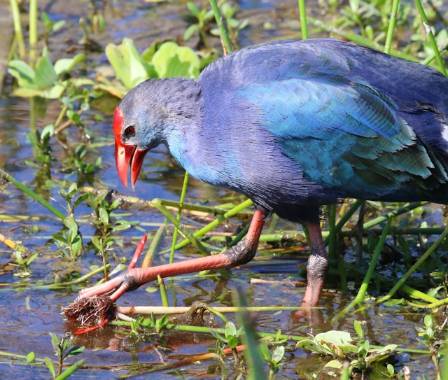
We didn't have to wait long. Shortly after arriving, we noticed a Purple Swamphen feeding among the reeds. It suddenly flew up and landed a short distance away, right beside another individual.
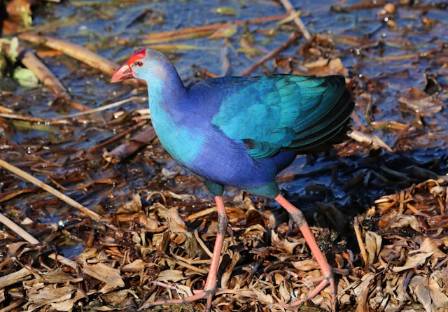
One of the most noticeable features of these two birds was the color of their heads and necks. Both had pale blue, almost grayish heads, which looked quite different from the bird I had observed in South Africa. The South African individual had a much darker blue head, with a color that was much closer to the shade of its back.
Different Subspecies of Purple Swamphen
I had previously learned that Purple Swamphens included at least two forms, one with a lighter-colored head and another with a darker head. However, I had not realized just how dramatic the difference could be until I saw the birds in Florida.
After doing some additional research, I discovered that the Purple Swamphen has at least 13 recognized subspecies. The dark-headed bird I encountered in South Africa belonged to the Porphyrio porphyrio madagascariensis subspecies, while the Florida birds belonged to Porphyrio porphyrio poliocephalus.
The poliocephalus form is naturally distributed around the Caspian Sea region, making its presence in southeastern Florida particularly interesting. Seeing these two forms in different parts of the world gave me a fascinating opportunity to appreciate the considerable variation found within this colorful species.
More from the edition
Column · en
Lavender, the Useful Plant
How often have you heard the saying “stop and smell the roses”? The same idea can easily be applied to many other plants, especially lavender. This beloved herb encourages people to slow down and appreciate its fragrance, appearance, and calming presence.
Column · en
Watch Out for Water-Lilies!
Water-lilies (Nymphaea species) produce the largest flowers among all plants found in Manitoba. However, because these aquatic plants usually grow in deep water, seeing their beautiful blooms up close often requires a boat. This unique challenge makes water-lily researchers a special group of botanists, as they frequently need to enter lakes and rivers to collect samples and study these plants.
Column · en
The Ultimate Guide to Buying a Men’s Suit: Fit, Style, Fabric & Accessories
A well-fitted suit is more than just clothing—it’s a powerful tool for making a lasting impression, whether you’re interviewing for your dream job, attending a formal event, or building a professional wardrobe. For first-time buyers, however, navigating the world of suits can feel overwhelming: from understanding fit nuances to choosing the right fabric and accessories, there are countless details to consider. This guide breaks down the process into six essential steps, covering everything you need to know to buy a suit that fits perfectly, functions for your needs, and reflects your personal style. Whether you’re 18 or 80, this comprehensive resource will demystify suit shopping, ensuring you invest in a piece that serves you well for years to come.
Column · en
9 Must-See Attractions at Bollywood Parks Dubai You Can’t Miss
If you're heading to Dubai and want a unique experience that blends theme park thrills with the color, energy, and drama of Indian cinema, Bollywood Parks Dubai is the place to be. Spanning 1.7 million square feet, it’s the world’s first theme park dedicated entirely to Bollywood, bringing the magic of Hindi movies to life with shows, rides, and immersive experiences. To help you make the most of your visit, here are nine unmissable attractions inside the park.
Column · en
Himeji Castle: Japan’s Elegant White Heron
Himeji Castle, often referred to as the “White Heron Castle,” rises gracefully from its hilltop setting like a bird ready for flight. It is widely regarded as one of Japan’s most beautiful and best-preserved castles, famous for its brilliant white exterior and refined traditional architecture. Visitors who join tours of Japan can explore its wooden interiors, winding pathways, and historic grounds once walked by samurai, feudal lords, and scholars. The atmosphere carries a strong sense of history, allowing travelers to experience the cultural depth of Japan in a truly immersive way.
Column · en
Which Is the Biggest RV in the World?
There are currently several massive motorhomes competing for the unofficial title of the largest RV in the world. Most of them fall into the Class A luxury category, offering fully equipped living spaces, premium materials, and extremely high price tags.