Sunday column
Fundamentals of Watercolor Florals: A Comprehensive Guide for New Artists
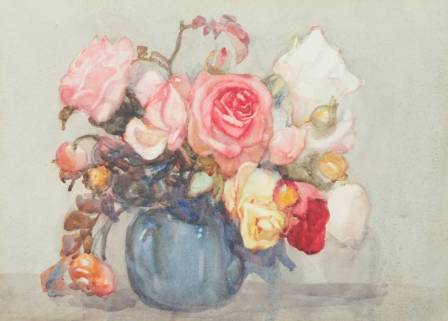
Mastering floral subjects is an ideal way to explore a contemporary watercolor style. It encourages a fluid and spontaneous approach, allowing you to utilize the medium's unique ability to blend and bleed effortlessly. While many beginners feel intimidated by the complexity of petals and three-dimensional structures, the secret to success lies in simplification. By focusing on essential shapes and expressive strokes rather than minute details, you can avoid muddy results and create vibrant, airy compositions.
Matthew Sinclair
Desk editor
Editor’s note
The full column continues in quiet type below.
Section
Sunday Broadsheet
Mastering floral subjects is an ideal way to explore a contemporary watercolor style. It encourages a fluid and spontaneous approach, allowing you to utilize the medium's unique ability to blend and bleed effortlessly. While many beginners feel intimidated by the complexity of petals and three-dimensional structures, the secret to success lies in simplification. By focusing on essential shapes and expressive strokes rather than minute details, you can avoid muddy results and create vibrant, airy compositions.
Mastering Basic Floral Foundations
Observing nature reveals that most flowers are composed of simple, repeating geometric patterns. Whether a bloom has four rounded petals or six pointed ones, it often follows a basic radial structure like a star or a circle. Once you master these fundamental building blocks, you gain the ability to depict nearly any species.
When starting out, begin with a single stem. Place the head of the flower approximately two-thirds of the way up your page to create a balanced portrait. Frame the bloom by curving the stem and leaves inward in a gentle "V" shape. This layout works beautifully for statement flowers such as lilies, roses, or daffodils. From there, you can progress to groupings of three. To maintain a natural aesthetic, vary the height and width of each flower to introduce movement and visual contrast.
Developing Dynamic Compositions
Once you are comfortable with individual stems, you can experiment with more complex arrangements:
-
Bouquets and Posies: To paint a successful bouquet, choose one primary focal flower and two supporting varieties. Fill the remaining space with smaller "filler" blossoms and greenery. You can gather the stems at the base or place them in a painted vase for a finished look.
-
Floral Wreaths: Start by lightly sketching a circular guide. Arrange your focal flowers first, then add leaves and smaller details following a single direction, such as clockwise, to create a sense of flow. Using very pale greens for filler leaves is an effective way to bridge gaps without overcrowding the design.
-
Scatter Patterns: Imagine tossing a handful of petals into the air and letting them land randomly on your paper. This technique involves repeating a few simple elements across the entire page. Start with your largest, lightest shapes as a base and layer smaller, darker elements over them, constantly changing their orientation and color.
Techniques for Depth and Contrast
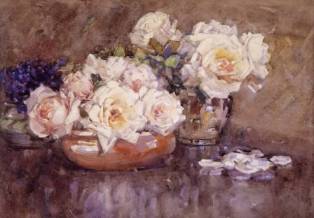
The interplay of different watercolor methods is what gives floral art its character. Using the "wet-on-wet" technique—allowing wet paint from a flower to touch the wet paint of a leaf—creates ethereal color bleeds that connect the piece naturally. Conversely, the "wet-on-dry" method is perfect for adding sharp details, such as veins on a leaf or shadows on petals, once the initial layers have set.
Leaves are just as vital as the blooms themselves. The contrast between colorful petals and green foliage makes a painting strike a balance. Use the same brushstrokes for leaves as you do for petals, but vary the shapes—from jagged edges to long, sweeping lines for tulips or irises.
To create a compelling focal point, pay special attention to the flower centers. You can drop a dark, concentrated pigment into a wet petal base to let it diffuse naturally, or wait for the paint to dry and use a fine brush to add precise dots and "flicks" for an anemone-style center. High contrast is another powerful tool; try pairing very pale blossoms with deep, dark foliage to make your artwork pop.
Continued Observation and Practice
The best way to improve is through direct observation. Study the flowers in your local environment or through high-quality photography to understand their silhouettes and color transitions. By breaking down complex nature into simple shapes and embracing the fluid personality of watercolor, you will find endless inspiration for your creative journey.
More from the edition
Column · en
The Best Fruitcake
Fruitcake is often the subject of holiday jokes, but this version completely changes that reputation. Packed with a generous mix of dried fruits, nuts, warm spices, citrus zest, and a splash of brandy, this rich loaf truly captures the essence of the festive season. The recipe yields two cakes, making it perfect for sharing—keep one for yourself and gift the other.
Column · en
Fiddle Leaf Fig Houseplant
The name “Fiddle Leaf Fig” is sometimes used for two different plants: Ficus lyrata and Philodendron bipennifolium. It is common for one popular name to describe more than one species, and this is one such example. The care information below focuses on Ficus lyrata, the plant most often sold in garden centers and stores as a Fiddle Leaf Fig houseplant.
Column · en
Key Insights into the Nature of Black Holes
A black hole is fundamentally a region in space where the gravitational pull is so intense that nothing can escape its grasp. This extreme gravity is the result of matter being squeezed into a tiny space. While these cosmic entities may seem mysterious, understanding their characteristics helps clarify how the universe operates at its most extreme limits.
Column · en
Hidden Histories of Famous Animated Figures
Most of us hold fond memories of the cartoons that defined our youth. Whether it was the frantic energy of Donald Duck or the mystery-solving adventures of Scooby-Doo, animation has spent nearly a century evoking deep emotional responses in audiences.
Column · en
Top 7 Breathtaking Ocean Views Around the World
Few things stir the soul like standing before the endless horizon where sea, sky, and land collide. From dramatic cliffs and hidden bays to iconic coastlines, the planet offers countless vantage points where the ocean feels larger than life. Whether you’re chasing sunsets, photographing waves, or simply soaking in nature’s grandeur, these seven ocean panoramas are among the most unforgettable.
Column · en
Which Is the Biggest RV in the World?
There are currently several massive motorhomes competing for the unofficial title of the largest RV in the world. Most of them fall into the Class A luxury category, offering fully equipped living spaces, premium materials, and extremely high price tags.