Sunday column
Growing Hydrangeas
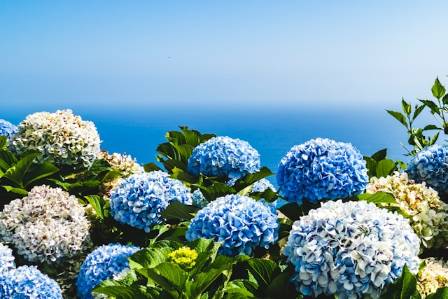
Hydrangeas are some of the most beloved flowering shrubs found in Massachusetts gardens. The famous “blue” hydrangea, also known as bigleaf hydrangea (Hydrangea macrophylla), has become one of the defining plants of Cape Cod landscapes. Whether planted along shrub borders, combined with perennial flowers, or displayed as a single specimen plant, hydrangeas bring impressive color and charm from summer through autumn.
Stellan Moore
Desk editor
Editor’s note
The full column continues in quiet type below.
Section
Sunday Broadsheet
Hydrangeas are some of the most beloved flowering shrubs found in Massachusetts gardens. The famous “blue” hydrangea, also known as bigleaf hydrangea (Hydrangea macrophylla), has become one of the defining plants of Cape Cod landscapes. Whether planted along shrub borders, combined with perennial flowers, or displayed as a single specimen plant, hydrangeas bring impressive color and charm from summer through autumn.
Several hydrangea species are commonly grown in gardens, and most of them have similar growing needs. They perform best in soil that stays evenly moist, drains well, and contains plenty of organic matter such as compost or aged manure. These plants are not well suited to dry conditions and usually struggle in very sandy soil. In most situations, hydrangeas need about one inch of water each week through a deep watering. During periods of extreme heat and drought, they may require up to two inches weekly to prevent wilting. Drip irrigation and soaker hoses are excellent choices because they maintain soil moisture while keeping leaves dry, which helps reduce the chance of leaf diseases.
Hydrangeas can grow in full sun or lightly filtered shade. They generally perform better when protected from intense afternoon sunlight, especially bigleaf hydrangeas, which can droop even when the soil contains enough moisture.
These shrubs prefer moderate fertility. Apply about four ounces of a balanced fertilizer in early spring and again after flowering. Before planting container-grown hydrangeas, inspect the roots and gently loosen them if they are tightly circling the pot. Prepare the planting area with organic material and place the shrub at the same depth it was growing in the container. The upper surface of the root ball should remain even with the surrounding soil. After planting, water thoroughly and add a two- to three-inch layer of quality mulch around the root zone, while keeping mulch away from the crown.
Smooth Hydrangea (Hydrangea arborescens)
Smooth hydrangea is a native shrub of the eastern United States, where it naturally grows beneath woodland canopies. It prefers partial shade and consistently moist soil. Mature plants usually form rounded shrubs about three to five feet tall and wide.
This species flowers from late June through early July, producing clusters of white blooms that are typically four to six inches across. The popular cultivar ‘Annabelle’ is especially admired for its enormous flower heads, which can reach twelve inches in diameter. ‘White Dome’ features a more open lacecap-style flower arrangement that holds up well during rainy weather.
Smooth hydrangea produces flowers on new growth, so pruning should be done in late winter or early spring before fresh shoots emerge. It is hardy to zone 4 and may die back completely during unusually cold winters, but it will still bloom the following year because its flower buds develop on new stems.
Bigleaf Hydrangea (Hydrangea macrophylla)
Bigleaf hydrangea is one of the highlights of the summer garden, especially during July. It typically grows three to six feet tall and spreads equally wide, forming a rounded shape with many sturdy, upright stems.
This species is often slow to produce leaves in spring and may suffer winter damage, sometimes dying back to the ground in colder years. Bigleaf hydrangeas produce two major flower forms. The Hortensia type creates large rounded clusters made mostly of sterile flowers, while the Lacecap type features a central group of tiny fertile flowers surrounded by larger decorative sterile flowers arranged in a flat cluster.
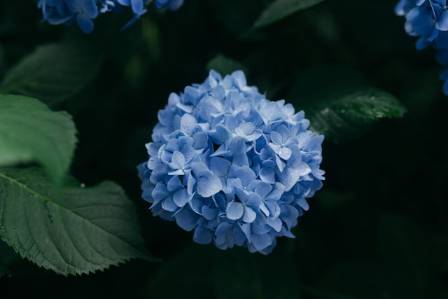
Flower color in bigleaf hydrangeas can vary greatly, ranging from blue and white to pink, rose, and red. The final color depends largely on soil chemistry and the presence of aluminum. When aluminum is available in acidic soil, flowers usually become blue. When aluminum is unavailable, blooms tend to appear pink.
Soil pH plays an important role in aluminum availability. In soil with a pH of about 5.5 or lower, flowers are generally blue. When the pH reaches 6.5 or higher, blooms are usually pink, rose, or red depending on the variety. The strength of the color also depends on the amount of pigment naturally present in the cultivar. For example, ‘Nikko Blue’ typically produces soft pastel blue or pastel pink flowers, while ‘Dooley’ develops much deeper shades.
Pruning Bigleaf Hydrangeas
Bigleaf hydrangea pruning can be confusing because these plants usually form flower buds on older stems during summer, with blooms appearing the following year in late June or early July. The main flower bud develops at the stem tip, while additional buds form lower down near the leaf joints.
If the top flower bud survives, the lower buds usually remain inactive. However, if winter damages the main bud, some lower buds may produce flowers. Temperatures below 10°F, along with early autumn or late spring freezes, can destroy flower buds and lead to poor flowering the next summer.
During the first few years after planting, it is usually enough to remove faded flowers once they turn brown. Cut them just above the next pair of leaves. As plants mature, maintain their shape by removing the oldest stems, especially those more than three years old, directly at ground level during late winter. Dead branches and damaged tips should also be removed at this time.
If height reduction is necessary, trim stems just above a healthy pair of leaves after flowering finishes. Ideally, plant bigleaf hydrangeas in locations where they can naturally reach their mature size.
Modern breeding has introduced reblooming bigleaf hydrangeas that can flower on both old and new wood. This remontant trait allows them to bloom even after winter damage destroys older flower buds. Cultivars such as ‘Endless Summer’, ‘Penny Mac’, and ‘Dooley’ are examples of these repeat-blooming varieties. Bigleaf hydrangea is hardy to zone 6.
Panicle Hydrangea (Hydrangea paniculata)
Panicle hydrangea has been a popular landscape plant for many years and is often mistakenly called Pee Gee hydrangea. This large shrub or small tree can grow ten to twenty feet tall and spread just as wide.
It blooms from July through September, producing large cone-shaped flower clusters that are six to eight inches long. These panicles contain both decorative sterile flowers and smaller fertile flowers. The blooms begin white and gradually change to mauve-pink shades that remain attractive into autumn.
Among all hydrangea species, panicle hydrangea is one of the most adaptable. It tolerates full sun, dry conditions, and colder temperatures better than many other types. Because it flowers on new wood, pruning can be done in late winter or early spring if size control is needed. It is hardy to zone 3.
Popular Panicle Hydrangea Cultivars
The traditional Pee Gee hydrangea is the cultivar ‘Grandiflora’, which often grows with a single trunk and a tree-like form. Its heavy flower clusters, measuring twelve to eighteen inches long, create gracefully arching branches with a fountain-like appearance.
Newer cultivars provide improved garden performance. ‘Kyushu’ is an upright variety with many fertile flowers, creating a lighter and more open look. ‘Limelight’ produces lime-green buds that open into pale greenish-white flowers and grows about six to eight feet tall and wide. ‘Tardiva’ is a late-season bloomer that flowers from late August through October and reaches eight to twelve feet tall. ‘Little Lamb’ is a smaller variety growing only four to six feet tall, with delicate flower clusters said to resemble small lambs dancing above the plant.
Oakleaf Hydrangea (Hydrangea quercifolia)
Oakleaf hydrangea is native to the southeastern United States and is easily recognized by its large leaves that resemble oak foliage. The leaves can grow up to eight inches long and five inches wide.
This shrub develops upright stems and can reach around eight feet tall. Over time, it forms a dense clump by sending up new shoots from the roots. Mature plants develop attractive reddish, peeling bark that adds winter interest.
In July, oakleaf hydrangea produces large cone-shaped flower clusters containing both fertile and sterile flowers. These blooms can reach twelve inches long and four inches wide at the base. As they age, the flowers turn a beautiful pinkish-purple and remain attractive into autumn. The foliage can become especially striking in fall, changing into shades of scarlet and burgundy.
Flower buds form on older wood, so pruning should only be done immediately after flowering if necessary.
Popular Oakleaf Hydrangea Cultivars
‘Snow Queen’ is a reliable cultivar that grows more compactly, reaching about six feet tall. It handles sunlight well and produces creamy white flower clusters six to eight inches long.
‘Alice’ is a vigorous newer cultivar that can grow ten to twelve feet tall. It produces exceptionally large flower heads, sometimes twelve to fourteen inches long, with individual flowers that are quite large.
‘Snowflake’ features multiple layers of flower bracts, creating a double-flowered appearance. Its twelve- to fifteen-inch flower clusters can become so heavy that the branches bend downward, creating a graceful weeping effect. This variety prefers moist soil and partial shade.
‘Pee Wee’ is a dwarf form suited for smaller gardens, reaching only about three feet tall and wide. It produces smaller five-inch flower clusters and offers attractive fall color. Oakleaf hydrangea is hardy to zone 5.
Climbing Hydrangea (Hydrangea anomala petiolaris)
Although it is technically a vine rather than a shrub, climbing hydrangea deserves attention because it is one of the most impressive flowering climbers available. It shares many of the same growing preferences as other hydrangeas but can be slow to establish after planting.
Once mature, it can climb up to sixty feet. It attaches itself to surfaces using root-like structures called holdfasts, making it ideal for growing against walls, fences, buildings, or large trees.
Climbing hydrangea blooms in June, producing large, flat lacecap flower clusters that can reach ten inches across. These flowers often extend outward from the surface they grow on, creating a dramatic three-dimensional effect. The foliage turns golden yellow in autumn, adding seasonal interest.
This spectacular vine is hardy to zone 4 and can become a stunning long-lived feature in the landscape.
More from the edition
Column · en
The Grand Foundation and Early Origins of the Royal Ontario Museum
The Royal Ontario Museum was officially founded on April sixteenth in nineteen hundred and twelve through the joint administration of the Ontario provincial government and the University of Toronto. Initial collections were transferred from the academic institution and the local department of education originating from a predecessor facility located at the Toronto Normal School. His Royal Highness the Duke of Connaught who served as the governor general of Canada formally opened the institution to the general public on March nineteenth in nineteen hundred and fourteen. The chosen site sat along the periphery of the urban area distant from the downtown core selected specifically for its close adjacency to the main university campus. The original architectural footprint arose on the western boundary adjacent to Philosopher's Walk featuring a primary entryway facing Bloor Street and encompassing five distinct disciplines covering archaeology palaeontology mineralogy zoology and geology. Construction expenses reached four hundred thousand dollars marking the initial stage of a larger master plan intended to stretch toward Queen's Park Crescent and form an imposing symmetrical layout.
Column · en
Understanding Modern Abstract Flower Oil Painting
Oil painting has been a beloved art form for centuries, and modern abstract flower oil painting offers a refreshing and innovative spin on this traditional medium. In this post, we will explore the essence of modern abstract flower oil painting, the techniques used to create it, and why it has become so popular in recent years.
Column · en
5 Spanish Castles You Can Stay In
Across Spain, the countryside is filled with ancient castles and palaces that have watched over towns and villages for hundreds of years. Although kings, queens, and nobles no longer inhabit these historic buildings, many of them have been carefully restored and transformed into unique hotels. Staying in one of Spain’s Paradores offers the rare chance to step directly into history and experience life in a medieval or Renaissance setting. Here are five remarkable castle hotels where guests can enjoy a truly royal stay.
Column · en
7 Expert Tips for Choosing the Best Tea Set for Every Occasion
Tea is more than just a warm drink—it’s a cherished ritual that brings comfort, calm, and connection. Whether you're savoring a solo cup or hosting an elegant gathering, the right tea set can elevate the entire experience. From design and functionality to materials and serving pieces, choosing a tea set tailored to your needs makes all the difference. Here are seven essential tips to help you find the perfect set for any occasion.
Column · en
Hidden Histories of Famous Animated Figures
Most of us hold fond memories of the cartoons that defined our youth. Whether it was the frantic energy of Donald Duck or the mystery-solving adventures of Scooby-Doo, animation has spent nearly a century evoking deep emotional responses in audiences.
Column · en
Japanese Daifuku: Taste and Tips
Daifuku is one of Japan’s most beloved traditional sweets, treasured for its soft, chewy mochi (glutinous rice cake) exterior and subtly sweet anko (red bean paste) filling. But did you know that daifuku comes in many variations? This dessert has evolved into a treat with countless flavors and textures.