Sunday column
The Grand Foundation and Early Origins of the Royal Ontario Museum
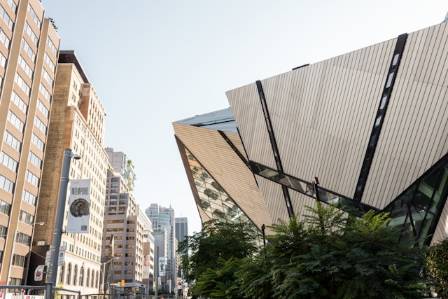
The Royal Ontario Museum was officially founded on April sixteenth in nineteen hundred and twelve through the joint administration of the Ontario provincial government and the University of Toronto. Initial collections were transferred from the academic institution and the local department of education originating from a predecessor facility located at the Toronto Normal School. His Royal Highness the Duke of Connaught who served as the governor general of Canada formally opened the institution to the general public on March nineteenth in nineteen hundred and fourteen. The chosen site sat along the periphery of the urban area distant from the downtown core selected specifically for its close adjacency to the main university campus. The original architectural footprint arose on the western boundary adjacent to Philosopher's Walk featuring a primary entryway facing Bloor Street and encompassing five distinct disciplines covering archaeology palaeontology mineralogy zoology and geology. Construction expenses reached four hundred thousand dollars marking the initial stage of a larger master plan intended to stretch toward Queen's Park Crescent and form an imposing symmetrical layout.
Florence Merriweather
Desk editor
Editor’s note
The full column continues in quiet type below.
Section
Sunday Broadsheet
The Royal Ontario Museum was officially founded on April sixteenth in nineteen hundred and twelve through the joint administration of the Ontario provincial government and the University of Toronto. Initial collections were transferred from the academic institution and the local department of education originating from a predecessor facility located at the Toronto Normal School. His Royal Highness the Duke of Connaught who served as the governor general of Canada formally opened the institution to the general public on March nineteenth in nineteen hundred and fourteen. The chosen site sat along the periphery of the urban area distant from the downtown core selected specifically for its close adjacency to the main university campus. The original architectural footprint arose on the western boundary adjacent to Philosopher's Walk featuring a primary entryway facing Bloor Street and encompassing five distinct disciplines covering archaeology palaeontology mineralogy zoology and geology. Construction expenses reached four hundred thousand dollars marking the initial stage of a larger master plan intended to stretch toward Queen's Park Crescent and form an imposing symmetrical layout.
Historic Expansion Through Challenging Economic Times
The first major enlargement of the institution welcomed the public on October twelfth in nineteen hundred and thirty-three. This expensive renovation project involved the erection of an eastern wing facing Queen's Park which necessitated the removal of a Victorian mansion previously situated on the grounds. Because this construction transpired during the depths of the Great Depression deliberate measures were implemented to source regional building supplies and employ manual laborers for excavation tasks. Working crews alternated their operational weeks due to the intensely demanding physical nature of the excavation work. Administrative restructuring occurred in nineteen hundred and forty-seven when corporate legal status dissolved and all institutional properties transferred directly to the university before being reincorporated as an independent entity alongside a newly constructed planetarium funded by a prominent industrialist benefactor.
Evolution and Demolition of Associated Planetary Facilities
Further structural enhancements materialized between nineteen hundred and seventy-eight and nineteen hundred and eighty-four with the addition of terrace galleries on the northern side and a dedicated workspace on the southern perimeter. This modern development required the permanent removal of an outdoor oriental garden space and an adjoining dining venue. Queen Elizabeth the Second inaugurated the fifty-five-million-dollar expansion featuring stepped architectural tiers that earned distinguished professional design accolades. Decades later shifting municipal budgets led to the shuttering of the planetarium facility which eventually transitioned through various temporary uses before being acquired entirely by the academic institution. Recent municipal permits authorized the gradual dismantling of the upper planetarium structures while preserving the original foundation layers to integrate the footprint into a new university academic expansion supporting urban studies and campus arts programs.
The Daring Architectural Vision of Renaissance ROM
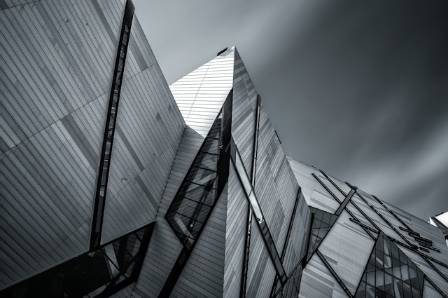
At the dawn of the twenty-first century the museum embarked upon an ambitious modernization campaign known widely as Renaissance ROM. Governmental bodies alongside generous private philanthropic contributions provided substantial funding to elevate annual visitor numbers and secure long-term financial stability for ongoing research and educational outreach. The crowning architectural achievement of this massive undertaking emerged as a striking deconstructivist crystalline addition known as the Michael Lee-Chin Crystal conceptualized by an internationally renowned architect chosen through a competitive global design process. Implementing this bold crystal formation required the previous northern terrace structures to be taken down while upgrading surrounding exhibition spaces and introducing numerous innovative displays. Final expenditures for the comprehensive renewal initiative approached two hundred and seventy million dollars reshaping the physical identity of the cultural landmark.
Ongoing Modernization and Contemporary Architectural Refinements
Recent multi-year restoration efforts focus on resolving prior structural shortcomings within the crystalline wing while honoring the original avant-garde design intentions of the visionary architect. Upgrades incorporate an enlarged overhead skylight designed to flood the central interior atrium with abundant natural daylight alongside an additional interior staircase and the complete reconstruction of the outdoor plaza to create a flat welcoming surface capable of hosting vibrant street performances and community gatherings. These continuous improvements demonstrate an enduring commitment to blending striking modern architecture with functional public accessibility ensuring the institution remains a dynamic cultural focal point for generations to come.
More from the edition
Column · en
What is a dolphin?
Dolphins are among the most intelligent animals in the ocean and are widely admired for their playful behaviour and close interactions with humans. There are more than 40 known dolphin species, which are divided into six different families. Some animals commonly called whales, such as the killer whale and pilot whale, are actually dolphin species despite their names.
Column · en
What's that Weed? Dollarweed!
Dollarweed, often called pennywort, is a warm-season perennial broadleaf weed that commonly appears in lawns and turf areas. It belongs to the parsley family and includes several related species, such as marsh pennywort, coastal plain pennywort, many-flowered pennywort, and whorled pennywort.
Column · en
Best Bike Stunts Ever
When it comes to two wheels, nothing captures the imagination like gravity-defying tricks. From daring flips to impossible spins, bike stunts have become a global spectacle that blends athletic skill with fearless creativity. Let’s take a ride through some of the most iconic moves, the legends who pulled them off, and how the sport continues to push forward.
Column · en
Sago Fruit Dessert
Sago Fruit Dessert is a light, creamy, and refreshing treat that’s especially popular during Ramadan, particularly at Iftar. It blends tender, chewy sago pearls with chilled milk and a variety of fresh fruits such as bananas, apples, and grapes. This dish is simple to prepare and ideal for anyone seeking something nutritious, cooling, and satisfying after a long day of fasting.
Column · en
Top Ten Beach Towns for a Cottage by the Sea
If you dream of owning or staying in a cozy cottage by the ocean, these charming coastal towns are worth discovering. Away from the busiest tourist destinations, they offer peaceful beaches, beautiful landscapes, rich history, and relaxing seaside lifestyles. From quiet islands to historic waterfront communities, each destination provides its own unique coastal charm.
Column · en
6 of the World’s Most Impressive Piers
Across coastlines worldwide, piers stand as a bridge between land and sea. Some are beloved for their seaside entertainment, others are marvels of history, while a few are celebrated simply for their sheer size. Built from timber, concrete, or steel, these structures have become icons of both engineering and culture. Here are six of the most extraordinary piers on the planet.