Quiet Type Edition
NTnotedthesundy.com
← Back to desk3 min column
Ghosts of the Seabed: The Elusive Southern Stingray

Sunday column

Ghosts of the Seabed: The Elusive Southern Stingray

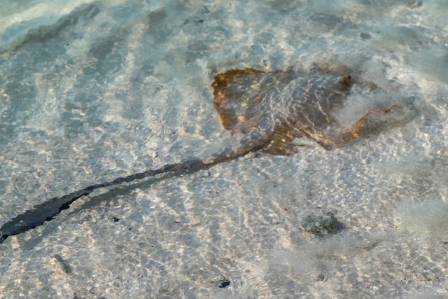
The southern stingray (Hypanus americanus) is a cartilaginous species sharing ancestry with sharks and skates. Perfectly adapted to a benthic lifestyle, these rays spend the majority of their time gliding along the ocean floor. In shallow coastal waters, the movement of foraging rays often attracts shorebirds, which capitalize on the small fish disturbed by the rays' activity.

L

Lily Evans

Desk editor

Editor’s note

The full column continues in quiet type below.

Section

Sunday Broadsheet

The southern stingray (Hypanus americanus) is a cartilaginous species sharing ancestry with sharks and skates. Perfectly adapted to a benthic lifestyle, these rays spend the majority of their time gliding along the ocean floor. In shallow coastal waters, the movement of foraging rays often attracts shorebirds, which capitalize on the small fish disturbed by the rays' activity.

Physical Characteristics

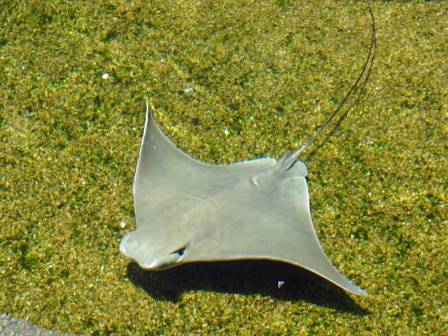
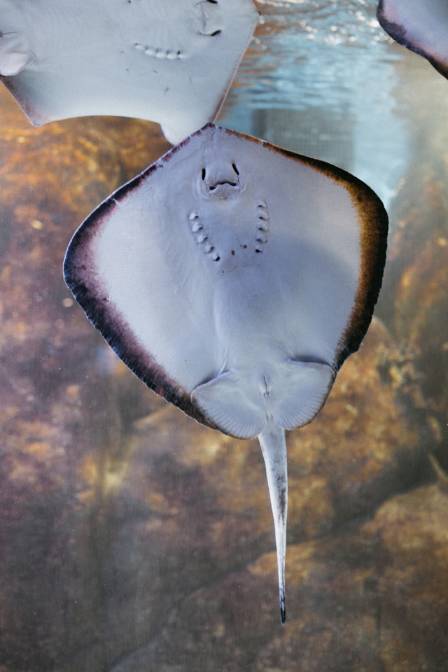
Southern stingrays possess flat, diamond-shaped discs with notably angular corners, distinguishing them from other ray species. Their dorsal coloring ranges from olive-green to brown, providing camouflage against the sandy seabed, although juveniles may exhibit dark gray hues temporarily. Ventrally, they are primarily white with darker marginal bands. Their pectoral fins are fused to their body discs, functioning more like wings than traditional fins. Sensory adaptations include eyes and spiracles—specialized dorsal openings—on top of the head; spiracles allow the ray to breathe by drawing water in when its gills are buried in sand. While males typically span two to three feet, females grow larger, reaching about four feet across. Their slender, whip-like tails can extend up to twice the length of their bodies.

Diet & Habitat

Image: Julie Bedford / NOAA / Public and Constituent Affairs
As opportunistic foragers, southern stingrays consume a wide variety of prey, including small fish, worms, crustaceans, and mollusks. Their jaws contain hardened plates capable of crushing hard-shelled animals. To locate hidden prey, they rely on a suite of senses: smell, touch, and electroreception. They unearth meals by spraying water from their mouths or vigorously flapping their fins to disrupt the substrate.
Though they frequently hunt under the cover of darkness, these rays are generally continuous grazers throughout the day. When threatened by predators such as lemon or hammerhead sharks, they either bury themselves in the sand or defend themselves using venomous barbs located on their tails.
This species inhabits tropical and subtropical waters of the Western Atlantic and the Gulf of Mexico, ranging from New Jersey south to Brazil. Typically residing in shallow coastal zones, they can descend to depths of nearly 200 feet in search of food. They are strictly bottom-dwellers, rarely venturing far from the seafloor. Within the National Marine Sanctuary System, they are prominent residents of the Florida Keys, Flower Garden Banks, and Gray’s Reef. Populations are known to undertake short migrations to reach annual nursery grounds.

Life History

Reproduction occurs through internal fertilization, followed by a gestation period of four to seven months, culminating in live birth. Litters can consist of up to 10 pups, each born with a functional serrated barb on its tail and fully independent from birth.
Sexual maturity rates and life cycles vary by population, though males generally mature one to two years earlier than females. With a potential lifespan exceeding 15 years, southern stingrays can be either solitary or social. They often aggregate in large groups during mating season or for communal defense against predators, communicating through pheromones, tactile interaction, and biting.

Threats & Conservation

While global populations remain relatively stable compared to other threatened ray species, the conservation status of the southern stingray warrants attention. Originally listed as "Data Deficient" by the IUCN Red List, its status was updated to "Near Threatened"​ in early December 2020.
Primary threats include accidental capture as bycatch, collection for the aquarium trade, and harassment by snorkelers and divers. Additionally, they face environmental pressures from coastal development, climate change, oceanic deoxygenation (dead zones), and acidification—the latter posing a risk to the shellfish populations that comprise their diet.

More from the edition

Column · en

6 Thrilling US Destinations for Your Next Off-Road 4x4 Adventure

When it comes to off-road adventures, the excitement is palpable, regardless of the season. However, as winter blankets much of the northern US in snow, some might find their adventurous spirit hibernating. But fear not! Planning your next 4x4 escapade should always be on your radar. So let’s ignite that wanderlust! Here’s a curated list of 6 exhilarating off-road destinations across the United States that are bound to deliver unforgettable experiences.

Column · en

Are Smoothies Good for You? A Nutritionist’s Comprehensive Guide

Smoothies have become a staple in modern diets, celebrated for their convenience, versatility, and ability to pack fruits, vegetables, and nutrients into a single, easy-to-consume drink. Whether enjoyed as a quick breakfast on a busy morning, a post-workout recovery snack, or a way to sneak extra veggies into a child’s diet, smoothies offer undeniable appeal. But beneath their vibrant colors and refreshing taste lies a question that divides health enthusiasts: are smoothies truly good for you, or are their high sugar content and blended format undermining their nutritional value? To answer this, we’ll dive into the science, benefits, potential pitfalls, and expert tips to help you make informed choices about incorporating smoothies into your lifestyle.

Column · en

Coastal Majesty

Majestic mountains lean forward to kiss the endless, shimmering sea. Along certain coastlines—like California’s rugged Big Sur or Oahu’s volcanic shores—towering peaks descend steeply into cerulean waters, offering a breathtaking tableau where earth meets ocean.

Column · en

The 10 Greatest Impressionist Landscape Paintings

The Impressionist movement revolutionized 19th-century art, breaking away from classical traditions to focus on light, color, and the transient beauty of the natural world. Landscapes became the ideal subject for artists to experiment with these innovations. Below, we explore ten of the most remarkable Impressionist landscape paintings, examining their techniques, significance, and lasting impact.

Column · en

What Is a Satellite?

When you hear the word “satellite,” you may immediately picture a large metal spacecraft traveling around Earth high above the planet.

Column · en

9 Best Major Tennis Tournaments

The piece begins by noting that tennis has grown into a truly global sport with high-stakes tournaments that draw in fans from around the world. It frames the list as events worth attending—not just for the tennis, but for the spectacle, setting, history and travel experience. (Roadtrips)