Sunday column
Types of Rock Climbing Explained
If there’s one takeaway from the media attention around Tommy Caldwell and Kevin Jorgeson’s ascent of the Dawn Wall, it’s that rock climbing is surprisingly difficult to explain to people who don’t climb. Even for climbers themselves, the styles, gear, and terminology can be confusing. This is a simplified overview of the main types of climbing.
Ruby Avalon
Desk editor
Editor’s note
The full column continues in quiet type below.
Section
Sunday Broadsheet
If there’s one takeaway from the media attention around Tommy Caldwell and Kevin Jorgeson’s ascent of the Dawn Wall, it’s that rock climbing is surprisingly difficult to explain to people who don’t climb. Even for climbers themselves, the styles, gear, and terminology can be confusing. This is a simplified overview of the main types of climbing.
Free Solo Climbing
Free solo climbing is the most straightforward—and most dangerous—form of climbing. There are no ropes or protective systems involved. If a climber falls, there is nothing to stop the fall. In essence, it’s climbing with only your body and the rock.
A simple comparison is climbing trees as a child: that same activity, without safety equipment, is free soloing.
One well-known example is Alex Honnold, who became widely recognized for his free solo ascents. While he often climbs with ropes in other styles, documentaries like Free Solo focus specifically on his rope-free climbs.
Free Climbing
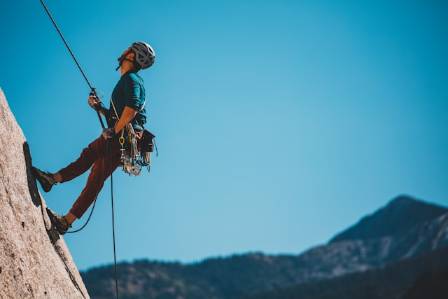
Free climbing is the most common style among climbers. Despite the name, it does not mean climbing without protection. Instead, climbers use ropes and safety systems, relying on physical ability—hands and feet on natural rock—to ascend.
In this style, a climber wears a harness connected to a rope managed by a partner (the belayer). If a fall happens, the rope system prevents the climber from hitting the ground.
Free climbing is generally divided into two main categories: sport climbing and traditional (trad) climbing. In trad climbing, climbers place removable protection like cams and nuts into cracks as they ascend. In sport climbing, fixed bolts are already installed in the rock, and climbers clip into them using quickdraws.
Because ropes have limited length (often around 150–230 feet), longer routes are broken into multiple sections called pitches. One climber leads each pitch, placing or clipping protection as they go, then builds an anchor at the top. The second climber follows after, secured by the rope system.
A famous example is the multi-pitch route on El Capitan known as the Dawn Wall, which contains roughly 30 pitches. The 2015 ascent by Caldwell and Jorgeson was complex because both climbers attempted difficult lead sections rather than following a simple leader–follower structure.
In gym settings, any roped climbing—whether top-rope or lead—is considered free climbing (specifically sport climbing).
Aid Climbing
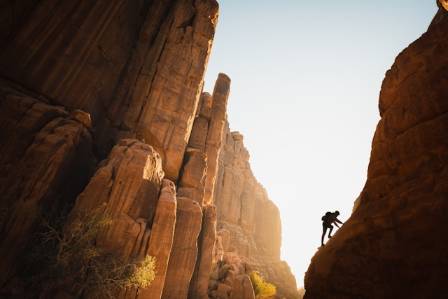
Aid climbing is a style where climbers rely on equipment to make upward progress instead of pulling directly on natural rock holds. Climbers place gear into the rock, attach ladders or straps to it, and use these tools to step upward.
Rather than using holds for upward movement, the equipment itself becomes the primary means of progression.
A well-known example is the route “The Nose” on El Capitan, first climbed as an aid route in 1958 by Warren Harding and others. It remains one of the most iconic big-wall climbs in the world.
Bouldering
Bouldering is a rope-free form of climbing focused on short but powerful sequences of moves. Climbers use only climbing shoes, chalk, and padded crash mats to reduce risk from falls.
Because there are no ropes, falls are part of the activity, but problems (short climbing routes) are usually low to the ground. The emphasis is on strength, technique, and problem-solving.
Most climbing gyms include dedicated bouldering areas, making it one of the most accessible entry points into the sport.
Deep Water Soloing
Deep water soloing is another rope-free style of climbing, similar to bouldering, but performed above deep water. Instead of crash pads, the water below serves as the landing zone in case of a fall.
It requires very little equipment, although access often involves boats or climbing along coastal cliffs. Popular locations include coastal cliffs in Spain and Southeast Asia, with growing interest in places in the United States as well.
A notable milestone was the first major deep-water solo competition held in 2013 in Utah, where climbers competed on a wall positioned over a pool.
Final Thoughts
No matter the style—whether rope-free, rope-protected, or gear-assisted—climbing offers different ways to engage with vertical terrain. Each discipline has its own skills, risks, and rewards, but all share the same core experience: moving upward using body and mind together.

More from the edition
Column · en
Common Kingfisher
The Common Kingfisher is among the most dazzling and cherished birds inhabiting rivers, lakes, and wetlands. Its brilliant plumage, swift diving techniques, and patient fishing behavior make it a favorite for birdwatchers and wildlife photographers alike. Despite its small stature, this bird demonstrates impressive skill, intelligence, and adaptability, distinguishing it from many other freshwater species.
Column · en
The Most Breathtaking Coastal Scenery in the World: Must-Visit Ocean Destinations
The ocean holds an irresistible allure for humans. We willingly invest time and money just to witness its vast, mesmerizing beauty. While we may never fully understand what draws us to the sea, one thing is certain—there are countless breathtaking ocean views around the world waiting to be discovered. If you're looking for some of the most spectacular coastal landscapes, we’ve handpicked several stunning locations, each offering a unique and unforgettable experience.
Column · en
Best 6 Best Luxury Silk Scarves to Buy
A number of prestigious fashion houses are known for creating exceptionally beautiful and high-quality silk scarves. Among the most notable names are the following.
Column · en
Care Guide for the ZZ Plant
The ZZ plant (Zamioculcas zamiifolia), also known as the Zanzibar Gem, is a popular low-maintenance houseplant recognized for its glossy, oval-shaped leaves that grow along long, thick stems.
Column · en
Identifying White Herons: A Comprehensive Guide
Observing white wading birds offers a fascinating opportunity to hone your wildlife identification skills. While these elegant creatures may appear similar at first glance, each species possesses unique characteristics that distinguish them from their relatives. Learning to recognize these differences will greatly enhance your birdwatching experiences in wetland habitats.
Column · en
The Ultimate Guide to Buying a Men’s Suit: Fit, Style, Fabric & Accessories
A well-fitted suit is more than just clothing—it’s a powerful tool for making a lasting impression, whether you’re interviewing for your dream job, attending a formal event, or building a professional wardrobe. For first-time buyers, however, navigating the world of suits can feel overwhelming: from understanding fit nuances to choosing the right fabric and accessories, there are countless details to consider. This guide breaks down the process into six essential steps, covering everything you need to know to buy a suit that fits perfectly, functions for your needs, and reflects your personal style. Whether you’re 18 or 80, this comprehensive resource will demystify suit shopping, ensuring you invest in a piece that serves you well for years to come.