Sunday column
Antirrhinum majus: From Greenhouse Production to Floral Arrangements
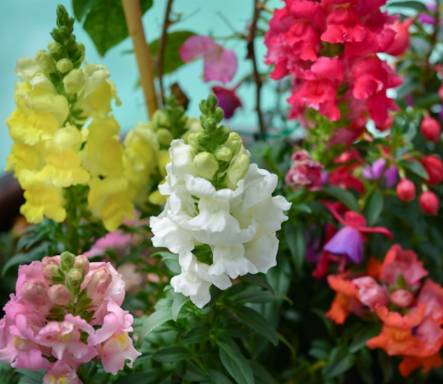
Snapdragon (Antirrhinum majus) belongs to the Scrophulariaceae family. The name Antirrhinum originates from Greek, meaning “nose-like,” referring to the distinctive form of its blossoms. Each flower is approximately 1¼ to 1½ inches long, with a tubular structure and rounded upper and lower lips. Depending on the variety, flowers may be single, double, or open-faced (commonly called “butterfly” types) that lack a defined lip.
Charlotte Moore
Desk editor
Editor’s note
The full column continues in quiet type below.
Section
Sunday Broadsheet
Snapdragon (Antirrhinum majus) belongs to the Scrophulariaceae family. The name Antirrhinum originates from Greek, meaning “nose-like,” referring to the distinctive form of its blossoms. Each flower is approximately 1¼ to 1½ inches long, with a tubular structure and rounded upper and lower lips. Depending on the variety, flowers may be single, double, or open-faced (commonly called “butterfly” types) that lack a defined lip.
A single stem can support as many as 15 closely packed flowers and may grow up to 3 feet long when cut. The tall flower spikes and wide range of colors make snapdragons highly versatile for floral arrangements, offering numerous creative possibilities for both florists and consumers. Most stems available in floral shops are produced in greenhouses under controlled conditions to ensure they are long, straight, and uniform. However, many people favor the more natural and relaxed appearance of snapdragons grown outdoors in fields. These plants are simple to cultivate in rows and are available in many different color variations.
Production
Snapdragons are classified into four groups (I–IV) based on how their growth and flowering respond to seasonal temperature changes and day length. Group I varieties bloom in winter under short days and low light conditions. Group II types flower from late winter into early spring as light and temperatures begin to rise. Group III cultivars are suited for spring flowering, while Group IV varieties perform best under long days, high light intensity, and nighttime temperatures above 60°F (16°C). Growers must carefully select cultivars according to seasonal conditions to ensure successful production.
These plants are annuals that thrive in full sun to partial shade, especially during cooler seasons. Seeds typically sprout within 7–14 days at temperatures between 70–75°F. Light is necessary for germination, though covering seeds lightly with vermiculite helps retain moisture and reduce algae growth. It is best to water from below or mist gently to avoid disturbing the seeds. Seedlings should be transplanted into larger containers when their first true leaves develop, usually 3–4 weeks after sowing. Pinching young plants back to about 1½–2 inches tall when they reach 3–4 inches in height can encourage branching. Direct sowing is not advised. For outdoor growing, seeds should be started 8–10 weeks before the last frost. Plants should be spaced 4–12 inches apart.
Weed control is essential, as weeds compete with crops for water, nutrients, and sunlight, reducing flower production and increasing susceptibility to pests and diseases. Effective weed management may involve cultivation, mulching, or a combination of cultural and chemical methods, depending on available resources and costs.
High humidity, overhead irrigation, and plant debris can increase the risk of diseases. Common issues affecting snapdragons include anthracnose, botrytis blight, rust, powdery mildew, downy mildew, and root rot. Accurate identification of diseases is critical for proper control.
Anthracnose appears as yellow spots that turn white with brown edges and may cause leaf death or stem damage. Botrytis blight causes petals to brown and develop gray fungal growth. Downy mildew results in stunted growth, downward-curling leaves, and fungal growth on the undersides. Powdery mildew shows as white fungal patches on leaves and stems. Root rot is often indicated by wilting; affected roots may appear dark or damaged. Rust produces small yellow bumps that release rust-colored spores.
Maintaining good sanitation is the most effective way to manage diseases. Removing plant debris helps interrupt pathogen life cycles. Drip irrigation can reduce disease by minimizing moisture on foliage. Fungicides such as chlorothalonil, thiophanate-methyl, mancozeb, and copper-based products are commonly used when necessary.
Common insect pests include aphids, whiteflies, leafminers, caterpillars, and mites. Regular monitoring allows early detection and easier control. Neem oil or insecticidal soap can help manage aphids, whiteflies, and mites. Leafminers can be controlled with spinosad, while caterpillars may be treated with various insecticides, including Bacillus thuringiensis (Bt) for young larvae.
When using pesticides, it is essential to follow all label instructions carefully, including application rates and safety guidelines.
Harvest and Handling
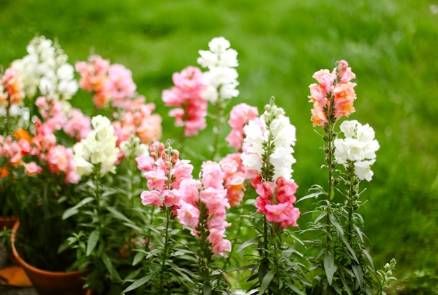
For single-cut production, stems may reach 12–60 inches in height, while multiple harvests per plant typically yield shorter stems of 12–36 inches. Ideal harvest timing is when several lower flowers on the spike have opened, while upper buds remain closed but show good color. Removing tight tips can encourage faster blooming of remaining flowers.
Snapdragons are sensitive to ethylene gas, which can accelerate aging and reduce vase life. Some varieties are more resistant, but others benefit from treatments such as 1-MCP or silver thiosulfate (STS) to prevent premature flower drop.
Postharvest treatment with floral solutions containing sugar can improve flower quality. Stems should always be stored upright, as they tend to bend if placed horizontally. Proper storage conditions include temperatures of 33–35°F and protection from moisture loss using polyethylene wrapping.
Cultivar Recommendations
Snapdragons are divided into garden types and greenhouse types. For outdoor production, garden varieties are recommended, as greenhouse types are bred for controlled environments.
Recommended series include:
Madame Butterfly Series – double flowers in shades such as bronze, yellow, ivory, pink, and red
Chantilly Series – early, open-faced blooms in colors like light pink, cream, white, and purple (Group I–II)
Rocket Series – strong stems and good branching, available in white, orchid, red, and gold (Group III–IV)
Potomac Series – suitable for both field and greenhouse production, with a wide color range (Group III–IV)
Design Applications
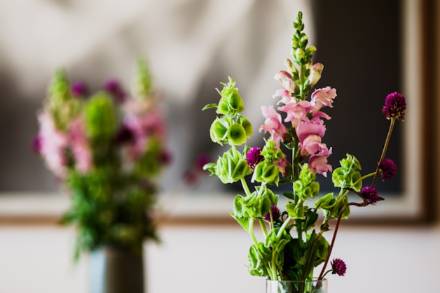
Snapdragons function well as line flowers in arrangements and can also stand alone for striking visual effects. For example, designs using ‘Chantilly Bronze’ highlight their open-faced blooms and vibrant coral tones.
A classic triangular arrangement features a three-sided display, with flowers primarily visible from the front and sides, making it suitable for placement against walls or on platforms. Creating balanced designs involves establishing the height, width, and depth with initial stems, then adding more material evenly to maintain symmetry.
Containers may be constructed from natural materials such as wood and branches, lined with waterproof layers and fitted with floral foam. The foam should be soaked properly and secured with wire to keep it stable. Floral food solution should be added to sustain the arrangement without making it difficult to handle.
More from the edition
Column · en
Success with Succulents
Succulent plants have attracted the attention of gardeners for many years, and their popularity continues to grow. Their unique appearance, low water requirements, and ability to thrive in challenging conditions make them an excellent choice for places like Denver. Although growing succulents may seem intimidating at first, understanding their basic needs can help you create healthy plants that will impress visitors and neighbors.
Column · en
The perfect boat
Selecting a boat for ocean cruising is a major decision that deserves careful consideration. I have explored this subject during numerous rallies and spoken with hundreds of skippers about their experiences. Almost every sailor has a different opinion about which boat is ideal and the reasons behind that choice, yet surprisingly few people question just how important it is to select the right vessel from the beginning.
Column · en
Black Swan: The World’s Only Completely Black Swan
The Black Swan (Cygnus atratus) is the only swan species in the world with an almost entirely black-colored body.
Column · en
From Sputnik to Firefly: The Fascinating World of Satellites
On October 4, 1957, the announcement “T-minus 10 minutes” echoed through an underground bunker at the Baikonur Cosmodrome in Kazakhstan. Only about 200 meters away, a massive 29-meter R-7 rocket stood on the Tulip launch pad. Its unusual payload was a polished, basketball-sized sphere weighing 83.6 kilograms.
Column · en
The World's 17 Most Lavish Ingredients
Indulge in a culinary journey through the world's most opulent and extravagant ingredients. These culinary gems are a testament to the heights of gastronomic luxury, far beyond your average grocery bill.
Column · en
4 Surprising Facts That Might Change How You See Seagulls
Often spotted swooping over beaches or loitering near picnic tables, seagulls have earned a cheeky reputation—especially for their bold food-snatching antics. But beneath that noisy exterior is a bird of remarkable adaptability and intelligence. Here are four unexpected facts about seagulls that may just earn them a bit more respect.