Sunday column
Polar Bears: Giants of the Arctic
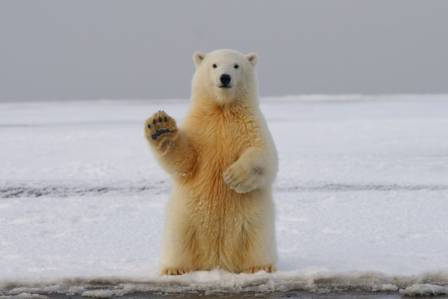
Polar bears (Ursus maritimus) are close relatives of brown bears but have evolved to thrive in snowy, icy habitats, inhabiting some of the coldest regions in North America. Their black skin helps absorb heat from the sun, while their thick, white fur provides insulation, repels water, and offers camouflage against the snow and ice. Large, webbed paws make them exceptional swimmers, allowing them to navigate the Arctic waters with ease.
Jack Foster
Desk editor
Editor’s note
The full column continues in quiet type below.
Section
Sunday Broadsheet
Polar bears (Ursus maritimus) are close relatives of brown bears but have evolved to thrive in snowy, icy habitats, inhabiting some of the coldest regions in North America. Their black skin helps absorb heat from the sun, while their thick, white fur provides insulation, repels water, and offers camouflage against the snow and ice. Large, webbed paws make them exceptional swimmers, allowing them to navigate the Arctic waters with ease.
In the United States, polar bears are found exclusively in Alaska. Two subpopulations utilize Alaskan territory at different points in their life cycle: the Chukchi Sea subpopulation, estimated at around 3,000 bears, and the Southern Beaufort subpopulation, which has roughly 900 individuals. Only two U.S. national park units—Bering Land Bridge National Preserve and Cape Krusenstern National Monument—are known to have polar bears in proximity, with some bears’ home ranges extending into park boundaries. For specific information about polar bears in any national park, it’s best to contact the park directly.
Diet and Feeding
Polar bears consume a diet much richer in fat and protein than other bear species. Their main prey are seals, though they will also scavenge whale carcasses when available. With an exceptional sense of smell, polar bears can detect prey or carcasses from nearly 20 miles away. When on land and primary food sources are scarce, they may eat marine mammal remains, birds, fish, terrestrial mammals, and even berries.
Winter Dens
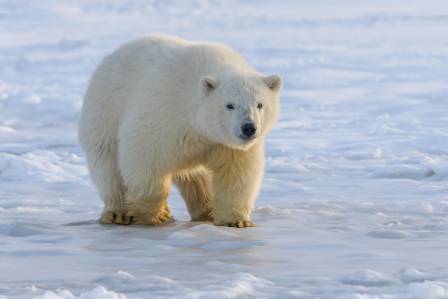
Pregnant female polar bears are the only ones that spend the winter in dens, as hunting for seals on sea ice is most productive during this season. Dens can be located on land along the coast or on sea ice. Unlike black and brown bears, which enter a deep metabolic dormancy during hibernation, denning polar bears remain somewhat active throughout the winter months while nurturing their unborn cubs.
Reproduction and Life Cycle
Mating usually occurs between March and June, but embryo implantation is delayed until autumn. Polar bears give birth during the winter to one to three cubs, with twins being the most common.
Newborn cubs are typically 12–14 inches long and weigh just over one pound. In spring, the mother and her cubs emerge from the den.
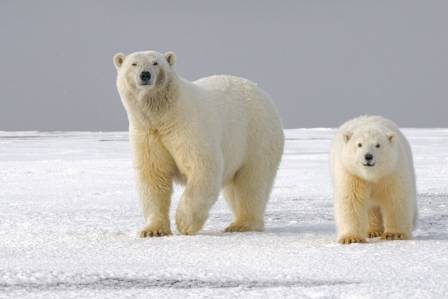
Mother polar bears are highly protective, sometimes defending their young from adult males, which can pose a threat to cubs. Cubs grow quickly, remaining with their mother for a little more than two years as they learn essential survival skills in the harsh Arctic environment.
More from the edition
Column · en
An In-Depth Manual for Mastering Landscape Painting
Landscape painting is a lifelong pursuit that offers endless discovery. Whether you are just beginning or looking to refine your existing skills, this guide outlines a structured path to help you capture the beauty of the outdoors on canvas.
Column · en
Amazing Girl Drawing Ideas That You Can Easy Handle
Whether you’re just starting out with sketching for fun or an aspiring artist seeking fresh inspiration, this guide offers a variety of drawing ideas for girls — ranging from simple, cute concepts to more detailed anime-style illustrations.
Column · en
What Are Nebulae And How Are They Formed?
Nebulae are enormous collections of gas and dust drifting through space. The singular form is "nebula," while the plural is "nebulae." These magnificent structures rank among the most beautiful sights in the universe. Over time, astronomers have given many nebulae names inspired by familiar objects and creatures, including birds, insects, sea animals, mammals, and even supernatural figures.
Column · en
List: Tallest TV Broadcasting Towers in the World
TV broadcast and sightseeing towers are remarkable man-made structures known for their towering heights and distinctive designs. While their primary function is signal transmission, many of these towers feature public observation decks and restaurants at the upper levels, making them popular tourist attractions. In many cities, they serve as iconic landmarks, defining the skyline.
Column · en
Hongya Cave: A Stunning Riverside Landmark in Chongqing
Hongya Cave, known as “Hongyadong” in Chinese, is situated along the riverside area where Cangbai Road meets the Yangtze River and Jialing River. The most distinctive feature of this famous attraction is its traditional stilted wooden architecture, which perfectly represents the architectural style of old Chongqing.
Column · en
11 Fascinating Facts About Chickens—and Why They Deserve Better Lives
Chickens are the most numerous land-dwelling animals on Earth, yet their intelligence and emotional depth are often overlooked. In many industrial farming systems, they endure harsh and unnatural conditions. The following facts shed light on the remarkable traits of chickens and offer a compelling reason to rethink how we treat them.