Sunday column
The Changing Nightscape in the Era of Urban Transformation
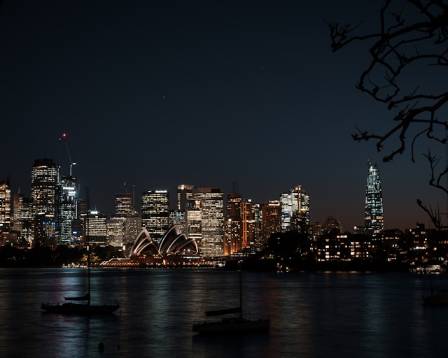
A recent photographic study of a coastal landscape at night provided a poignant introduction to a scholarly dialogue regarding the intersection of metropolitan environments and historical analysis. The visual scene depicts a dusky environment where trees and residential architecture are illuminated by scattered lamps, while a distant city appears as a glowing silhouette against the horizon. This image effectively highlights how contemporary urban areas are now visually distinct from natural landscapes due to the pervasive reach of nocturnal lighting. Investigating the history of nighttime illumination reveals how this phenomenon has long been overlooked, despite being a constant presence in the daily lives of global populations.
Elias Thornfield
Desk editor
Editor’s note
The full column continues in quiet type below.
Section
Sunday Broadsheet
A recent photographic study of a coastal landscape at night provided a poignant introduction to a scholarly dialogue regarding the intersection of metropolitan environments and historical analysis. The visual scene depicts a dusky environment where trees and residential architecture are illuminated by scattered lamps, while a distant city appears as a glowing silhouette against the horizon. This image effectively highlights how contemporary urban areas are now visually distinct from natural landscapes due to the pervasive reach of nocturnal lighting. Investigating the history of nighttime illumination reveals how this phenomenon has long been overlooked, despite being a constant presence in the daily lives of global populations.
The Significance of Nightscape History
One of the most profound yet frequently neglected environmental shifts since the end of the nineteenth century involves the transformation of the nocturnal sky and the nature of darkness itself. It is essential that both environmental and urban researchers adopt the concept of the nightscape as a vital analytical lens for understanding our shared history. Historically, scholars have thoroughly examined the modernization of infrastructure such as water, sewage, and electricity, yet the specific evolution of artificial lighting and its associated pollutants remains significantly understudied. While technological systems are often designed to mitigate waste, they frequently introduce new and complex forms of environmental degradation. Light pollution stands as a primary example of this intricate development.
Anthropogenic Illumination and Scientific Concerns
Human-made illumination creates skyglow, which is the bright haze scattered across the atmosphere that masks the natural darkness of the celestial canopy. Because of dense population centers and the normalization of lighting infrastructure, this effect has intensified significantly since the latter half of the twentieth century. Astronomers were the earliest group to vocalize concerns regarding this issue. Historically, scientific observatories were often situated near expanding metropolitan regions, but as artificial light, air pollution, and transit vibrations escalated, these facilities were forced to relocate to distant, secluded areas. This pattern is exemplified by the repeated relocations of national astronomical facilities in Mexico throughout the twentieth century to escape the encroaching urban glare.
Tracking the Evolution of Artificial Light
In the early seventies, a seminal article in a leading scientific journal officially introduced the concept of light pollution to a broader audience. This publication juxtaposed photographs of Pasadena taken in nineteen eleven and nineteen sixty-five to illustrate the rapid spread of artificial light over five decades. The earlier image was visually striking, while the later photograph demonstrated how a vast network of illumination had expanded toward the coast. The shift in how these images were archived suggests that nocturnal brightness became so commonplace by the sixties that it ceased to be remarked upon as a distinct phenomenon, effectively normalizing the presence of artificial light at night.
Modern Challenges and Global Patterns
Since that time, the radiance above cities has expanded and brightened dramatically. Metropolitan hubs are now continuously bathed in artificial twilight from sunset until dawn, denying residents the experience of true darkness. Contemporary scientific analysis indicates that annual rates of skyglow growth have accelerated sharply in recent years. This phenomenon is not confined to urban centers but now permeates remote rural environments, with studies suggesting that non-urban populations across the globe are increasingly exposed to widespread atmospheric brightening. Artificial illumination is thus fundamentally altering the ecological and sensory fabric of the entire planet.
Environmental Nuance and Social Justice
Environmental variables such as snow cover and cloud density significantly influence how artificial light manifests in a specific location, often magnifying its reach. Consequently, the knowledge generated by scientific research is highly dependent on local environmental conditions and the specific lighting technologies in use. Beyond the physical impact on the sky, artificial light is distributed unevenly across metropolitan landscapes. Research demonstrates that lower-income and marginalized communities often endure substantially higher levels of exposure to outdoor lighting than more affluent neighborhoods. This disparity transforms light pollution into a matter of environmental injustice, as these groups face both potential health risks and a diminished opportunity to encounter natural nocturnal darkness.
Conclusion in the Anthropocene
Nocturnal skies and urban nightscapes serve as crucial indicators of the evolving connection between land and atmosphere. These environments possess distinct histories that mirror the broader patterns of human-driven environmental change. By examining the nightscape through an interdisciplinary lens, researchers can better understand the consequences of rapid urbanization and the systematic reshaping of the planet. Recognizing these shifts is essential for navigating the complexities of the current geological epoch, where the divide between the natural night and human-made radiance has become increasingly blurred.
More from the edition
Column · en
The Evolution of Sushi: A Surprising Historical Journey
The global phenomenon of sushi—the combination of vinegared rice and fresh seafood—has a history that contradicts many modern assumptions. While today it is often viewed as a high-end Japanese delicacy, its roots trace back to ancient China, where it functioned as a preservation method rather than a fresh meal. Throughout the centuries, sushi has undergone radical transformations, evolving from a pungent, fermented street food into the diverse culinary art form enjoyed across the world today.
Column · en
Forests and Rivers in the Alpine Lakes Region
This area is still largely forested—something rare in many mountainous regions—and it’s the scale and richness of these forests that make the Cascades stand out. While other ranges may have higher peaks, few offer forest ecosystems as spectacular, except perhaps the Olympic Mountains.
Column · en
Polar Bears: Giants of the Arctic
Polar bears (Ursus maritimus) are close relatives of brown bears but have evolved to thrive in snowy, icy habitats, inhabiting some of the coldest regions in North America. Their black skin helps absorb heat from the sun, while their thick, white fur provides insulation, repels water, and offers camouflage against the snow and ice. Large, webbed paws make them exceptional swimmers, allowing them to navigate the Arctic waters with ease.
Column · en
Care Guide for the ZZ Plant
The ZZ plant (Zamioculcas zamiifolia), also known as the Zanzibar Gem, is a popular low-maintenance houseplant recognized for its glossy, oval-shaped leaves that grow along long, thick stems.
Column · en
5 Fun Facts About Clownfish
Clownfish are famous for their vibrant colors and lively personalities, making them one of the most beloved aquarium fish around the world. Here are five fascinating facts about these colorful marine residents.
Column · en
The World’s Most Remarkable Mountains to Climb
Mountain climbing represents one of the most challenging yet rewarding forms of adventure travel. Beyond the physical demands, each ascent offers cultural insight, natural beauty, and a deeper appreciation of Earth’s geography. The following twelve peaks, located across several continents, illustrate the variety and richness of the world’s climbing destinations.