Sunday column
Gorilla: The Largest of the Great Apes
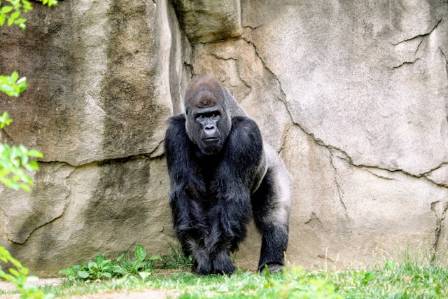
Gorillas are the biggest members of the great ape family. Although they are incredibly powerful and can be more than ten times stronger than humans, they share about 98.3% of their genetic makeup with people, making them one of our closest relatives after chimpanzees and bonobos.
Lily Brooks
Desk editor
Editor’s note
The full column continues in quiet type below.
Section
Sunday Broadsheet
Gorillas are the biggest members of the great ape family. Although they are incredibly powerful and can be more than ten times stronger than humans, they share about 98.3% of their genetic makeup with people, making them one of our closest relatives after chimpanzees and bonobos.
There are two main species of gorillas in the world: eastern gorillas and western gorillas. Although they belong to different groups, they live relatively close to each other, separated by a vast forest region of around 560 miles. These two species are further divided into four subspecies: eastern lowland gorillas, eastern mountain gorillas, western lowland gorillas, and western Cross River gorillas.
Social Groups and Family Life
Gorillas are highly social animals that live together in groups known as troops. Most troops contain around five to ten individuals, although some groups can grow to include more than 50 gorillas.
A typical gorilla family is led by a mature male called a silverback, named for the silver-colored hair that develops across his back as he ages. The silverback protects the group, guides their movements, and mates with the adult females. Young gorillas stay with their family group until they become mature. When they grow older, all males and many females leave their original troop to join or create new groups, helping prevent close relatives from breeding with each other.
Reproduction and Raising Young
Gorilla reproduction is similar to that of humans in several ways. Female gorillas experience fertility cycles, carry their babies for about eight to nine months, and usually give birth to a single infant.
After birth, mothers care for their babies for several years before having another offspring. Female gorillas generally give birth only once every four to six years, meaning their populations recover very slowly after suffering declines.
This slow reproductive rate makes gorillas especially vulnerable when facing threats such as habitat destruction, disease, or illegal hunting.
Intelligence and Emotional Abilities
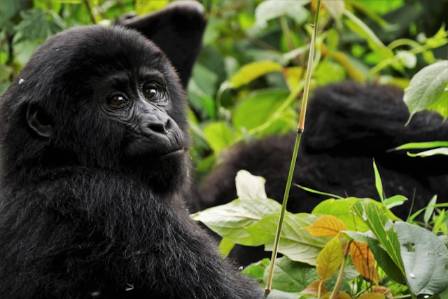
Gorillas display many complex emotions and behaviors that resemble those of humans. They can show happiness through playful laughter and may experience grief after losing members of their group.
They communicate using a wide variety of sounds, including grunts, barks, cries, whines, chuckles, hoots, roars, and screams. These vocal signals help them express emotions, maintain relationships, and warn others of danger.
Gorillas are also highly intelligent animals. Researchers have observed them using tools in the wild, such as sticks to test water depth or gather food. Some gorillas have even been seen creating simple bamboo structures that help young individuals climb.
Importance in the Forest Ecosystem
Gorillas play an essential role in maintaining the health of their forest habitats. As they travel through the forest eating plants and fruits, they spread seeds through their droppings, helping new vegetation grow.
Their powerful bodies also influence the environment. By breaking apart plants such as banana trees to reach food, they create openings in the forest and help other animals access resources. Their activities contribute to the balance and diversity of the ecosystems they inhabit.
What Is the Scientific Name of a Gorilla?
The eastern gorilla’s scientific name is Gorilla beringei, while the western gorilla is known scientifically as Gorilla gorilla.
The word “gorilla” has a long history. It is believed to come from a description written by the Carthaginian explorer Hanno, who traveled along the western coast of Africa nearly 2,500 years ago. During his journey, he encountered large, hairy primates, and his interpreters translated the local name into Ancient Greek as gorillai.
The term was roughly interpreted as meaning “hairy person.” Although the accuracy of Hanno’s account remains uncertain, American naturalist Thomas S. Savage was familiar with this name when he formally described gorillas scientifically in the 1840s and used “gorilla” as the official name.
Are Gorillas Endangered?
Both eastern and western gorillas are currently classified as critically endangered by the International Union for Conservation of Nature (IUCN).
The eastern gorilla population has declined significantly, with only a few thousand mature individuals remaining. Both species face many of the same dangers, including habitat destruction caused by farming, mining, roads, and other human activities.
Additional threats include illegal hunting, infectious diseases, and the continued loss of natural forest environments. Protecting their habitats and reducing human pressures are essential for their survival.
Where Do Gorillas Live?
The two gorilla species live in different regions on opposite sides of the Republic of the Congo, separated by the Congo Basin rainforest.
Eastern gorillas are found in areas of Rwanda, Uganda, and the Democratic Republic of the Congo. Western gorillas inhabit parts of Angola, Cameroon, the Central African Republic, the Democratic Republic of the Congo, Equatorial Guinea, Gabon, and Nigeria.
Gorillas live mainly in forests and build nests for sleeping each night. Most nests are constructed on the ground, although some may be made in trees. Mountain gorillas live at higher elevations, usually above 1,400 meters, in habitats such as mountain forests, bamboo forests, and alpine grasslands.
Unlike many other large animals, gorillas are not strongly territorial. Different family groups may share overlapping areas while maintaining their own social structures and routines.
More from the edition
Column · en
5 Things to Know About Sun Conures
Sun conures possess the capacity for speech, though they typically don't match the talking proficiency of some other parrot species. These birds generally acquire only a small vocabulary, and many individuals never develop the ability to imitate human words at all.
Column · en
Fiddle Leaf Fig Houseplant
The common name “Fiddle Leaf Fig” can describe either Ficus lyrata or Philodendron bipennifolium. It is fairly common for one popular name to be used for more than one plant species, and this is one such example. The care information here applies specifically to Ficus lyrata, which is the plant most often sold as a Fiddle Leaf Fig houseplant in retail stores.
Column · en
A Guide to Train Travel in the USA
Think train travel belongs to another era in the USA? Not at all. While the country has the world's largest road network, it is also a surprisingly rewarding place to explore by rail. Instead of concentrating on the road ahead or waiting at an airport, you can spend hours looking through enormous windows as snowy peaks, open grasslands, vast deserts and bustling cities gradually pass by.
Column · en
What is inside a Japanese bento box?
Bento boxes are an important part of Japanese culinary tradition and can be found throughout Japan in countless styles, ranging from convenient store-bought meals to carefully crafted handmade creations.
Column · en
7 Exciting Finds When Collecting Rocks on Ocean Beaches
Walking along an ocean beach can be a peaceful and exciting experience for rockhounding enthusiasts. With the gentle sound of waves in the background, every step along the shore could reveal a hidden treasure. Whether you're looking for stones that have been naturally polished by the ocean or fossils that have survived for centuries, beaches offer a variety of collectible items. Below are seven of the most common treasures you can find while rockhounding on the beach.
Column · en
The 10 Most Famous Pieces of Street Art in the World
Street art emerged in 1960s Philadelphia, USA, fueled by the creative drive of pioneering artists like Cornbread and Cool Earl. Long dismissed as a lesser art form, this genre encompasses everything from wall tags and public transit murals to building-scale pieces. Though often unauthorized and transient—easy to paint over or remove—street art has nonetheless captured the imagination of countless creators and admirers. At its core, it seeks to make art accessible and visible to the masses, serving as a vehicle for profound messages that spark reflection. Today, some street artworks command million-dollar price tags and stand as celebrated masterpieces. Artsper highlights 10 of the most iconic street art pieces across the globe.