Sunday column
The Most Beautiful and Magical Desert on Earth — Brazil’s Desert
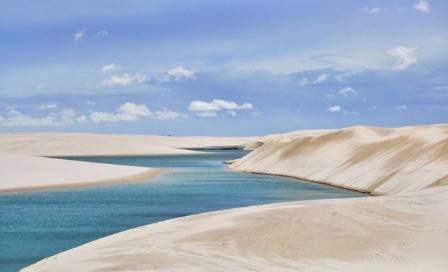
The world is filled with extraordinary places and rare natural phenomena that seem almost impossible to imagine. One of these remarkable landscapes can be found in Brazil, where vast white sand dunes surround crystal-clear lagoons in shades of turquoise and blue-green. The water is so transparent that the bottom can often be seen, while fish and shrimp move beneath the surface. When the sun begins to set, the entire landscape takes on an even more spectacular appearance. The result looks almost like a paradise created on Earth.
Lyanna Cross
Desk editor
Editor’s note
The full column continues in quiet type below.
Section
Sunday Broadsheet
The world is filled with extraordinary places and rare natural phenomena that seem almost impossible to imagine. One of these remarkable landscapes can be found in Brazil, where vast white sand dunes surround crystal-clear lagoons in shades of turquoise and blue-green. The water is so transparent that the bottom can often be seen, while fish and shrimp move beneath the surface. When the sun begins to set, the entire landscape takes on an even more spectacular appearance. The result looks almost like a paradise created on Earth.
This extraordinary destination is Lençóis Maranhenses National Park, a place often described as “the most beautiful desert in the world.”
Unlike conventional deserts, this landscape is covered with thousands of temporary lagoons that appear during the rainy season. The combination of brilliant white dunes and intensely coloured pools creates a remarkable natural scene unlike almost any other desert on the planet.
Whether you have already been fortunate enough to visit or have never had the opportunity, this distant landscape is still possible to appreciate from afar. Even without travelling thousands of miles around the world, its remarkable scenery can transport you to one of Earth’s most unusual environments.
The Desert of a Thousand Lakes
When the word desert comes to mind, most people imagine enormous expanses of dry yellow sand beneath an intense sun. Water is usually scarce, and the idea of a desert containing countless lakes filled with aquatic life seems almost contradictory.
Yet such a landscape truly exists. Here, seemingly endless dunes meet remarkably clear water, while fish and shrimp survive in temporary lagoons. Because of this unusual combination, the area has earned the nickname “Desert of a Thousand Lakes.” It is also considered the wettest desert in the world, offering a completely different idea of what a desert landscape can look like.
Lençóis Maranhenses is located in Maranhão state in northern Brazil, east of São José Bay and along the Atlantic coast. The landscape covers approximately 1,500 square kilometres. Although the region receives substantial rainfall, very little vegetation grows across the dunes, making it an unusual desert environment in northern South America.
Countless lagoons of different sizes and colours are scattered across the immense white expanse. Fish and crabs can be seen moving through the water, while the surrounding dunes provide an exceptional setting for watching the sun disappear over the horizon. The combination of water, sand and changing light creates an almost unreal atmosphere that many visitors find breathtaking.
How the Desert Lakes Are Created
During the rainy months, rainwater gathers in the low areas between the dunes and forms temporary lagoons. Some of these pools can reach depths of approximately 3 metres. Each year, thousands of travellers arrive from around the world to experience this unusual natural phenomenon.
Seen from a distance, the white dunes and turquoise pools appear to weave together like an enormous piece of green gemstone. Fish move through the clear water, while shepherds guide their animals across the high dunes and fishermen travel toward the sea beneath the night sky.
When the rainy season comes to an end, the intense equatorial heat causes the water to gradually evaporate. Some lagoons can lose as much as one metre of water each month, and during the dry period they may disappear completely, leaving behind nothing but expanses of sand.
Even without the lagoons, however, the landscape remains impressive. During the dry season, waves of brilliant white sand extend toward the horizon. Viewed from above, the curved dunes can resemble enormous pieces of sun-bleached linen. This appearance is reflected in the name “Lençóis Maranhenses,” which translates from Portuguese as “sheets of Maranhão.”
The unusual landscape is created by a combination of local geography and climate. Annual rainfall reaches approximately 1,600 millimetres, around 300 times the amount received by the Sahara. Rainwater becomes trapped beneath the sand by an impermeable layer of rock, allowing lagoons to form in different shades of blue, green and black.
Nearby rivers also transport large amounts of sediment, depositing it near their mouths. During the dry season, strong winds from the coast push dry sand inland. Over many years, this combination of water, sediment and wind has gradually produced the extraordinary desert landscape seen today.
A Desert Shaped by Rain and Coast
Lençóis Maranhenses lies along Brazil’s northeastern coast, in a region that benefits from the country’s high levels of rainfall associated with the world’s largest tropical rainforest. The abundance of water is one of the main reasons this unusual desert can support such a distinctive landscape.
The area is now widely known as the “Desert of a Thousand Lakes” and has been protected as a national park. Covering more than 1,500 square kilometres, the park extends roughly 50 kilometres inland from the coast and dunes.
The scenery immediately challenges expectations. In a place where you might expect nothing but dry, empty sand, there are instead lagoons, fish and other forms of life. For photographers, the environment provides an endless collection of dramatic compositions, with almost every viewpoint resembling a scene from a film.
Visitors can explore on foot with a backpack, spend nights camping and swim in whichever lagoon catches their attention. At sunset, the clouds become illuminated with changing colours, turning the landscape into an especially magical scene.
One way to appreciate the scale of the park is by taking a helicopter flight. A typical aerial excursion lasts around 35 minutes and provides a broad view of the dunes and lagoons. However, an aerial tour cannot offer the same close contact with the landscape as visiting the dunes on the ground.
From São Luís, the capital of Maranhão, reaching Barreirinhas by car takes approximately five hours. Despite the large number of visitors, the route is served by four buses each day. Barreirinhas serves as the principal gateway for travellers heading into the central areas of the desert.
One memorable way to approach the region is by water and leave by land. A speedboat can be used to travel between different scenic locations along the route. At a small-town dock, visitors can also try a locally made fruit wine produced by fermenting a mixture of fruits. The drink is unusual and refreshing, and a glass can cost only about $2.
Mangrove ecosystems can be found around the edges of the desert, providing habitat for crabs, clams and birds. Beyond them, brilliant white dunes rise beside blue lagoons, producing scenery that looks almost too perfect to be natural.
The region is one of the planet’s most surreal desert environments because seemingly opposite elements exist together here. Desert and lake, dryness and water, sand and living ecosystems all occupy the same landscape. From a distance, the dunes and lagoons can resemble a gigantic piece of jade set against a field of white.
Nature’s Secrets of the Desert
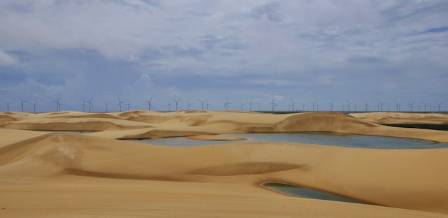
From January through June, heavy rain can arrive almost every day. Rather than disappearing immediately into the sand, much of the water collects in the depressions between the dunes.
The resulting lagoons can be remarkably transparent, reflecting the colour of the sky. Depending on the conditions and time of day, they may appear bright blue, turquoise or even golden when illuminated by the setting sun. Fish and shrimp inhabit many of these temporary pools, giving visitors opportunities to swim, fish or simply admire the scenery.
Plant life remains limited because the shifting sand has covered much of the original vegetation over thousands of years. Under the powerful tropical sun, temperatures at the surface can reach as high as 80°C.
The name Lençóis Maranhenses reflects the visual appearance of the dunes themselves, which resemble enormous pieces of linen stretched across the landscape and dried beneath the sun.
A Paradise for Adventure
Thousands of lagoons with varying shapes and depths are scattered throughout the dunes. Each one can display a different colour, ranging from deep blue and pale green to reddish-brown when algae are present.
Local communities have given some of the lagoons evocative names, including Blue Lake, Love Lake and Lake of Hope. These names reflect the emotions, hopes and dreams associated with the landscape.
Blue Lake and Green Lake are among the most popular destinations near Barreirinhas. Locally, they are associated with the “big sheet” and “small sheet.” Blue Lake is the largest, deepest and most vividly coloured of the two, and its waters contain fish and crabs.
Swimming in the lagoons provides a refreshing break from the heat while also allowing visitors to observe the aquatic creatures living in the water.
During the daytime, the desert can feel like an enormous natural water park. Visitors can take photographs among the dunes, hike through the sand, join guided off-road jeep excursions or climb to the top of a dune before racing back down.
Natural water slides and rafting along the channels between lagoons can provide additional excitement. When water levels reach their highest point, kite surfing also attracts adventurous visitors. This demanding sport uses a large kite to propel the rider across the water and can be both challenging and exhilarating.
As evening approaches, the landscape changes once again. The combination of dunes, lagoons, shadows and sunset colours can make the entire desert appear like a giant living oil painting.
Aerial Views and Jungle Adventures
For another view of the landscape, visitors can take a helicopter ride costing approximately $130 per person. From above, the crescent-shaped dunes form patterns that resemble enormous linen sheets being blown across the ground.
The surrounding region also offers experiences beyond the dunes and lagoons. Visitors can travel by boat through nearby rainforest areas, encounter playful monkeys and climb lighthouses for wide panoramic views.
Other activities include riding ATVs across the dunes, drinking fresh coconut water and trying Brazilian-style grilled shrimp prepared with distinctive local flavours.
Final Thoughts
The Desert of a Thousand Lakes offers an experience that can easily become a once-in-a-lifetime memory. During the rainy season, the landscape undergoes a remarkable transformation, creating an otherworldly setting where vast dunes and clear water exist side by side.
The transformation is temporary, lasting only for several months each year. June and July are considered ideal months for visiting because the lagoons are generally at their fullest before the arrival of the dry season causes the water to gradually disappear.
Lençóis Maranhenses challenges the conventional idea of what a desert should be and offers a completely different perspective on the diversity of Earth’s landscapes. It is a place where seemingly incompatible environments exist together, creating scenery that feels almost impossible until you see it for yourself.
More from the edition
Column · en
Visiting Pamukkale: The Glorious Travertine Pools of Turkey
During our honeymoon in Turkey, my husband and I visited two unforgettable places: the travertine terraces of Pamukkale and Cleopatra’s Pool within the Hierapolis archaeological complex. Our tour only allowed about two hours for the entire visit, which felt far too short. Still, whether you have a brief stop or a full day, the site is absolutely worth seeing.
Column · en
Sculpted by the Sea: The Dynamic Geology of Rocky Coastlines
The relentless pounding of surf and breaking waves has shaped rocky coasts into some of the most dramatic landscapes on Earth. Characterized by high-energy erosion, these coasts are typically found along active tectonic margins with narrow continental shelves. Composed of sedimentary, igneous, or metamorphic rock, they bear witness to complex geological processes, including faulting, folding, and volcanic activity. The specific profile of a rocky coast—whether steep cliffs or gentle slopes—is dictated by the interplay of bedrock resistance, climate, and wave energy. For instance, the resistant lava flows of Kalaupapa National Historical Park (Hawaii) create towering sea cliffs, while the more erodible limestones of Dry Tortugas National Park (Florida) form gentler slopes. Glacial activity further sculpts these regions, carving deep fjords and depositing talus slopes, while carbonate coasts can lithify into eolianite dunes that later erode into steep bluffs.
Column · en
Easy Beginner's Guide To Painting A Squirrel
Painting a squirrel can be a fun and rewarding project, especially for beginners, as it provides a great opportunity to practice capturing the charm and intricate details of wildlife in art. To begin, gather your materials: acrylic or watercolor paints, a selection of brushes, a palette, and a painting surface such as paper or canvas.
Column · en
The Most Beautiful Lighthouses Under the Sunset Around the World
Lighthouses, often built to guide ships through treacherous waters, are not only functional structures but also breathtaking landmarks. As the sun sets, these lighthouses shine even brighter, becoming some of the most picturesque sights across the globe. Whether old or modern, perched high on cliffs or standing tall on serene beaches, these lighthouses offer perfect sunset views. Here are some of the most stunning lighthouses that glow under the twilight sky.
Column · en
10 Most Stunning Beaches You Must Visit in Your Lifetime
Craving a tropical escape? Few places rival the serenity and beauty of a pristine beach. Whether you're seeking solitude, adventure, or simply a place to soak in the sun, these beaches are among the most extraordinary on Earth. From dramatic coastlines to hidden shores, this list features ten of the most visually breathtaking and unique beaches that promise unforgettable experiences.
Column · en
6 Thrilling US Destinations for Your Next Off-Road 4x4 Adventure
When it comes to off-road adventures, the excitement is palpable, regardless of the season. However, as winter blankets much of the northern US in snow, some might find their adventurous spirit hibernating. But fear not! Planning your next 4x4 escapade should always be on your radar. So let’s ignite that wanderlust! Here’s a curated list of 6 exhilarating off-road destinations across the United States that are bound to deliver unforgettable experiences.