Sunday column
Top 5 Innovations Shaping the Video Game Industry
From the era of large mainframe computers to the era of handheld devices, the landscape of gaming has undergone a remarkable evolution. Today, propelled by technological advancements and the growing interest of people, the gaming industry stands as a multi-billion-dollar juggernaut. Leading nations like China, Japan, and the USA are at the forefront, with revenues reaching $24.4 billion, $23.5 billion, and $12.4 billion respectively.
Brooke
Desk editor
Editor’s note
The full column continues in quiet type below.
Section
Sunday Broadsheet
From the era of large mainframe computers to the era of handheld devices, the landscape of gaming has undergone a remarkable evolution. Today, propelled by technological advancements and the growing interest of people, the gaming industry stands as a multi-billion-dollar juggernaut. Leading nations like China, Japan, and the USA are at the forefront, with revenues reaching $24.4 billion, $23.5 billion, and $12.4 billion respectively.
Furthermore, the number of individuals engaged in gaming, particularly among those aged under 18, has reached unprecedented levels. With an array of genres to choose from—ranging from action to puzzle, musical to real-time strategy, and browser games—the excitement among gamers worldwide continues to escalate as gaming experiences become increasingly immersive and realistic.
From the introduction of Super Mario in the 1980s to the groundbreaking Pokémon Go in 2016, the gaming landscape has witnessed monumental transformations. Here, we present a list of the top 5 innovations that are currently shaping the video game industry:
1. Voice Recognition
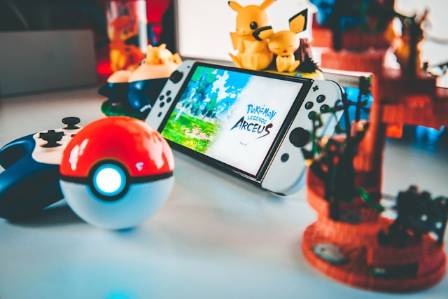
Voice recognition technology, although not novel, has become increasingly prevalent and functional over time. Whether through plug-in devices or built-in microphones, gamers can now seamlessly interact with their gaming consoles and characters through voice commands. A prime example of this technology is "Hey You, Pikachu," where players communicate with a wild Pikachu throughout the game to gain its trust.
2. Customizable Characters
Unlike earlier times, where players were limited to predefined avatars, modern games offer extensive customization options for characters, including names, gender, appearances, hairstyles, outfits, and accessories. Games like Dragon Age Series and WWE Series allow players to personalize various aspects of their characters, fostering a deeper sense of immersion.
3. Interactive Drama/Role-Playing Games

Interactive drama or role-playing games present players with cinematic storylines where decisions made by the player influence the narrative's progression. Titles like "The Walking Dead" and "Façade" focus on character-driven narratives, allowing players to shape the outcome based on their choices.
4. Downloadable Content (DLC)
Downloadable content enhances gaming experiences by providing additional in-game content, such as maps, weapons, and story expansions. Often utilized in episodic games like Fallout 3 and fighting games like Mortal Kombat, DLC serves to enrich the gameplay experience and retain player engagement.
5. Wearable Gaming

Wearable technology, including eyeglasses and smartwatches, has expanded the realm of portable gaming, enabling players to engage in gameplay without the constraints of holding traditional devices. Efforts to integrate wearables with gaming consoles are poised to revolutionize the gaming experience further.
More from the edition
Column · en
How to Care for Tulips After They Bloom — Ensuring Colorful Returns Each Spring
Tulips are iconic spring bloomers known for their bright colors and graceful shape. While they often shine in their first year, their ability to return strongly in following seasons depends on how you care for them after flowering. Here’s a complete guide to keeping tulips healthy and show-worthy year after year.
Column · en
Ramen Rules: Tim Anderson Deconstructs Japan's Famous Noodle Soup
A steaming bowl of ramen—with its springy noodles, aromatic broth, and carefully curated toppings—has become synonymous with Japanese cuisine worldwide. Yet this beloved dish is far from a singular creation: it’s a tapestry of regional traditions, cultural adaptation, and culinary innovation, rooted in Chinese origins but reimagined as a distinctly Japanese icon. To call ramen Japan’s national dish is both accurate and misleading—accurate because it permeates every corner of the country, from street stalls to Michelin-recommended restaurants, and misleading because it encompasses hundreds, if not thousands, of unique variations. Like “pasta” in Italy or “curry” in India, “ramen” is an umbrella term, uniting dishes that share core elements but diverge wildly in flavor, texture, and style. From the clear, citrus-kissed shio ramen of Tokyo to the rich, spicy tan tan men of Osaka, ramen is a celebration of diversity—one that tells the story of Japan’s history, geography, and creative spirit. In this deep dive, we explore the essence of ramen, its journey from Chinese import to Japanese staple, its regional identities, and the art of crafting the perfect bowl, culminating in a classic Tokyo shoyu ramen recipe that captures the dish’s timeless appeal.
Column · en
The Best Fruitcake
Fruitcake is often the subject of holiday jokes, but this version completely changes that reputation. Packed with a generous mix of dried fruits, nuts, warm spices, citrus zest, and a splash of brandy, this rich loaf truly captures the essence of the festive season. The recipe yields two cakes, making it perfect for sharing—keep one for yourself and gift the other.
Column · en
Raccoons — Facts and Fancies
The raccoon (Procyon lotor) is a member of the carnivore order, a group of mammals that mainly consume meat but may also eat plant materials such as berries, fruits, vegetables, eggs, acorns, beech nuts, hickory nuts, grains, grasses, and tree bark when other food sources are limited. Like other carnivores, raccoons have five toes on each foot and large canine teeth. However, raccoons are omnivorous animals, and the balance between plant and animal foods in their diet changes depending on the season and available resources.
Column · en
Future Supercars And Sports Cars Worth Waiting For
For enthusiasts who dream of ultimate automotive performance, supercars, hypercars, and elite sports cars represent the peak of engineering achievement and emotional driving excitement. These vehicles combine extreme speed, advanced technology, and bold design—from precision track-focused machines to luxurious grand tourers built for long-distance performance.
Column · en
The Andromeda Galaxy: All you need to know
While dozens of smaller galaxies orbit closer to our own, the Andromeda Galaxy remains the nearest major spiral galaxy to the Milky Way. Aside from the Large and Small Magellanic Clouds—which are visible mainly from the Southern Hemisphere—Andromeda is the brightest galaxy beyond our own that can be seen in the night sky. Located approximately 2.5 million light-years away, it is also the farthest object visible to the naked eye under dark-sky conditions.