Sunday column
Raccoons — Facts and Fancies
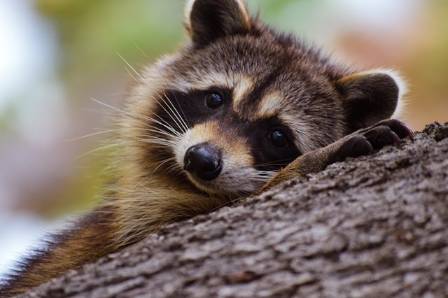
The raccoon (Procyon lotor) is a member of the carnivore order, a group of mammals that mainly consume meat but may also eat plant materials such as berries, fruits, vegetables, eggs, acorns, beech nuts, hickory nuts, grains, grasses, and tree bark when other food sources are limited. Like other carnivores, raccoons have five toes on each foot and large canine teeth. However, raccoons are omnivorous animals, and the balance between plant and animal foods in their diet changes depending on the season and available resources.
Thomas Richardson
Desk editor
Editor’s note
The full column continues in quiet type below.
Section
Sunday Broadsheet
The raccoon (Procyon lotor) is a member of the carnivore order, a group of mammals that mainly consume meat but may also eat plant materials such as berries, fruits, vegetables, eggs, acorns, beech nuts, hickory nuts, grains, grasses, and tree bark when other food sources are limited. Like other carnivores, raccoons have five toes on each foot and large canine teeth. However, raccoons are omnivorous animals, and the balance between plant and animal foods in their diet changes depending on the season and available resources.
Raccoons belong to the Procyonidae family, which includes animals such as ringtail cats and coatis, and may also be related to red pandas. North America is home to several raccoon species and numerous subspecies. Their body weight generally ranges from about 12 to 35 pounds, with males typically larger than females. Their fur is usually grayish brown, and their tails feature five to seven dark rings separated by wider lighter-colored bands. The end of the tail is always dark. White-colored albino individuals and black-colored melanistic raccoons can also occasionally be found.
Physical Abilities and Unique Adaptations
Raccoons have an exceptional sense of touch, which is considered more advanced than that of most other non-primate mammals. Their sensitive front paws allow them to manipulate objects, open containers, unlock doors, and explore their surroundings with remarkable skill.
They also possess excellent hearing and strong eyesight, adaptations that suit their nighttime lifestyle. Raccoons are talented climbers and are among the few mammals capable of climbing down trees headfirst. They are also capable swimmers and can cross rivers and lakes when necessary, although they usually enter deep water only when escaping danger.
The common belief that raccoons wash their food is not entirely accurate. This behavior is mainly observed in captive raccoons. In the wild, the movement resembles a fixed behavior pattern associated with searching for aquatic prey rather than cleaning food. The name “raccoon” comes from an Algonquin word meaning “one who scratches with its hands.”
Daily Habits and Activity Patterns
Raccoons are primarily nocturnal animals. A common misconception is that seeing a raccoon during daylight hours means it is infected with rabies. In reality, healthy raccoons may appear during the day, especially in urban areas, when they need extra food or when their den has been disturbed.
Female raccoons caring for young may also need to search for food during both daytime and nighttime hours. If a raccoon behaves normally while active during the day, it is most likely healthy and should simply be left alone.
Habitat and Territory
Raccoons are territorial animals that prefer wooded environments near water sources such as ponds, lakes, marshes, and streams. They generally avoid areas without suitable vegetation and access to water.
When relocating raccoons, it is important to choose an appropriate environment with reliable water supplies, protection from hunting, and nearby resources that allow them to gradually find their own food.
Raccoons usually create dens inside hollow trees, rock openings, and underground shelters. During late autumn and early winter, they grow a thicker winter coat and consume large amounts of food to prepare for colder conditions. In severe weather, they may remain inside their dens for extended periods without eating. However, raccoons do not truly hibernate.
Reproduction and Birth of Young
Adult raccoons typically breed between January and June, depending on climate and environmental conditions. Females may become capable of reproduction at around ten months of age. Although young males can physically breed during their first year, they usually do not because older males dominate breeding opportunities.
If a female does not become pregnant during her first breeding period, she may enter another reproductive cycle several months later, which explains why some young are born later in the year.
Most raccoon babies are born during April and May after a gestation period of approximately 63 days. Males do not participate in pregnancy or raising the young. A typical litter contains about four babies, though litter sizes can range from one to seven.
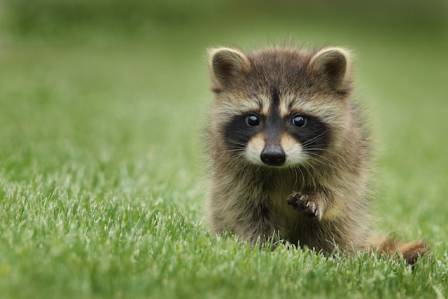
Newborn raccoons are lightly covered with fur and already show faint facial markings. Their tail rings may be visible at birth or develop within the first week. Their ears remain folded against their heads, and their eyes stay closed. At birth, they usually weigh only three to five ounces.
Growth and Development of Baby Raccoons
Young raccoons communicate when they are hungry, cold, or separated from their mother by making chattering, whining, or bird-like sounds. At first, they move by crawling with all four legs extended but cannot yet climb or support their full body weight.
Their eyes open at around three weeks old, followed shortly afterward by their ears. At this stage, they become increasingly vocal, producing sounds such as growls, hisses, warning noises, and other calls.
By five to six weeks old, young raccoons are usually able to walk, run, and climb confidently. Around seven weeks, they begin practicing behaviors through playful wrestling, biting, squealing, and defensive movements that imitate adult behavior.
At approximately eight to nine weeks old, they begin eating solid foods and start traveling outside the den with their mother.
Family Life and Independence
Young raccoons are fully weaned at around four months of age. Mothers with young often receive special status within raccoon groups, and other raccoons may avoid competing with them during feeding.
In northern regions, including Virginia, young raccoons often remain with their mother for nearly a year until she prepares to breed again. In warmer southern areas, young may separate during autumn but can later reunite with family members around feeding areas and dens.
Lifespan and Natural Threats
Raccoons can survive up to 16 years in the wild, although many do not live beyond five years. Research shows that the second year of life is often the most dangerous period.
The greatest causes of death are human-related, including hunting, trapping, vehicle collisions, and attacks from domestic dogs. Other threats include disease and poor nutrition.
Natural predators include cougars, bobcats, wolves, coyotes, alligators, foxes, and great horned owls. However, deaths caused by people greatly exceed those caused by natural predators.
Raccoons are naturally clean animals and often use shared latrine areas in the wild.
Raccoons and Urban Environments
Unlike many native mammals, raccoons have adapted extremely well to human development. Instead of losing habitat, they have learned to use urban environments for survival.
Buildings such as attics and chimneys can become shelter sites, storm drains function as travel routes, and outdoor pet food can replace some of their natural food sources. This ability to live alongside humans has increased encounters between people and raccoons.
Many conflicts occur when raccoons build dens in chimneys or attics, especially when a mother is raising young. The best approach is usually to leave the family undisturbed until the mother naturally moves the babies, which generally happens when they are eight to nine weeks old.
Removing the mother and sealing the entrance too early can leave young raccoons trapped inside, leading to starvation or death. Many baby raccoons brought to wildlife rehabilitators are not truly orphaned—they are simply separated from their mothers.
If someone discovers raccoons living in a chimney or attic, they should be encouraged to wait until the young are old enough for the mother to relocate them.
Another danger occurs when hollow trees are cut down. Before removing an old tree, people should always check whether animals are living inside.
Diseases and Health Concerns
Raccoons can carry several diseases, including canine distemper, feline distemper, rabies, leptospirosis, salmonellosis, tuberculosis, coccidiosis, and toxoplasmosis. They may also host parasites such as roundworms, tapeworms, flukes, and heartworms.
Canine distemper is a viral disease transmitted through direct or indirect contact. It is one of the most significant causes of raccoon deaths and has eliminated entire populations in some areas.
Although canine distemper cannot infect humans, rabies can be transmitted by warm-blooded animals. Raccoons, foxes, skunks, woodchucks, and bats are considered higher-risk wildlife species.
The symptoms of canine distemper can resemble rabies because both affect the nervous system. Signs may include unusual aggression, paralysis, circling behavior, self-injury, seizures, and reduced fear of humans.
Rabies spreads through bites or saliva from infected animals. Two forms may occur: a “quiet” form, where animals appear weak, tired, and unresponsive, and a “furious” form, where aggression and attacks are more common. Paralysis and convulsions may appear during later stages.
Understanding Raccoons and Rabies
Although raccoons are considered major rabies carriers in parts of the Mid-Atlantic region, there has never been a medically confirmed case of a human contracting rabies from a raccoon.
People should still be cautious around raccoons that appear sick or behave unusually. However, fear of all raccoons is unnecessary. Never attempt to capture a raccoon yourself, as a frightened animal may bite in self-defense, which can result in the animal being killed for rabies testing.
More from the edition
Column · en
The best folding electric bikes
After testing dozens of folding electric bikes throughout 2026, we selected the models that received the highest overall ratings. These folding e-bikes stood out for their lightweight designs, portability, riding performance, battery range, comfort, and innovative features.
Column · en
Sago Fruit Dessert
Sago Fruit Dessert is a light, creamy, and refreshing treat that’s especially popular during Ramadan, particularly at Iftar. It blends tender, chewy sago pearls with chilled milk and a variety of fresh fruits such as bananas, apples, and grapes. This dish is simple to prepare and ideal for anyone seeking something nutritious, cooling, and satisfying after a long day of fasting.
Column · en
Mastering Cyclamen Care for Lasting Winter Blooms
Cyclamen persicum is a charming plant known for its sweet-scented flowers that come in shades of pink, red, white, and purple. These blossoms stand tall above dense, heart-shaped leaves that often feature attractive silver patterns. As a perennial that grows from tubers, this plant follows a unique cycle where it rests during the summer and comes back to life in the autumn. While it is a beloved indoor plant during the winter holidays, owners should be mindful that it is poisonous to humans and pets.
Column · en
Exploring the Enigmatic Depths: Drach Caves in Mallorca
The Drach Caves, a remarkable system of four expansive caverns in Mallorca, beckon adventurers to unearth the mysteries concealed beneath the earth's surface. These subterranean wonders are not merely a sight to behold; they are a journey through time, believed to have emerged during the Miocene Epoch, spanning a staggering 23 to 5 million years ago.
Column · en
Everything You Need to Know Before Visiting Antelope Canyon
This guide shares key information and personal experience about visiting Antelope Canyon in Page, Arizona, along with practical tips to help you prepare for a trip to these famous slot canyons.
Column · en
A Good Bowl of Borscht Can Change Your Life
The best bowl of borscht I ever tasted came from a punk house in the summer before I turned eighteen. At that point, I had already been on my own for nearly two years, drifting between whoever would take me in after my mother left town. I survived mostly on whatever vegan food I could scavenge or afford, eating a very simple, carb-heavy diet that kept me going but not much more.