Sunday column
All true spider monkeys are on the verge of extinction.
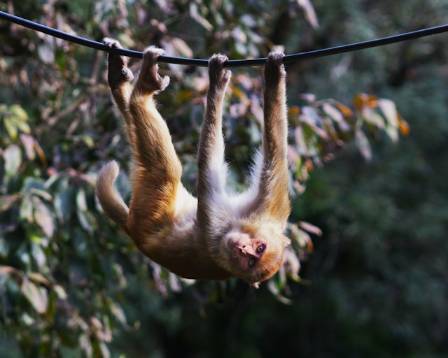
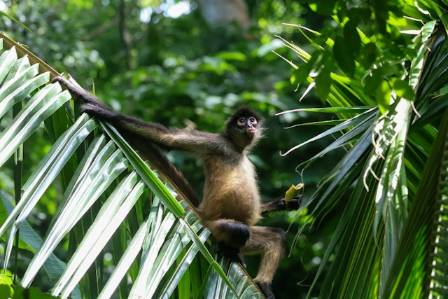
Spider monkeys belong to the genus Ateles and are easily recognized by their extremely long limbs and curved, hook-shaped hands.
Chloe Harrison
Desk editor
Editor’s note
The full column continues in quiet type below.
Section
Sunday Broadsheet
Spider Monkey
Spider monkeys belong to the genus Ateles and are easily recognized by their extremely long limbs and curved, hook-shaped hands. These adaptations allow them to move efficiently through the forest canopy.
On average, spider monkeys weigh around 6 kilograms (13.25 pounds), with a body length ranging from approximately 35 to 66 centimeters (14 to 26 inches).
One of their most remarkable features is their long, flexible tail, which can reach nearly 88 centimeters (35 inches) in length. This tail is prehensile, meaning it can wrap around branches and function almost like an additional limb. Together with their long arms and specialized hands, this feature makes spider monkeys excellent climbers and highly skilled at swinging between trees.
These physical adaptations allow them to live a mostly arboreal lifestyle, spending the majority of their time high above the forest floor.
Species Diversity
There are currently seven recognized species of spider monkeys, and each species has its own unique patterns of coloration and physical characteristics.
This variety creates a wide range of adaptations within the spider monkey group, allowing different species to survive in various forest environments.
The scientific name of the genus, Ateles, comes from the Greek word meaning “imperfect.” This name refers to their lack of opposable thumbs, which separates them from many other primates.
However, the absence of thumbs does not prevent spider monkeys from surviving successfully. Their specialized hands and powerful tails allow them to navigate their natural habitats with great skill.
Social Behavior and Communication
Spider monkeys are highly social animals that usually live in groups called troops.
A troop may contain between 20 and 100 individuals, although they often separate into smaller groups when searching for food.
These monkeys are diurnal, meaning they are active during the daytime. Because they are adapted to life in trees, they spend most of their time moving through the upper levels of the forest canopy.
Spider monkeys communicate through a complex combination of:
- Vocal sounds
- Facial expressions
- Body movements and postures
Their advanced communication system reflects their complicated social relationships.
Unlike some primates that form long-term pair bonds, spider monkeys generally follow polygamous mating patterns. They typically form temporary mating partnerships known as consortships.
Diet and Ecological Role
Spider monkeys mainly consume a fruit-based diet. Fruits provide most of their nutritional needs, but they also eat a variety of other foods, including:
- Flowers
- Tree bark
- Seeds
- Leaves
- Insects
When food becomes scarce, they may expand their diet to include additional resources such as bird eggs, small animals, and honey.
Beyond providing nutrition, their feeding behavior plays an important role in maintaining forest ecosystems.
As spider monkeys travel through the canopy and eat fruits, they spread seeds through their waste. This natural process helps new plants grow and supports forest regeneration.
Seed dispersal by spider monkeys contributes to maintaining biodiversity and helps tropical forests remain healthy by supporting the reproduction of many tree species.
Lifespan and Reproduction
Spider monkeys can live for approximately 22 years in the wild.
They have a relatively slow reproductive process compared with many other mammals. The pregnancy period lasts around seven to seven and a half months.
Female spider monkeys usually give birth to:
- One infant every year, or
- One infant every two years
Newborn spider monkeys are covered in fur at birth. During their first stage of life, infants remain attached to their mother’s stomach for about 16 weeks. After this period, they begin riding on their mother’s back.
Young spider monkeys develop relatively quickly:
- Females usually reach reproductive maturity at around 4 years old
- Males typically mature slightly later, at about 5 years old
The relationship between mother and infant is extremely strong. Mothers provide protection, transportation, and care for their young, and juveniles often stay close to their mothers for several years before becoming fully independent.
Scientific Classification of Spider Monkeys
Spider monkeys belong to the family Atelidae, which contains some of the largest New World monkeys.
The term “spider monkey” refers to approximately seven different species that share similar physical features and behaviors.
The recognized species include:
- Brown-headed spider monkey (Ateles fusciceps)
- Red-faced spider monkey (Ateles paniscus)
- Peruvian spider monkey (Ateles chamek)
- White-cheeked spider monkey (Ateles marginatus)
- White-bellied spider monkey (Ateles belzebuth)
- Geoffroy’s spider monkey (Ateles geoffroyi)
- Brown spider monkey (Ateles hybridus)
Another monkey known as the woolly spider monkey or muriqui is sometimes confused with spider monkeys because of its name. However, it belongs to a different genus and is not considered a true spider monkey.
Conservation Status
Unfortunately, all true spider monkey species are considered threatened.
They face a high risk of disappearing from the wild due to environmental pressures and human activities.
Among them:
- The brown-headed spider monkey
- The brown spider monkey
are classified as critically endangered, meaning they are extremely close to extinction.
Habitat and Distribution
Spider monkeys are mainly found in the tropical rainforests of Central and South America, with their range extending from Mexico to Bolivia.
They are especially adapted to life high in the forest canopy, where they search for food and move between trees.
Although rainforests are their primary habitat, spider monkeys are also capable of living in other environments, including:
- Semi-deciduous forests
- Mangrove forests
Their ability to adapt to different forest habitats has allowed them to occupy a wide geographic range across the Americas.
More from the edition
Column · en
Humongous Humpback Whale Facts
Humpback whales are among the most impressive creatures in the ocean. These enormous marine mammals are known for their incredible size, unique feeding techniques, long migrations, and unforgettable presence in coastal waters.
Column · en
A brief history of microchips
Microchips, also known as integrated circuits, are the core building blocks of today’s electronic devices. They make possible the operation of countless technologies, including computers, smartphones, and advanced digital systems. Looking back at the development of microchips reveals how these miniature components have grown from simple inventions into powerful tools that have reshaped society.
Column · en
World’s Most Iconic Lighthouses: Beacons of History and Beauty
Lighthouses have long held a special place in the hearts of travelers, with their rich histories and stunning locations captivating imaginations across the globe. For centuries, these towering coastal sentinels have guided ships safely to shore, standing as enduring symbols of hope, resilience, and human ingenuity. From rugged shorelines battered by waves to serene islands tucked away in distant seas, each lighthouse tells a unique story of maritime heritage, while offering breathtaking views that make the journey to visit them well worth the effort. Here, we explore ten of the world’s most famous lighthouses, each with its own distinct charm and significance.
Column · en
From Sputnik to Firefly: The Fascinating World of Satellites
On October 4, 1957, the announcement “T-minus 10 minutes” echoed through an underground bunker at the Baikonur Cosmodrome in Kazakhstan. Only about 200 meters away, a massive 29-meter R-7 rocket stood on the Tulip launch pad. Its unusual payload was a polished, basketball-sized sphere weighing 83.6 kilograms.
Column · en
Seafood Recipes for an Elegant Dinner
Seafood has long been connected with elegant dining, and it’s not difficult to understand why. Its delicate flavor, rich texture, and versatility make it an excellent choice for refined meals. Whether you are planning a festive celebration or simply treating yourself to something special, seafood dishes can instantly make dinner feel more sophisticated.
Column · en
Essential Techniques for Boneless Flower and Bird Painting
Boneless painting is a traditional Chinese art form that bypasses rigid outlines, relying instead on direct applications of ink and color to define shape and spirit. This method requires a sophisticated grasp of moisture control and brush pressure to capture the fleeting beauty of nature. From the delicate curve of a petal to the sturdy grip of a bird’s claw, every element is rendered through fluid washes and rhythmic strokes that emphasize vitality over literal representation.