Sunday column
Exploring the Deep Ocean with Submersibles
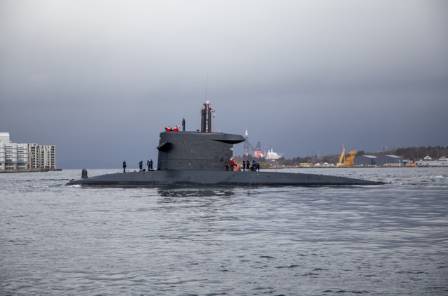
The average ocean depth is greater than 3,600 meters, or about 2.23 miles. Reaching such depths requires highly specialized equipment capable of operating under enormous pressure, near-freezing temperatures, and complete darkness. Over recent decades, underwater vehicle technology has continued to advance, giving scientists new ways to observe, investigate, and collect samples from the deepest parts of our planet.
Finn Vance
Desk editor
Editor’s note
The full column continues in quiet type below.
Section
Sunday Broadsheet
The average ocean depth is greater than 3,600 meters, or about 2.23 miles. Reaching such depths requires highly specialized equipment capable of operating under enormous pressure, near-freezing temperatures, and complete darkness. Over recent decades, underwater vehicle technology has continued to advance, giving scientists new ways to observe, investigate, and collect samples from the deepest parts of our planet.
Submersibles are robotic vehicles that are launched from research vessels and sent beneath the ocean surface. They gather observations and samples from both the water column and seafloor, providing valuable information for scientific research. Three major categories of submersibles have played important roles in NOAA Ocean Exploration-supported expeditions: human-occupied vehicles, remotely operated vehicles, and autonomous underwater vehicles.
Human-Occupied Vehicles
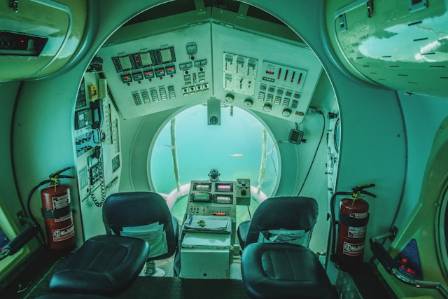
Human-occupied vehicles, commonly known as HOVs, carry a small group of scientists and pilots directly into the deep ocean. Their underwater missions are generally limited in duration, but they provide something unique compared with other types of submersibles: scientists can personally observe the environment with their own eyes while conducting research thousands of meters beneath the surface.
Like other underwater vehicles, HOVs are equipped with illumination systems, cameras, scientific sensors, robotic manipulator arms, and equipment for collecting samples. However, having researchers physically inside the vehicle allows them to make immediate observations, investigate unexpected features, gather specimens, and make scientific decisions directly at the seafloor.
One well-known example is Alvin, operated by the Woods Hole Oceanographic Institution. The vehicle has been in service since 1964 and can descend to approximately 4,500 meters. Each dive can carry two scientists together with one pilot, allowing researchers to investigate deep-sea environments firsthand.
Remotely Operated Vehicles
Remotely operated vehicles, or ROVs, are underwater robots connected to a surface ship by a tether. They are widely used for ocean research, exploration, photography, and data collection in both the water column and along the seafloor.
The connection between the ROV and the vessel allows operators on the surface to send commands to the vehicle and receive information from it in real time. This makes ROVs particularly useful when scientists need precise control over an underwater mission.
Many ROVs are also fitted with mechanical arms that pilots can operate remotely. These manipulators allow the vehicle to pick up rocks, biological specimens, or other materials from the seafloor. Scientists can then examine the collected samples in greater detail to learn more about underwater geological and biological environments.
The Hercules ROV, for example, has been used to investigate underwater sites including the wreck of the German submarine U-166 in the Gulf of America. Its tethered design enables researchers and pilots aboard the surface vessel to control the vehicle throughout the exploration.
Autonomous Underwater Vehicles
Autonomous underwater vehicles, known as AUVs, operate without continuous, real-time instructions from human pilots. Before deployment, researchers program the vehicle with a planned route and mission objectives. Once released, the AUV can dive, move, drift, or glide through the ocean independently.
These vehicles are equipped with sophisticated sensors capable of collecting detailed, high-resolution information. Their autonomous operation means scientists can concentrate on other research activities while the vehicle surveys an area of the ocean.
AUVs can be especially useful for mapping large areas and investigating environments that are difficult to reach using conventional systems. Their compact designs, propulsion systems, navigation technology, mapping software, and cameras allow them to explore different depths of the ocean.
Orpheus is one example of an autonomous underwater vehicle designed for deep-ocean exploration. It has been developed to investigate the hadal zone, the deepest part of the marine environment. Its compact structure and specialized equipment allow it to operate in extreme underwater conditions.
Different Vehicles, One Purpose
Although HOVs, ROVs, and AUVs operate in different ways, each type provides scientists with an important connection to the deep ocean. HOVs allow researchers to personally experience and investigate underwater environments, ROVs provide precise remote control from the surface, and AUVs can independently collect extensive scientific data along pre-programmed routes.
Together, these technologies have greatly expanded our ability to study regions of the ocean that would otherwise remain difficult or impossible to reach. As submersible technology continues to improve, scientists will be able to explore deeper environments, gather more detailed information, and develop a better understanding of the largely unexplored world beneath the ocean surface.
More from the edition
Column · en
10 Giraffe Facts
Giraffes live in the dry savannahs of Africa, roaming open plains and woodlands.
Column · en
7 Habits That Can Transform Women's Lives for the Better
Are you seeking greater joy and fulfillment in your life? Do you aspire to embody the best version of yourself? If so, this blog post offers valuable insights tailored just for you! At times, we may find ourselves yearning for more, wishing to reshape our lives for the better. This article presents seven positive habits that can significantly enhance your satisfaction and happiness.
Column · en
Woodpeckers: The Vital Core of the Woodland
Discover one of the most fascinating avian families in existence as we explore the intricate lives of North American woodpeckers.
Column · en
Elegant Outfit Ideas for Every Season and Occasion
Elegance is about more than just looking sophisticated, it’s about feeling confident in your own skin. When you slip into an elegant outfit, that sense of self-assurance often follows. What makes an outfit elegant can vary: it might be its simplicity, the quality of the fabric, or how perfectly it fits your body. Today, I’m excited to share a collection of elegant outfit ideas to inspire you to elevate your wardrobe. These looks prove that elegance doesn’t have to be complicated. It’s all about picking pieces that make you feel your best and there are ways to dress elegantly no matter the season or event. So, read on for some of my favorite elegant ensembles and essential pieces that belong in every elegant wardrobe.
Column · en
The perfect boat
Selecting a boat for ocean cruising is a major decision that deserves careful consideration. I have explored this subject during numerous rallies and spoken with hundreds of skippers about their experiences. Almost every sailor has a different opinion about which boat is ideal and the reasons behind that choice, yet surprisingly few people question just how important it is to select the right vessel from the beginning.
Column · en
What Is a Satellite?
When you hear the word “satellite,” you may immediately picture a large metal spacecraft traveling around Earth high above the planet.