Sunday column
Mountain Chicken: The Frog Fighting for Survival
Despite what its unusual name suggests, the mountain chicken is neither a chicken nor an animal that lives exclusively in the mountains. It is actually a species of frog native to the Caribbean islands of Dominica and Montserrat.
Aria Whitlock
Desk editor
Editor’s note
The full column continues in quiet type below.
Section
Sunday Broadsheet
Despite what its unusual name suggests, the mountain chicken is neither a chicken nor an animal that lives exclusively in the mountains. It is actually a species of frog native to the Caribbean islands of Dominica and Montserrat.
Why Is It Called a Mountain Chicken?
The mountain chicken is also known as the giant ditch frog. Its unusual local name is commonly linked to the claim that its meat tastes similar to chicken. However, its large body size and its chicken-like, squawking alarm call may also have inspired the name.
Another explanation connects the name with the way young frogs are raised. Once the froglets leave the nest where they hatched, they remain with their mothers for some time. This behavior is somewhat similar to the way a hen stays with and cares for her chicks.
A Frog at Risk of Extinction
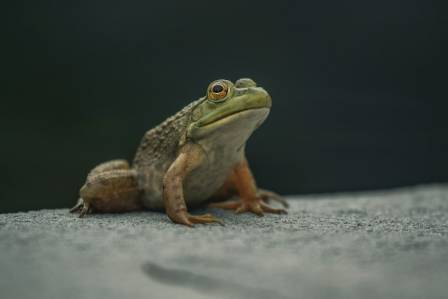
Unfortunately, this large Caribbean frog is now facing a serious threat of extinction. It is classified as Critically Endangered on the IUCN Red List.
Several factors have contributed to its dramatic decline, including the destruction of its natural habitat, the presence of invasive species and continued hunting.
However, the most significant reason for the species' recent population collapse is a deadly fungal infection. Chytrid fungus causes a disease known as chytridiomycosis, commonly referred to simply as chytrid. This infectious disease has had a devastating impact on mountain chicken populations and has become the major threat to the species' survival.
More from the edition
Column · en
Mastering Cyclamen Care for Lasting Winter Blooms
Cyclamen persicum is a charming plant known for its sweet-scented flowers that come in shades of pink, red, white, and purple. These blossoms stand tall above dense, heart-shaped leaves that often feature attractive silver patterns. As a perennial that grows from tubers, this plant follows a unique cycle where it rests during the summer and comes back to life in the autumn. While it is a beloved indoor plant during the winter holidays, owners should be mindful that it is poisonous to humans and pets.
Column · en
Tips for Visiting Big Wild Goose Pagoda
The Big Wild Goose Pagoda in Xi’an has a history spanning more than 1,300 years, dating back to the Tang Dynasty. It was originally constructed as a place to preserve Buddhist scriptures written in Sanskrit, which the famous monk Xuanzang brought back from India after his remarkable 17-year journey across Central Asia and India.
Column · en
What Are Nebulae And How Are They Formed?
Nebulae are enormous collections of gas and dust drifting through space. The singular form is "nebula," while the plural is "nebulae." These magnificent structures rank among the most beautiful sights in the universe. Over time, astronomers have given many nebulae names inspired by familiar objects and creatures, including birds, insects, sea animals, mammals, and even supernatural figures.
Column · en
Why the CN Tower Stands Out in Toronto
Towering over Toronto’s skyline at 553.3 metres (1,815 ft), the CN Tower became the world’s tallest free-standing structure from its opening in June 1976 until it was overtaken in 2007. Initially conceived as a broadcast mast, its designers soon expanded the vision—adding elevators, observation decks, a rotating restaurant, shops, and daring experiences. Today it draws more than 1.5–2 million visitors each year to witness its blend of architecture, views, and excitement.
Column · en
Fundamentals of Watercolor Florals: A Comprehensive Guide for New Artists
Mastering floral subjects is an ideal way to explore a contemporary watercolor style. It encourages a fluid and spontaneous approach, allowing you to utilize the medium's unique ability to blend and bleed effortlessly. While many beginners feel intimidated by the complexity of petals and three-dimensional structures, the secret to success lies in simplification. By focusing on essential shapes and expressive strokes rather than minute details, you can avoid muddy results and create vibrant, airy compositions.
Column · en
Care Guide for the ZZ Plant
The ZZ plant (Zamioculcas zamiifolia), also known as the Zanzibar Gem, is a popular low-maintenance houseplant recognized for its glossy, oval-shaped leaves that grow along long, thick stems.