Sunday column
The World of Sea Turtles
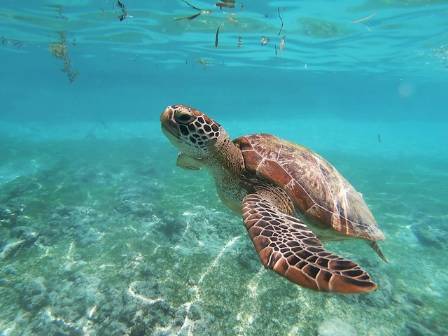
Sea turtles are reptiles that spend their lives in the ocean and travel through waters across much of the world. They belong to the turtle family but are distinct from turtles that live primarily on land or in freshwater environments. There are seven recognized species of sea turtles: leatherbacks, green turtles, hawksbills, loggerheads, olive ridleys, Kemp’s ridleys, and flatbacks. These remarkable animals have existed for more than 100 million years and can be found in nearly every ocean, with the exception of the polar seas. Leatherback turtles, however, are capable of traveling into surprisingly cold and far-northern waters.
Vesper Caldwell
Desk editor
Editor’s note
The full column continues in quiet type below.
Section
Sunday Broadsheet
Sea turtles are reptiles that spend their lives in the ocean and travel through waters across much of the world. They belong to the turtle family but are distinct from turtles that live primarily on land or in freshwater environments. There are seven recognized species of sea turtles: leatherbacks, green turtles, hawksbills, loggerheads, olive ridleys, Kemp’s ridleys, and flatbacks. These remarkable animals have existed for more than 100 million years and can be found in nearly every ocean, with the exception of the polar seas. Leatherback turtles, however, are capable of traveling into surprisingly cold and far-northern waters.
What type of animal is a sea turtle?
Sea turtles are reptiles and belong to the same broad animal class as snakes, lizards, crocodiles, and other reptiles. They share several characteristics with these animals, including breathing air, laying eggs, having scales, and being ectothermic, meaning that their body temperature is largely influenced by the surrounding environment.
What Is the Habitat of a Sea Turtle?
Marine turtles occupy a variety of ocean environments, especially in tropical and subtropical regions. Some spend time close to shore, while others travel through the open ocean, also known as pelagic habitat. Depending on the species and stage of life, sea turtles may be found around coral reefs, seagrass meadows, and other coastal ecosystems.
Beaches are also an essential part of their habitat. Female turtles come ashore to lay their eggs, and the young hatchlings begin their lives on land before making their way into the ocean.
Where Do Sea Turtles Live?
Throughout their life cycle, sea turtles commonly travel between feeding grounds and nesting beaches. Some species also move toward warmer waters at certain times of the year. These journeys can cover hundreds or even thousands of miles.
Nesting sites are distributed throughout tropical and subtropical areas around the world. Both male and female turtles travel to breeding areas, and females often return to the same general region where they originally hatched to lay their own eggs.
How Do Sea Turtles Mate?
Depending on the species, sea turtles generally reach reproductive maturity somewhere between 10 and 50 years after hatching. Once they become adults, they are capable of mating and may travel considerable distances to reach breeding and nesting areas.
During mating, the male climbs onto the female and uses his long tail to position himself. Males also have claws on their front flippers that help them hold onto the female. After securing his position, the male transfers sperm into the female’s cloaca, an opening located near the base of the tail.
Female sea turtles have the ability to retain sperm from multiple males. As a result, eggs within the same nesting season can have different fathers. This mixing of paternity can increase the genetic diversity among the resulting hatchlings.
How Many Sea Turtles Are Left?
There is no completely accurate worldwide count of sea turtles. Estimating their total population is extremely difficult because these animals spend most of their lives in the ocean. Male turtles in particular rarely come ashore, making them especially difficult to monitor.
Researchers therefore often use the number of nesting females as an indicator when estimating population size. Even then, not every nesting turtle is observed or counted, so population figures remain estimates rather than exact totals.
What Would Happen If Sea Turtles Went Extinct?
Sea turtles have important ecological roles within the environments they inhabit and can function as keystone species. Their disappearance would therefore affect many other organisms and ecological relationships.
A number of predators rely on sea turtles as part of their food sources. Birds, fish, crabs, and mammals such as raccoons could all be affected if turtles disappeared. At the same time, the organisms that sea turtles consume would also be impacted. Their prey includes jellyfish, sea sponges, and various crustaceans such as lobsters, crabs, and sea urchins.
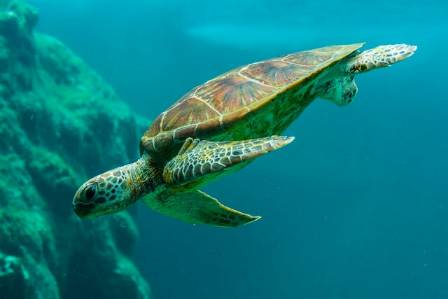
Green sea turtles have an additional ecological role because adults feed heavily on seagrass and algae. Their grazing can help maintain healthy seagrass habitats and influence the condition of these important coastal ecosystems.
Do People Eat Sea Turtles?
Yes, sea turtles are still consumed by people in some parts of the world. However, the practice has declined substantially over time and is prohibited in most countries. Certain exceptions remain, including some culturally important traditional practices among Indigenous communities and regulated fisheries in a small number of countries.
There are also locations where sea turtles have historically been raised for human consumption. One well-known example is the Cayman Turtle Farm in the Cayman Islands. In some regions, collecting sea turtle eggs for human use is also permitted under specific regulations.
Despite legal restrictions in many areas, illegal hunting of adult sea turtles and unauthorized collection of their eggs continue to occur in different parts of the world.
Sea Turtle Habitat Facts
Green turtles primarily consume seagrasses and algae once they reach adulthood.
Sea turtle eggs can contribute valuable nutrients to coastal ecosystems. Eggs and hatchlings that do not survive can return nutrients to the surrounding vegetation and beach environment.
Hawksbill turtles help regulate populations of sea sponges by feeding on them. Because sponges compete with corals for available space, hawksbills can indirectly support healthier coral reef ecosystems.
Some juvenile sea turtles spend their early developmental years in the Sargasso Sea. During this relatively vulnerable stage, the floating habitat provides opportunities for them to feed and remain sheltered while they continue growing.
More from the edition
Column · en
The Most Beautiful Snow-covered Mountains in the World
Snowy mountains are among the most spectacular natural creations on our planet. Their enormous peaks covered with fresh white snow create breathtaking scenery that inspires explorers, photographers, and outdoor enthusiasts. From the legendary Alps in Europe to the immense Himalayas in Asia, snow-covered mountains offer some of the most unforgettable views on Earth. Each mountain has its own unique character, history, and charm. Let’s discover some of the world’s most beautiful snow-covered mountains.
Column · en
Hidden Histories of Famous Animated Figures
Most of us hold fond memories of the cartoons that defined our youth. Whether it was the frantic energy of Donald Duck or the mystery-solving adventures of Scooby-Doo, animation has spent nearly a century evoking deep emotional responses in audiences.
Column · en
The Best Fruitcake
Fruitcake is often the subject of holiday jokes, but this version completely changes that reputation. Packed with a generous mix of dried fruits, nuts, warm spices, citrus zest, and a splash of brandy, this rich loaf truly captures the essence of the festive season. The recipe yields two cakes, making it perfect for sharing—keep one for yourself and gift the other.
Column · en
10 Best Station wagon in 2025
Shopping for a new wagon in 2025? You’re part of a shrinking but savvy crowd. Although crossovers dominate driveways, station wagons quietly continue to offer a compelling mix of comfort, space, road manners, and style. Whether you want a family cruiser, a high-speed missile, or something that handles gravel trails with ease—this list has it.
Column · en
Are Flavored Sparkling Waters Bad for You? The Science Behind Bubbly Drinks
Sparkling water has become a ubiquitous beverage in recent years, capturing the attention of health-conscious consumers and casual drinkers alike. By 2020, the global sparkling water market had surged to a staggering $29 billion, a testament to its popularity as a seemingly guilt-free alternative to sugary sodas and sweetened beverages.1 With zero calories, no added sugars, and a refreshing fizz, it’s easy to see why many people view sparkling water as a healthy choice. However, when flavors like lemon, grapefruit, or berry are added, the narrative becomes more complex. To unpack whether flavored sparkling waters are truly good for you, we turn to expert insights from Sean Hashmi, MD, a physician and regional director of weight management and clinical nutrition for Kaiser Permanente Southern California, who breaks down the key considerations—from carbonation’s effects to the hidden risks of artificial sweeteners and the truth behind “natural flavors.”
Column · en
The Art of Italian Pasta Making
Explore dough's artistry—pasta, noodles, pancakes, and dumplings craft a delicious masterpiece.