Sunday column
Exploring Decorative Inlay and Mosaic Techniques in Ancient Art
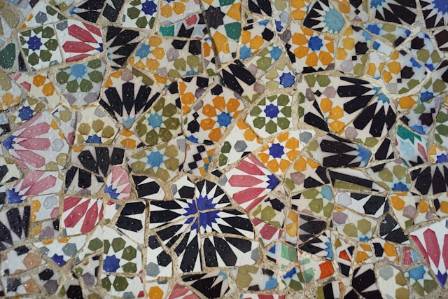
Decorative inlay and mosaic techniques have long been central to the artistic and technical achievements of ancient societies, offering a window into cultural identity and craftsmanship. Their intricate designs and enduring construction reveal advanced methods that continue to inspire contemporary artisans.
Zephyr Stone
Desk editor
Editor’s note
The full column continues in quiet type below.
Section
Sunday Broadsheet
Decorative inlay and mosaic techniques have long been central to the artistic and technical achievements of ancient societies, offering a window into cultural identity and craftsmanship. Their intricate designs and enduring construction reveal advanced methods that continue to inspire contemporary artisans.
Historical Development of Decorative Inlay and Mosaic Techniques
The origins of decorative inlay and mosaic art stretch back to early civilizations, where these forms served both ornamental and practical functions. Archaeological evidence from Mesopotamia and Egypt, dating to around 3000 BCE, displays remarkable craftsmanship and complex patterns.
Early artisans employed materials readily available in their environment, such as glazed bricks, stone, and precious metals, to create elaborate motifs. As societies expanded through trade and cultural interaction, the complexity of inlay and mosaic techniques increased, incorporating new materials and styles.
Key periods of development include the Byzantine, Islamic, and Renaissance eras, which introduced innovative materials, methods, and aesthetic concepts. These advancements not only reflect technological progress but also evolving tastes and cultural priorities, solidifying the role of inlay and mosaic work as a cornerstone of artistic expression throughout history.
Materials Used in Decorative Inlay and Mosaic Art
Decorative inlay and mosaic art utilizes a wide range of materials, chosen for both beauty and durability. Historically, artisans favored semi-precious stones, glass, ceramic tiles, and metals, each offering unique colors and textures suitable for intricate designs.
Materials such as lapis lazuli, turquoise, and agate were prized for their vivid tones and symbolic meaning. Byzantine mosaics often incorporated colored glass tesserae for their luminous quality, while gold and silver added a reflective, opulent effect. Material selection depended on local availability, technological capabilities, and cultural or religious significance.
Modern approaches have expanded the palette to include synthetic resins and composite materials, improving handling and consistency. Despite these innovations, traditional substances remain valued for their authenticity and enduring aesthetic charm in inlay and mosaic art.
Traditional Techniques of Decorative Inlay
Traditional inlay involves embedding contrasting materials into prepared surfaces to form intricate patterns. Historically, craftsmen used wood, ivory, and semi-precious stones, carefully cutting and fitting them into precisely shaped cavities.
This labor-intensive process required skill with chisels, gouges, and files to ensure seamless joints and a polished finish. Designs often included geometric or floral motifs, reflecting cultural symbolism and period-specific artistic norms.
Attention to alignment and smoothness was critical for both beauty and longevity. Mastery of traditional inlay demonstrates deep understanding of material properties and geometric precision, preserving cultural heritage through fine artistry.
Mosaic Assembly Techniques and Patterns
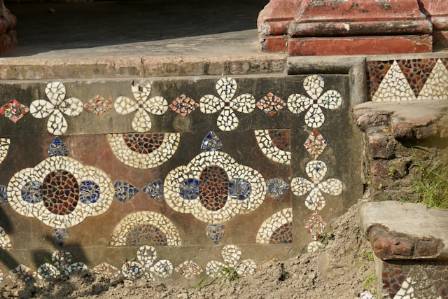
Mosaic construction involves arranging small pieces, or tesserae, to produce intricate decorative artworks. The methods employed influence both the visual effect and the stability of the finished piece.
Key approaches include:
Grid method: tesserae arranged on a measured framework for uniformity.
Ladder method: sequential rows in a stepped layout to create depth.
Tessellation: shapes fitted without gaps, producing seamless patterns.
Symmetry: repeated motifs balanced along axes to enhance visual harmony.
The choice of assembly technique depends on artistic goals and material characteristics, shaping the final composition whether in geometric abstraction or naturalistic imagery.
Grid and Ladder Methods
The grid and ladder approaches are foundational techniques in inlay and mosaic work, supporting precise placement of tesserae.
In the grid method, a structured matrix is drawn to guide accurate alignment, ideal for geometric or repetitive designs. The ladder method uses a stepped, tiered arrangement, enabling sequential assembly while maintaining cohesion, especially in complex multi-colored mosaics.
Tools such as rulers, compasses, and marking devices help achieve precision. Both methods enhance the technical accuracy of mosaics and inlay, contributing to their aesthetic appeal and longevity.
Tessellation and Symmetrical Designs
Tessellation and symmetry are central to creating visually coherent and structurally sound mosaics. Tessellation arranges shapes without overlaps or gaps, often employing geometric forms like triangles, squares, or hexagons. Symmetry balances motifs along axes, producing orderly, harmonious designs.
These techniques were historically used to convey spiritual or symbolic meaning, as seen in Byzantine and Islamic art. They demonstrate advanced understanding of geometry and craftsmanship, supporting durable and aesthetically sophisticated decorative surfaces.
Tools and Devices for Creating Decorative Inlay and Mosaics
Artisans rely on specialized tools for shaping, cutting, and assembling materials accurately in decorative inlay and mosaic work.
Common implements include chisels, gouges, and hammers for shaping stones and ceramics, as well as nippers and tile cutters for dividing materials into precise forms. Additional aids, like tesserae setters and grout spreaders, facilitate secure placement, while vacuum tables and suction devices stabilize larger projects.
These tools form the technical foundation that underpins both the creation and preservation of intricate inlay and mosaic artworks.
Technological Significance in Artifact Preservation
Technology is vital in conserving decorative inlay and mosaic artifacts. Advanced techniques allow conservators to examine, stabilize, and repair works with minimal risk.
Non-invasive imaging technologies, such as infrared or ultraviolet spectroscopy, reveal hidden layers without damaging surfaces. Modern materials like acrylic resins and consolidants strengthen fragile tesserae, extending their lifespan while maintaining visual authenticity.
Other methods include laser cleaning to remove contaminants and custom devices for precise repair, ensuring both the structural integrity and aesthetic quality of the artifacts.
Techniques for Restoration and Conservation
Restoration begins with careful assessment and documentation of an artifact’s condition. Cleaning employs gentle solvents or low-pressure techniques to remove dirt without damaging delicate surfaces.
When pieces are missing or damaged, replacements are color-matched and shaped to blend seamlessly. Advanced tools, including lasers, enable precise cleaning and repair. Protective coatings and consolidants stabilize surfaces for long-term preservation, safeguarding the cultural and artistic significance of inlay and mosaic works for future generations.
Enhancing Durability and Aesthetic Value
Selecting high-quality stones, glass, and ceramics enhances both the resilience and visual impact of inlay and mosaic pieces. Techniques such as bonding agents and protective surface treatments shield artworks from moisture, chemical damage, and wear.
Modern innovations, including laser cleaning and micro-adhesives, allow detailed repairs that preserve aesthetic and structural integrity. These efforts ensure that decorative inlay and mosaic art remains appreciated and intact over centuries.
Artistic Styles Influenced by Decorated Inlay and Mosaic Work
Decorative inlay and mosaic techniques have shaped numerous artistic traditions. Byzantine art is famous for its gold-background mosaics with religious iconography, while Islamic art emphasizes geometric patterns and arabesques, reflecting mathematical precision and spiritual symbolism.
During the Renaissance and Baroque periods, artists used inlay and mosaic methods to create highly detailed, luxurious effects in architecture and decorative objects. Modern applications combine traditional craftsmanship with innovative materials and digital techniques, continuing the legacy of these artistic practices.
Byzantine and Islamic Patterns
Byzantine mosaics feature gold backgrounds and intricate religious imagery, emphasizing divine themes. Islamic mosaics often display repeating geometric shapes and arabesques, reflecting religious guidelines against figural representation.
These patterns demonstrate mastery of geometry and advanced decorative skills, serving as enduring examples of technological and artistic achievement.
Renaissance and Baroque Innovations
In the Renaissance and Baroque periods, new materials and techniques enabled more complex compositions, including semi-precious stones, gilding, and illusionistic effects such as trompe-l’œil. Artisans refined assembly methods to improve precision and durability, producing large-scale decorative programs in palaces, churches, and civic architecture.
Contemporary Innovations in Decorative Techniques
Modern advances integrate composite materials, digital design, laser cutting, and automated machinery, enabling highly precise patterns and intricate tessellations. These technologies enhance efficiency and accuracy while maintaining the artistic essence of traditional inlay and mosaic techniques.
Cultural and Functional Roles of Inlay and Mosaic Artifacts
Decorative inlay and mosaic works often signify religious, social, or political meaning. They convey cultural narratives, elevate interiors and public spaces, and demonstrate technological skill. Materials such as gold, marble, and glass reinforced social status and cultural prestige, while also providing durable, visually striking decoration.
Future Directions and Challenges in Decorative Inlay and Mosaic Techniques
Digital tools like 3D modeling and laser cutting offer exciting opportunities for precision and complexity. However, integrating new technology must balance innovation with preservation of traditional craftsmanship. Sustainable, eco-friendly materials and methods are also essential to ensure the continued practice of these historical techniques without compromising environmental responsibility.
More from the edition
Column · en
A Good Bowl of Borscht Can Change Your Life
The best bowl of borscht I ever tasted came from a punk house in the summer before I turned eighteen. At that point, I had already been on my own for nearly two years, drifting between whoever would take me in after my mother left town. I survived mostly on whatever vegan food I could scavenge or afford, eating a very simple, carb-heavy diet that kept me going but not much more.
Column · en
13 Ultra-Refreshing Beverages to Cool You Down This Summer
For a truly revitalizing summer, these 13 tasty drinks are your go-to picks! Whether you’re reaching for bubbly sparkling water, an icy cocktail, or a homemade soda, there’s a thirst-quencher here for every moment of the season.
Column · en
Easy Sakura Jelly Recipe
There’s something magical about preserving the short-lived beauty of cherry blossoms—and Sakura Jelly captures that feeling perfectly. With its soft pink tones and gentle floral scent, each bite feels like a small tribute to spring. I first encountered this dessert during a peaceful afternoon tea, and its light sweetness and refreshing taste immediately stood out.
Column · en
the Undulating Hills of Moravia
To undulate means “to move in a smooth, wave-like pattern.” The dictionary example—Her body undulated to the thumping rhythm of the music—certainly has a sensual flair. In this case, though, the subject isn’t moving. Yet when photographing the mesmerizing landscapes of Moravia, the hills’ curves and patterns create the illusion of movement, rhythm, and flow across the frame.
Column · en
What Are the Top Off-Road Pickup Trucks?
Off-road pickup trucks remain the ideal choice for anyone who needs a vehicle that can handle daily tasks while tackling rough terrain with ease.
Column · en
8 Incredible Facts About El Capitan You Should Know
El Capitan, a monumental granite formation in Yosemite National Park, stands as one of the most iconic and challenging features in the world. Its vast scale and unique history make it a must-visit for nature enthusiasts and rock climbers alike. With towering cliffs, impressive geological origins, and historical climbing milestones, El Capitan captivates all who encounter it. Whether you're interested in its natural beauty or its pivotal role in the climbing community, here are eight fascinating facts that highlight why this giant rock formation continues to awe visitors from around the globe.