Sunday column
Amazing facts about whales
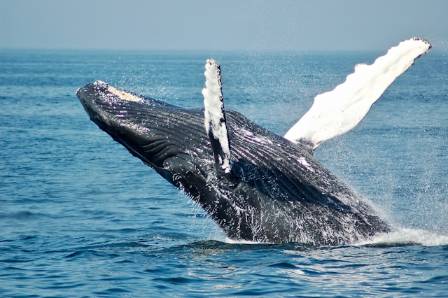
Whales are among the most awe-inspiring, enigmatic, and often misunderstood animals on Earth. They traverse enormous distances across oceans, dive to extreme depths, and possess remarkable intelligence. Unfortunately, centuries of commercial hunting and the ongoing impacts of climate change have drastically reduced their populations.
Gideon Blackwood
Desk editor
Editor’s note
The full column continues in quiet type below.
Section
Sunday Broadsheet
Whales are among the most awe-inspiring, enigmatic, and often misunderstood animals on Earth. They traverse enormous distances across oceans, dive to extreme depths, and possess remarkable intelligence. Unfortunately, centuries of commercial hunting and the ongoing impacts of climate change have drastically reduced their populations.
In this article, we explore key questions about whales, their ecological importance, and the challenges they continue to face in today’s changing oceans.
10 Amazing Facts About Whales
Blue whales are the largest animals ever known to exist. They can reach lengths of around 100 feet (30 meters) and weigh up to 200 tons. Their vocalizations are also extraordinary—producing sounds that can reach up to 188 decibels, louder than a jet engine, and capable of traveling hundreds of miles underwater.
In the 19th and early 20th centuries, blue whales were heavily hunted and nearly driven to extinction. Their blubber was once a major source of oil before petroleum replaced it. A single blue whale may consume about 16 tons of krill each day, roughly 12% of its body weight.
Gray whales undertake some of the longest migrations in the animal kingdom, traveling up to 12,430 miles (20,000 kilometers) annually between Arctic feeding areas and breeding grounds in Mexico.
Sperm whales are the deepest-diving marine mammals, capable of reaching depths beyond 3,280 feet (1,000 meters) while hunting for giant squid. They also sleep in a vertical position, drifting upright for short periods of around 10–15 minutes.
Bowhead whales are among the longest-living mammals, with lifespans that may reach 200 years, likely supported by the cold Arctic waters they inhabit.
Beluga whales were once mistaken by sailors for mermaids due to their pale coloration and human-like facial expressions.
Whales are highly intelligent, demonstrating strong memory, communication skills, emotional awareness, and problem-solving abilities. Sperm whales in particular have the largest brains of any known animal, about five times the size of a human brain.
Whale feces plays a crucial ecological role by fertilizing ocean waters. This “whale pump” transports nutrients from deep waters to the surface, supporting phytoplankton growth, which in turn produces over half of the oxygen on Earth.
Understanding Whales and Their World
Whales remain partly mysterious because studying them in vast oceans is extremely challenging. Limited tracking data makes research difficult, though modern technologies such as drones and satellite tagging are improving our understanding and helping conservation efforts.
There are around 90 species of cetaceans, a group that includes whales, dolphins, and porpoises. Whales are generally divided into two major categories: toothed whales and baleen whales.
Toothed whales, such as orcas and sperm whales, use teeth to hunt and consume prey. Baleen whales, including blue whales, humpbacks, and right whales, filter small organisms like krill and plankton using baleen plates made of keratin.
Are Whales Fish?
Despite living in the ocean, whales are not fish. They are mammals, meaning they breathe air, give birth to live young, produce milk, and maintain a constant body temperature. Evolutionarily, they are more closely related to land mammals like wolves than to sharks or fish.
How Fast Can Whales Swim?
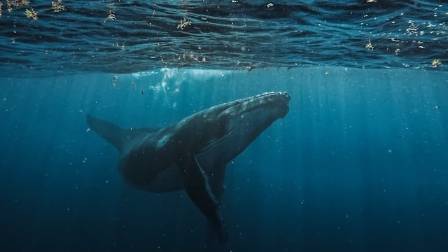
Whales are surprisingly fast swimmers despite their massive size. Their streamlined bodies allow them to move efficiently through water over long distances. Species such as orcas and sei whales can reach speeds of 50–60 mph in short bursts, while their typical cruising speed is around 25 mph. In contrast, bowhead whales are much slower, moving at about 3–4 mph during migration.
The Size of Blue Whales
Blue whales are the largest animals ever recorded, reaching lengths of up to 90–100 feet and weighing as much as 150–200 tons. To visualize this, they are roughly the size of two school buses placed end to end, and heavier than a large passenger aircraft.
Their tongues alone can weigh around 8,000 pounds—comparable to an adult African elephant. The largest recorded blue whale, measured in 1947, weighed approximately 190 tons.
What Do Whales Eat?
Whales are carnivorous animals. Their diet varies by species but can include krill, plankton, fish, squid, seals, seabirds, and other marine life. This feeding behavior makes them important apex predators and keystone species in marine ecosystems.
Their waste products play an essential role in ocean productivity by fertilizing plankton growth, which supports the broader marine food web.
Why Do Whales Sing?
Whale vocalizations, often referred to as “songs,” are still not fully understood. Scientists propose several possible functions:
Communication between individuals or groups
Coordination of movement within pods
Attracting mates during breeding seasons
Navigation across long ocean distances
Maintaining social bonds and mother–calf connections
Humpback whale songs, in particular, can be extremely complex and change over time. Humans can only hear a limited range of these sounds without specialized equipment. The recording of whale songs in the 1970s played a major role in raising global awareness about whale conservation.
Are Whales Endangered?
Many whale species were once hunted nearly to extinction. Industrial whaling, which peaked in the 19th and 20th centuries, is estimated to have killed around 3 million whales. Blue whale populations dropped by roughly 90%, and sperm whales declined significantly.
Although commercial whaling was officially banned in 1986, it still continues in a few countries. Some species have begun to recover, but others remain vulnerable.
Today, climate change is one of the biggest threats to whales. Rising ocean temperatures, increased acidity, shifting food availability, underwater noise pollution, and fishing net entanglement all contribute to ongoing population pressures.
Why Whales Matter to Ocean Ecosystems
Whales play a vital ecological role as keystone species. They help regulate marine food chains by controlling populations of prey species. Their movements distribute nutrients across vast ocean areas, supporting plankton growth and overall biodiversity.
When whale populations decline, entire ecosystems can be affected. Their presence also supports other marine life, as fish and seabirds often gather around them during migration.
Whales are not only magnificent creatures but also essential to the health of Earth’s oceans and climate systems.
More from the edition
Column · en
Essential Steps for Starting a Successful Balcony Garden
Growing a personal vegetable garden filled with fresh greens, aromatic herbs, or bright cherry tomatoes is a wonderful aspiration. Even if you lack a traditional backyard, a lack of extensive outdoor acreage should not prevent you from cultivating a thriving green space. Apartment residents can easily transform an underutilized patio or balcony into a lively and joyful sanctuary. Urban container gardening allows you to experience all the therapeutic and practical benefits of agricultural production within a small footprint. All you truly need to begin this rewarding journey is a sturdy balcony railing, a selection of appropriate containers, a few basic tools, and a willingness to learn and experiment with nature.
Column · en
Easy Indoor Plants for Beginners
Houseplants bring a refreshing sense of life to indoor spaces while also helping improve the atmosphere and brighten your mood. Even if gardening has never been your strength, you can still become a successful plant parent by starting with beginner-friendly indoor varieties and other low-maintenance houseplants.
Column · en
A Good Bowl of Borscht Can Change Your Life
The best bowl of borscht I ever tasted came from a punk house in the summer before I turned eighteen. At that point, I had already been on my own for nearly two years, drifting between whoever would take me in after my mother left town. I survived mostly on whatever vegan food I could scavenge or afford, eating a very simple, carb-heavy diet that kept me going but not much more.
Column · en
The Comprehensive Manual for Men's Tailoring
In an era defined by casual remote work and shifting dress codes, the necessity of a suit might seem debatable. Paradoxically, this makes it the perfect time to invest in one. With social calendars filling up and a growing weariness of loungewear, the suit is experiencing a cultural renaissance. Modern fashion has liberated tailoring from rigid rules; it is no longer about the standard navy set but about bold pinstripes, classic houndstooth, and personal expression. Whether paired with a traditional silk tie or a vintage graphic tee, every man needs at least one exceptional suit.
Column · en
The World's 17 Most Lavish Ingredients
Indulge in a culinary journey through the world's most opulent and extravagant ingredients. These culinary gems are a testament to the heights of gastronomic luxury, far beyond your average grocery bill.
Column · en
The World’s Most Beautiful Cities After Dark
A city can transform completely once the sun goes down. Streets that appear ordinary during the day often become magical when illuminated by streetlights, architectural lighting, and reflections on rivers and canals. From historic capitals to vibrant modern metropolises, these destinations reveal some of their most captivating scenery after dark.