Quiet Type Edition
NTnotedthesundy.com
← Back to desk4 min column
Monkeys: Curious Minds of the Canopy

Sunday column

Monkeys: Curious Minds of the Canopy

Primates Among the Trees and Beyond Monkeys—those quick-footed, intelligent creatures of the tropics—occupy an astonishing range of environments. Most are born for life in the trees, while others, like baboons and macaques, have adapted to life on the ground. New World monkeys swing through the forests of the Americas, while their Old World cousins roam across Asia and Africa. Sadly, many of these species now face serious threats to survival. More Than Just Primates

L

Lena Shore

Desk editor

Editor’s note

The full column continues in quiet type below.

Section

Sunday Broadsheet

Primates Among the Trees and Beyond

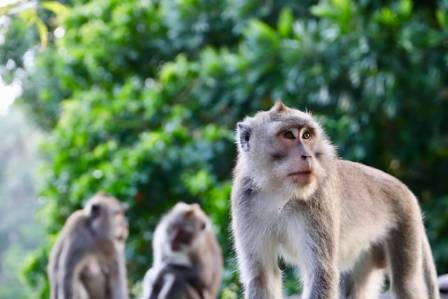
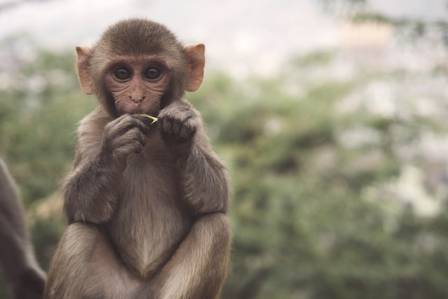
Monkeys—those quick-footed, intelligent creatures of the tropics—occupy an astonishing range of environments. Most are born for life in the trees, while others, like baboons and macaques, have adapted to life on the ground. New World monkeys swing through the forests of the Americas, while their Old World cousins roam across Asia and Africa. Sadly, many of these species now face serious threats to survival.

More Than Just Primates

It's a common mistake to think of all primates as monkeys. In truth, monkeys are evolutionarily distinct from apes—such as gorillas, chimpanzees, and humans—and from prosimians like lemurs and lorises. One visible trait sets them apart: monkeys typically have tails, while apes do not. Apes also tend to be larger and are known for more complex cognitive abilities.

Grooming as Social Glue

Monkeys don’t just clean each other for hygiene—they bond through touch. Removing debris or insects is a show of affection and trust. In species like vervet monkeys, this attention fluffs and insulates their fur, keeping them warmer and closer as a troop.

The Unique Tail Advantage

Among monkeys, only a select few have prehensile tails—nature’s built-in fifth limb. These remarkable appendages are exclusive to certain species in the Americas, such as howler monkeys and spider monkeys. Their tails help them grip branches and maneuver through dense forest canopies with ease. Old World monkeys, while tailed, lack this grasping ability.

Europe’s Lone Monkey Population

The Barbary macaque stands alone as Europe’s only wild monkey. Most live in the mountainous forests of North Africa, but a small group has resided for centuries in Gibraltar. Despite their resilience, these macaques are classified as endangered due to shrinking numbers and habitat pressures.

The World’s Tiniest Tree-Dweller

Pygmy marmosets, the smallest monkeys on Earth, inhabit the Amazon’s thick jungles. At just 5 inches long, these petite primates weigh little more than a deck of cards. Living in tight-knit family units, they rely on teamwork to raise their young and thrive in the treetops.

A Giant Among Monkeys

On the opposite end of the scale is the mandrill—a striking figure with vibrant facial markings and a muscular frame. Found in the forests of Central West Africa, male mandrills can tip the scales at over 100 pounds, dwarfing their smaller female counterparts.

Faces That Tell a Story

The bald uakari’s bright red face is more than a visual quirk—it’s a health indicator. Individuals with rosy complexions are often in better condition, while paler faces may signal illness. These rainforest dwellers use color cues, aided by sharp vision, when selecting mates.

Creative Problem Solvers

Capuchin monkeys are among the most resourceful of their kind. In the wild, they have been observed using stones as tools—cracking open nuts with precise strikes. This behavior has existed for millennia, showcasing a level of ingenuity once thought to be uniquely human.

Voices That Echo Through the Forest

The booming calls of howler monkeys resonate through dense canopies, audible from miles away. Their powerful vocalizations stem from an enlarged bone in the throat, making them one of the loudest terrestrial mammals. Males, in particular, use these roars to establish territory and attract mates.

Nature’s Hot Springs Enthusiasts

Japanese macaques, also known as snow monkeys, are no strangers to the cold. In winter, they soak in natural thermal pools to stay warm. Observations suggest these spa-like sessions also help lower their stress levels—proving monkeys appreciate comfort too.

Sleep with Strategy

Nightfall sends monkeys high into carefully chosen trees. Isolated branches help deter predators and reduce the chances of being bitten by insects. Tall, detached trees serve as natural fortresses for sleeping troops seeking safety above the forest floor.

World Travelers

Rhesus macaques are among the most widespread of all monkey species. Though native to Asia, they’ve established populations in unexpected places—from American parks to Caribbean islands. Their flexibility in diet and habitat has helped them adapt across the globe.

Not Just Bananas

Despite their pop culture image, monkeys rarely eat bananas in the wild. Their diet is impressively varied—ranging from fruit and leaves to small animals and insects. Opportunistic feeders, they consume whatever the landscape provides.

A Race Against Time

Many monkey populations are in peril due to deforestation, poaching, and illegal trade. Species like the Roloway monkey and Cat Ba langur teeter on the edge, with some numbers falling below a few dozen individuals. Urgent conservation efforts are needed to protect these irreplaceable members of the animal kingdom.

Inside the Primate World

From their brilliant displays of intelligence to their rich social lives, monkeys continue to surprise and inspire. Whether swinging through rainforest vines or soaking in snowy springs, they remind us of the remarkable diversity—and vulnerability—of life on Earth.

More from the edition

Column · en

The dead leaf butterfly: Master of camouflage

The dead leaf butterfly (Kallima inachus) is a remarkable example of natural camouflage. When its wings are folded, their appearance closely resembles that of a dried leaf, complete with dark vein-like patterns that help the butterfly disappear among fallen foliage.

Column · en

Go with the Flow: Rivers and Streams

Naturally formed freshwater systems, including lakes, rivers, and streams, are interconnected through complex and constantly changing networks. Freshwater lakes are generally stationary water bodies enclosed by land, while rivers are flowing waterways that move through defined channels and eventually connect with larger aquatic systems. Streams also contain moving water and often combine with other streams to create larger waterways. A classification system is used to organize streams within watersheds based on their position and connections. For example, a stream located at the highest point of a watershed is considered a first-order stream, and when two first-order streams join, they create a second-order stream (Agriculture and Agri-Food Canada [AAFC], 2020).

Column · en

10 Most Stunning Beaches You Must Visit in Your Lifetime

Craving a tropical escape? Few places rival the serenity and beauty of a pristine beach. Whether you're seeking solitude, adventure, or simply a place to soak in the sun, these beaches are among the most extraordinary on Earth. From dramatic coastlines to hidden shores, this list features ten of the most visually breathtaking and unique beaches that promise unforgettable experiences.

Column · en

Easy Sakura Jelly Recipe

There’s something magical about preserving the short-lived beauty of cherry blossoms—and Sakura Jelly captures that feeling perfectly. With its soft pink tones and gentle floral scent, each bite feels like a small tribute to spring. I first encountered this dessert during a peaceful afternoon tea, and its light sweetness and refreshing taste immediately stood out.

Column · en

the Undulating Hills of Moravia

To undulate means “to move in a smooth, wave-like pattern.” The dictionary example—Her body undulated to the thumping rhythm of the music—certainly has a sensual flair. In this case, though, the subject isn’t moving. Yet when photographing the mesmerizing landscapes of Moravia, the hills’ curves and patterns create the illusion of movement, rhythm, and flow across the frame.

Column · en

An Introductory Guide to the Heritage of Japanese Bento Boxes

For enthusiasts of Japanese gastronomy or those who have explored the nation's rich traditions, the concept of the bento box is likely familiar. Essentially, an "obento" refers to a meal systematically arranged within a specialized portable container, designed for consumption away from home.