Sunday column
Exploring the Enigmatic World of Shadow Photography
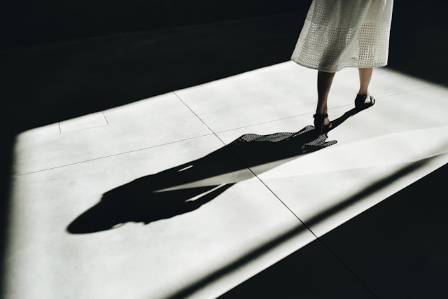
Discover the elusive art of shadow photography - a creative realm that adds depth and mystique to your photographs, and sometimes, even takes center stage. Here are expert tips to help you master the magic of shadows and unlock their secrets.
Mason Carter
Desk editor
Editor’s note
The full column continues in quiet type below.
Section
Sunday Broadsheet
Discover the elusive art of shadow photography - a creative realm that adds depth and mystique to your photographs, and sometimes, even takes center stage. Here are expert tips to help you master the magic of shadows and unlock their secrets.
Deciphering Shadow Photography
While photography is primarily about capturing light, it's equally about exploring the interplay of light and darkness. Shadows, often overlooked or sidestepped, possess the potential to elevate ordinary images into captivating works of art. Embracing shadows as a creative element can be the key to transforming your photographs.
In photography, shadows are the enigmatic, dark counterparts created when a subject blocks a light source. The shapes, sizes, and even colors of these shadows evolve with variations in light angles, directions, and temperature. Any photograph that prominently features shadows, either to accentuate subject contrast or as the primary subject, falls into the category of shadow photography.
The Significance of Shadows
Shadows play a pivotal role in photography. They provide balance, depth, and direction to an image. While highlights draw the viewer's attention, it's the shadows that guide the gaze, imparting dimension and a clear focal point. Without shadows, photographs often appear flat and lack authenticity.
Photographer Michael David Adams extols the ability of shadows to add complexity to a frame when utilized intentionally. He describes the duality of shadows in photography, saying, "You have two images at the same time: You have the subject itself, and then you have the way the light and the shadows are playing on that."
Setting the Mood and Drama
Shadows aren't just empty spaces but storytellers in their own right. They imbue photographs with a sense of time and place. The character and intensity of a shadow can dramatically influence the narrative. A harsh, stark shadow tells a different story than a soft, subtle one. You can manipulate the drama by leveraging the sharp, angular lines cast by architectural structures in a cityscape or create a moody atmosphere with the elongated, gentle shadows of a sunset.
Transforming the Mundane
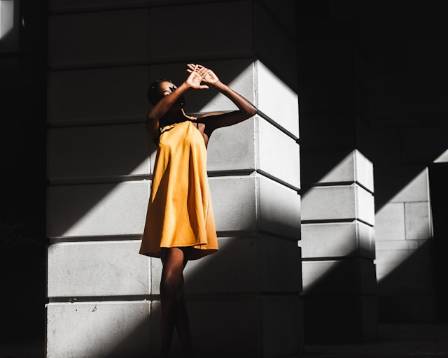
One of the remarkable attributes of shadows is their capacity to transfigure commonplace objects. Shadows can cast an everyday item in an entirely new light. Photographer Ren Fuller, who specializes in food photography, loves using glassware because it casts elegant, distinctive shadows. As light filters through glass, it creates beautiful, shimmering silhouettes.
In the realm of minimalist photography, shadows find frequent use as negative space in stark black-and-white compositions. Architectural photography, street photography, and fine art photography often employ shadows to craft geometric or abstract shapes.
Capturing Captivating Shadow Photos
To excel in shadow photography, understanding your light source is paramount. The direction of light significantly influences the characteristics of shadows. For long, dramatic shadows, the golden hours during early morning and evening are ideal. At midday, shadows are minimal but sharp and well-defined due to the harsh, direct light. Shoot on sunny days for distinct shadows, and seek side-lit scenarios where the light source is perpendicular to your subject.
As you embark on your shadow photography journey, begin with natural light. Ren Fuller suggests getting comfortable with it first. For studio work, start with a single artificial light source to learn how to manipulate shadows. Fuller recommends gradually incorporating light modifiers to shape or eliminate unwanted shadows.
Black and white photography is particularly well-suited for shadow photos. Shadows inherently offer heightened contrast and dynamic range, and converting to black and white can accentuate their impact. However, don't feel obligated to turn every shadow photograph into monochrome. Sometimes, the unique tones within shadows can enhance your image's intrigue and harmonize your color palette.
Keep an eye out for captivating patterns and shapes created by shadows. Unusual shadows are a magnet for the viewer's gaze, as they add a twist to the familiar. Shadows can also elegantly contour around another subject, such as a person, offering creative possibilities in portrait photography.
To capture deep, striking shadows, expose for the highlights, recommends Michael David Adams. Shooting in manual mode is advantageous, as your camera may attempt to balance exposure by compensating for the extremely dark areas. Maintain a low ISO to preserve the shadows' richness.
If your shot doesn't appear as dramatic as envisioned, post-processing tools like Adobe Photoshop Lightroom can help you fine-tune shadows and highlights, especially when working with RAW images. Editing in black and white initially and later reintroducing color can help focus on tonal range and simplify your image.

Don't fear the shadows. Embrace the art of observation and the magic of experimentation. Shadow photography is about observing the world around you and drawing inspiration from it. As Ren Fuller advises, "Photographers are observational humans by nature. It's all about being aware of your surroundings and being inspired by them." The learning process is characterized by trial and error, so shoot as much as possible to uncover your preferences and refine your skills. Armed with these insights, you're prepared to embark on your shadow photography journey, capturing the enigmatic beauty of light and darkness.
More from the edition
Column · en
Tips for Visiting Big Wild Goose Pagoda
The Big Wild Goose Pagoda in Xi’an has a history spanning more than 1,300 years, dating back to the Tang Dynasty. It was originally constructed as a place to preserve Buddhist scriptures written in Sanskrit, which the famous monk Xuanzang brought back from India after his remarkable 17-year journey across Central Asia and India.
Column · en
The Art of Flower Arranging: Techniques for Stunning Floral Designs
There is often much more intention behind a beautiful flower arrangement than meets the eye. The art of arranging flowers is not simply about placing random stems into a vase. It involves understanding how form, color, proportion, and empty space interact so that the flowers create a visual message rather than merely filling a container.
Column · en
Cherry Blossoms And Mount Fuji In Woodcut Prints
Have you ever been curious about how the vividly colored Japanese woodblock prints—known as ukiyo-e or hanga—are created? The printing methods behind these works were refined during the Edo period (1603–1868) and later became widely admired through the masterpieces of artists such as Katsushika Hokusai (1760–1849) and Utagawa Hiroshige (1797–1858).
Column · en
Where to See the Milky Way: The Best Stargazing Locations on Earth
Experiencing the Milky Way from Earth is an unforgettable sight, whether you're capturing its beauty through a lens or simply soaking in the cosmic wonder. To make the most of your stargazing experience, you need the right location and timing. The key factors are finding areas far from light pollution and, if possible, at higher elevations for clearer skies.
Column · en
Go with the Flow: Rivers and Streams
Naturally formed freshwater systems, including lakes, rivers, and streams, are interconnected through complex and constantly changing networks. Freshwater lakes are generally stationary water bodies enclosed by land, while rivers are flowing waterways that move through defined channels and eventually connect with larger aquatic systems. Streams also contain moving water and often combine with other streams to create larger waterways. A classification system is used to organize streams within watersheds based on their position and connections. For example, a stream located at the highest point of a watershed is considered a first-order stream, and when two first-order streams join, they create a second-order stream (Agriculture and Agri-Food Canada [AAFC], 2020).
Column · en
Colourful Macaroons
Enter the playful universe of bright, delicate macarons—sometimes also referred to as macaroons—where every light, airy bite delivers a harmony of taste and a splash of vivid color. These famous French pastries have become a worldwide favorite among dessert lovers, admired for their crisp outer shells and smooth, flavorful fillings.